
Origins of Pattachitra
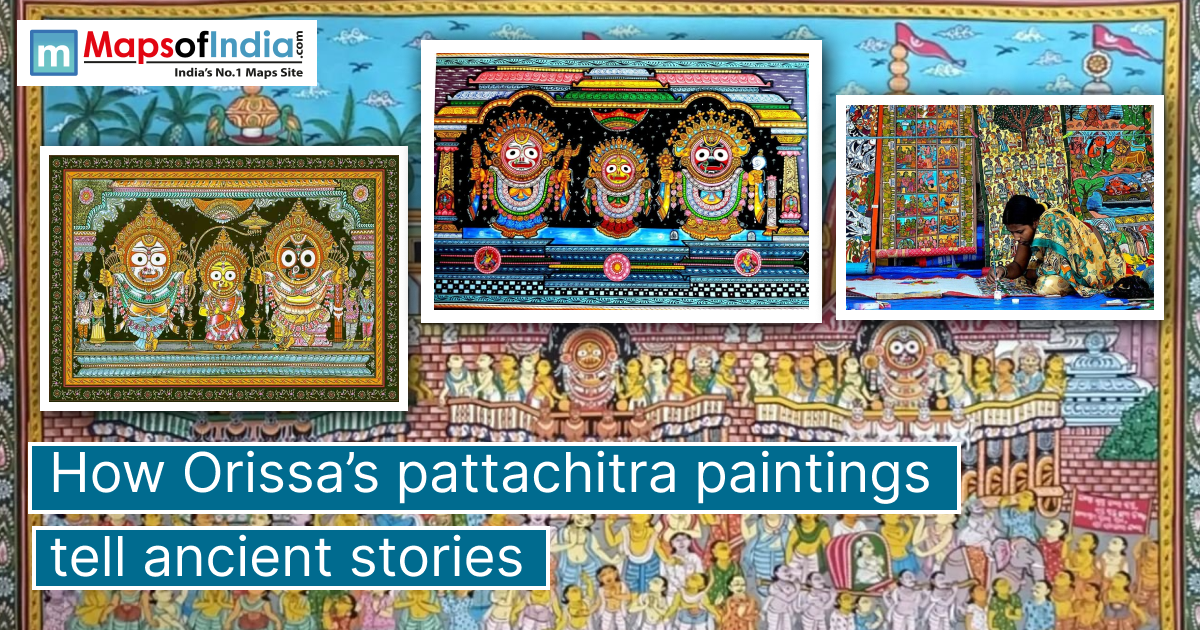
The origin of Pattachitra can be traced to the 5th century, when the Chitrakar artists started to create religious paintings for temples. The whole concept is closely associated with Lord Jagannath of Puri. The first Pattachitras were made to represent the stories from Hindu epics and also to be offerings to the gods.
The connection with Lord Jagannath
The foundation of Pattachitra art is the Jagannath Temple of Puri. During the annual Rath Yatra, when the gods are shown to the people outside the temple, the idols are taken away from the temple for cleaning rituals. Painted Pattachitras of the deities are put in the temple sanctum during this period to replace the idols. This custom underlines the importance these paintings have in the temple.
The materials used
The artists involved in Pattachitra are also the artists of nature. The base is achieved by a piece of cotton cloth being treated with a suspension made of chalk and tamarind seed gum. The colours used are all natural and are made from stones, minerals, and organic matter. Black is made from the soot of lamps, white from the conch shells, red from geru or red oxide, and yellow from haritala, a natural mineral.
The technique of creation
Putting together a Pattachitra is a work of time and patience. After preparing the cloth, the artists draw the outlines using the hair of animals for their brush, and then they fill in the colours. They use the colours slowly, one over the other, until the work is complete. The painting shines with the help of small stones to make it look glossy and bright.
The role of symbolism
Symbolism is the most prominent aspect of the Pattachitra paintings. The lotus, for example, is frequently used to represent purity, while the brilliant colours used show divine energy. Every sign of the deity is of utmost spiritual importance. The symmetry of the artworks shows the balance and harmony in the universe.
The storytelling tradition
A Pattachitra always tells a story with its pictures. Not only do the artists paint, but they also narrate the old stories with the help of form and colour. The viewers can understand the story as they go from one part of the painting to another. This form of visual storytelling is what keeps the old myths alive in this time of the new generation.
The villages of Raghurajpur and Pipli
Among the villages surrounding Puri, Raghurajpur is most famous for being the heritage village of Pattachitra art. The people living here are artists, and each house continues a tradition. Pipli is no less than a factory of the craft where the workmen produce appliqué and Pattachitra motifs. These small towns function like living museums where they not only keep but also show their rich cultural heritage from the past to the present and future generations.
Depictions of deities and festivals
Pattachitras are usually the ones that bring warmth to the religious festivals. They often are the depiction of the Rath Yatra, Krishna’s birth, and several avatars of Vishnu. The artists portray the divine moments in great detail. The emotional side of gods and goddesses is what makes the religious stories come alive.
The role of women in the art form
Females in artist households are very crucial when it comes to the preparation of materials, and they also help in the painting process. They do the grinding of pigments, polishing of canvases, and sometimes they paint the smaller parts. Their involvement is what keeps this family-based tradition going.
Evolution of Pattachitra over time
The growth of Pattachitra is not only backwards-looking but also forward-looking. The artists now are doing their works on palm leaves, wood, and even walls, apart from the traditional mediums. The modern creations have the present-day themes with a hint of the old style. It is still very much alive, but at the same time, it has accepted modern ways.
Palm Leaf Engraving Tradition
In addition to fabric painting, Odisha is also rich in the heritage of palm leaf Pattachitra called Talapatra Chitra. The artists carve the pictures on the dried leaves of the palm with sharp instruments and then apply black colour in the grooves of the leaves. Usually, these engraved leaves contain the stories from the religious books and family trees of the gods.
The Impact on Different Art Forms
The Pattachitra has been a great source of inspiration for the other local traditional art forms, like the use of cloth for decorative purposes, the art of engraving on stones and creating patterns on pieces of cloth. The pattern of the Pattachitra is mostly used in Odia sarees like Sambalpuri and Bomkai. The attractive borders and decorative figures have been used by the artists of folk and decorative arts throughout India.
The Role of Tourism and International Acknowledgement
Individuals who visit Puri and Konark mostly buy Pattachitra as mementoes. The recognition that this art receives internationally has attracted the local artists to it. Exhibitions in museums and cultural festivals around the globe have been the reasons for Pattachitra’s worldwide recognition.
Artists’ Difficulties
On the one hand, the art of Pattachitra is one of the most beautiful and culturally rich arts; however, on the other hand, the artists who practice this art suffer from financial problems. Quite a few of them have difficulties making a decent living and are under the threat of the cheap, machine-printed, and fake-art products. The shortage of promotional activities and support affects the artists’ desire to practice the craft and diminishes the number of them who are willing to take over the tradition of Pattachitra. The industry’s revival can be facilitated through awareness and fair pricing.
Cultural and Spiritual Importance
Pattachitra is beyond just a piece of art. It is the artist’s spiritual revelation. Every artpiece is committed to the god, revolves around the god, and comes from the god’s tradition. It instils virtues like patience, precision, and love for nature. For the artists, it is their form of worship where creation is adoration.
The Coming of Pattachitra
The existence of Pattachitra is bound to the love and help that it will get in the future. It is vital to keep the youth interested, give artists a decent-paying job, and popularise the art worldwide. The importance of storytelling and valuing the customs will ensure that this art will be alive and well in the future.
Conclusion
Pattachitra of Odisha is an art form that is beyond time and acts as a bridge between the past and the present. They represent the spiritual aspect of life, the skill, and the cultural heritage. Every single stroke of the brush contains the spirit of the ancient Indian civilization. Through the medium of protection and innovation, the lively age-old tradition will keep on telling the tales and memories of a society that is still alive in colours and canvas.