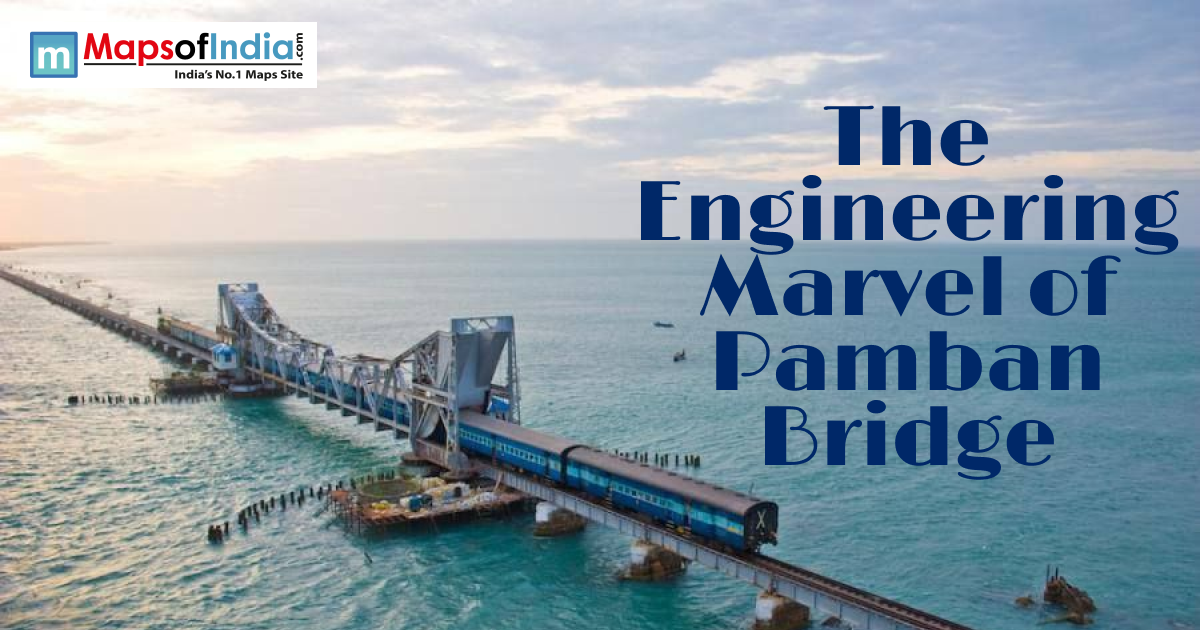
Over water, the Pamban Bridge runs thin and long, made of iron. From the Indian coast, it reaches toward Rameswaram Island without breaking. In 1914, when finished, it marked the country’s earliest bridge above the sea. This span, just over two kilometres, challenged what bridges were thought possible back then. Daily rail trips used to cut through the rough waters of the Palk Strait. Opened wide so vessels can move through below. After a hundred years, its two-part lifting span continues to rise without fail. Beaten hard by salty winds along with storms that never quit. Still upright despite all wear. History walks across on foot together with quiet dreams. People journeying toward holy places step over its frame. Folks here rely on it every single day. Not bending, even when storms rage, standing firm like a memory that won’t fade.
The Vision and Its Building Problems
Back then, around 1900, British engineers started thinking about linking Rameswaram Island. Instead of ferries, which were risky and took too long, they wanted something stronger. Because monsoon waves often wrecked vessels. That left pilgrims stuck for days on end. So the Madras Railway stepped in with an idea for a solid bridge. Fighting the ocean floor meant digging deep just to begin. Foundations had to hold firm under crushing pressure. Waves never stopped pushing against progress. Storms rolled through each season without fail. Metal weakened fast where salt touched it. People worked long hours in tough surroundings. One morning in August, steel met land. Years had passed since workers first began. That stretch across water, once thought too wild, now held firm under footsteps.
Innovative Design Features
Away at the edges, girders carry the load simply. Steel trusses run the whole way across. Stretching out, it measures exactly 2,065 meters long. In the middle, a two-part lift section rises when needed. One half of that moving span tips the scales at 400 tonnes. Minutes pass before hydraulic jacks raise them skyward. At full stretch, the space underneath climbs to twelve meters high. Curved rails guide motion without sharp edges in sight. Temperature shifts. The expansion joints handle the push and pull. Steel stays shielded by paint that fights rust every single day. Achieving harmony between durability and purpose was its core trait. Imagine metal shaped by precision, brought alive through movement.
The Bascule Section Engineering
Open water splits where the bridge once lay flat. One half swings up before the other, never together. Heavy chunks of metal below pull just enough to make lifting look easy. Where the road stops, the two pieces used to line up perfectly. Pistons filled with fluid push upward, doing the heavy lift. Even now, after years, that system keeps running without fail. A person handles each move by hand, step by step. Sound blasts from a horn tell others what's happening. Green things climb, inching up at an even pace. After everything passes through, down goes the platform once more. A few moments here, then it begins, five to seven minutes of motion above water. Each day, machines move together like a dance, out past the shore.
Materials And Corrosion Resistance
Out of England came high-grade steel, picked by British builders. Strong under stress, yet light on carbon, the metal held firm. Each piece fastened tight through rivets set with care. Layers upon layers of coating shielded the frame. Rust stayed away thanks to consistent upkeep. Still holding strong after salt spray and damp air checks. Today’s exams rely on sound waves deep inside metal. Fresh layers of defence go on when needed. This support beam beat the lifespan of newer builds. Back then, they knew how to mix stuff that lasts the same recipe from over a century ago.
Cyclone Resistance Over Time
A storm hit Rameswaram in 1964, breaking sections of the bridge. Some stretches suffered heavy harm. Work to fix it finished within 46 days. E. Sreedharan took charge, guiding repairs with sharp focus. Metro Man became his name after that. Fast reopening marked the bridge’s return. Storms came again years later, harder each time. Weak spots got fixed because of damage seen before. Today’s upgrades rely on tougher steel blends. Every gale left lessons built right into its frame.
Updated Improvements and Ongoing Care
Fresh paint goes on the bridge again and again. Cracks show up fast because of sound wave checks. Crews stand by, waiting for trouble. Every couple of years, layers that guard against rust get replaced. Machines built into the frame send live updates. Work crews keep things running without stopping. The rails company fixes small issues before they grow. When wind picks up, vehicles cannot cross. One lane stays open at a time on the old span. Work on the new twin bridge moves at a crawl. Balancing care for a century-old crossing shapes how fast the next one rises.
Engineering Insights For Today’s Bridges
Pamban Bridge shows what happens when metal meets salt air. Keeping rust away means never stopping the work. When the lift part moves, electricity must hold steady. Fixing pieces in sections cuts down emergency delays. People nearby pitching in makes rebuilding faster. That time it took just 46 days back in 1964? Still talked about today. A single span from long ago keeps drawing fresh eyes today. Not just history, its lessons keep shaping how people build now.
The People Within The Framework
Up there on the steel beams, railway crews check the structure each morning. When winds howl, they still make their way up the high supports. Below, where the drawbridge splits open, boats slip through with slow precision. People walking across often pause, hands folded, moving quietly over the span. Cameras click constantly near the lifting mechanism, capturing angles of metal and motion. Each rivet gets checked slowly by engineers. Thousands of hands, always working, hold the bridge together without pause.
Pamban Still Stands as Remarkable Engineering
One hundred years of storms did nothing to bring it down. Still today, the moving part lifts just as planned. Builders made it stronger than anyone thought possible. Careful upkeep kept every piece in place. A month and a half was all it took to restore proof of sharp skill. A bridge of iron rises where paths meet, binding communities through shared belief. Built by hands that refused to quit, it stands as proof of what effort can shape.