The Living Traditions of Varanasi Weaving Faith and Fire
Abhishree Sharma December 19, 2025
Varanasi - among Earth’s most ancient urban spots - carries custom in each alleyway. Called Kashi long ago, this spot blends daily existence, creativity, and worship without effort. Lined along the Ganga riverbank, it's hummed with sacred force, handmade wonders, and deep-rooted customs forever. Not only do travellers visit for faith reasons, but it also acts like an open-air archive of Indian ways. Crafters, temple workers, makers, and rowers here build a flowing scene still strong today.
The Eternal City of Light and Life
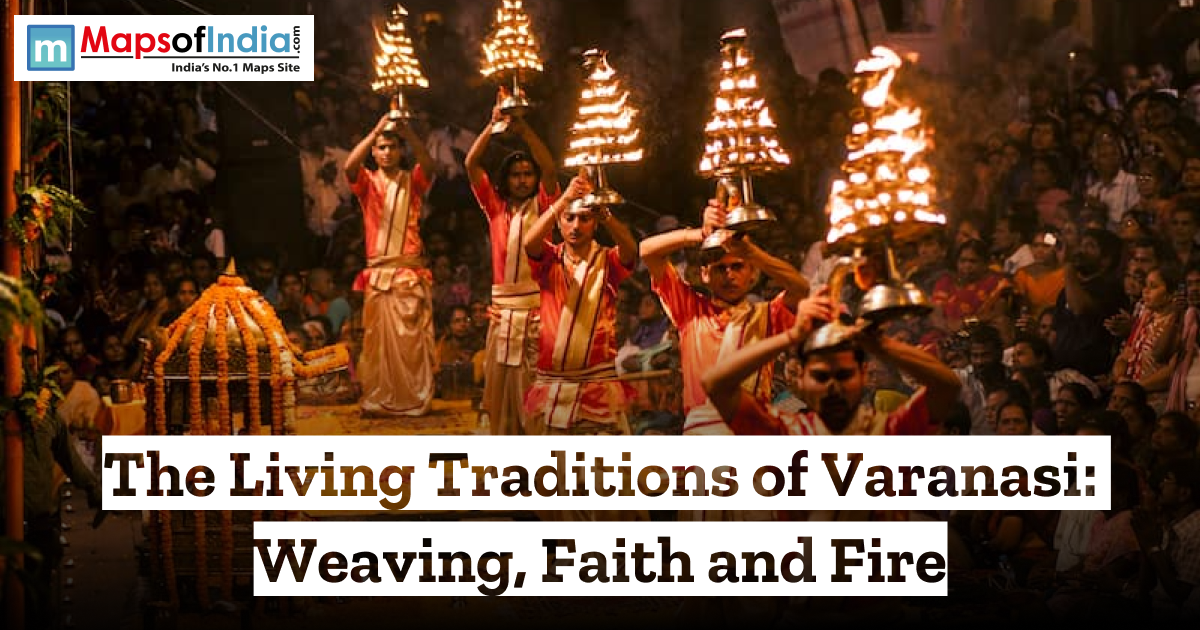
Varanasi’s known as the city of light - some call it Kashi, meaning bright or shining. Hindus see it as Shiva’s hometown - a place where dying can mean freedom from rebirth. Tight alleyways mix with ringing temple bells and nonstop prayer chants, making a vibe you won’t find anywhere else. With each morning sun, worshippers head down to the river steps to pray. Come evening, folks gather for the big fire ritual on the banks of the Ganges. Here, belief isn’t something you do now and then. Instead, it’s how folks live - linking them with the sacred each morning, noon, and night.
The Weaving Heritage of Banaras
One of the oldest and most loved heritages through the generations in Varanasi is the weaving of Banarasi silks. Its origins go back to the Mughals, a period when the Persian influences of the taste merged with the local talent. Karigars (craftsmen) conjure up miracles on handlooms, largely in localities like Madanpura, Alaipura, and Lallapura. These saris have become popular worldwide for their light fabrics, intricate metallic embroidery, and timeless patterns. Not a single thread is void of the voices that speak of the care, skill, and love that have been poured into it. Some saris take up to weeks or even months to be completed.
The Lives of the Weavers
Each Banarasi sari carries memories of ancestors who taught them in the craft over time. Not merely a job around here - this work shapes who people are, filling them with deep respect. As shuttles click back and forth, rows of tight streets hum with energy from relatives stitching beauty side by side. Lately, though, factory cloth and shifting buyer tastes have put pressure on this age-old practice. Still, state programs plus fresh worldwide attention to handmade textiles are slowly bringing back this old tradition. Lots of creators today work alongside regional artisans, offering decent pay along with fresh paths forward.
Faith on the Ghats of Ganga
The steps along the river in Varanasi pulse with sacred energy. Over eighty bathing landings dot the shore, every one tied to old tales and deep meaning. At Dashashwamedh, crowds gather nightly for glowing rituals that dance with colour. Meanwhile, Manikarnika keeps burning day and night. It’s where bodies are burned continuously. Here, living and dying go hand in hand, no fear at all. Locals say passing away in Varanasi brings moksha, freedom from endless rebirth rounds. Devotees soak in holy water while temple men carry out ceremonies; meanwhile, wandering monks sit still near the bank. Each landing spot whispers belief, stretching nonstop across hundreds of years.
Temples That Define the City’s Spirit
Varanasi hosts countless holy sites. From the temple present here, the Kashi Vishwanath stands out, which was built for lord Shiva. This spot is known as one of the twelve sacred Jyotirlingas. Despite attacks and rebuilds over time, it's stayed strong. Nearby spots worth noting are the Sankat Mochan shrine, Durga’s pond area, and the Annapurna place. Every shrine attracts visitors looking for good fortune while finding calm. One after another, they make up the soul of the place.
Artisans and Crafts Beyond Silk
Besides weaving, folks in Varanasi make wooden toys, brass items, and glass beads. Craftsmen here carve detailed pieces, picked up by buyers nearby, even far overseas. That well-known gulabi meenakari? A soft pink enamel trick found only in this town. You’ll spot it on trinkets and keepsakes, laced with fine, careful lines. A single handmade piece carries generations of skills shared among kin. One after another, these traditions build up what makes the place unique.
Festivals That Illuminate the City
Varanasi is a festival city, bursting with life and energy during the festive season. When Dev Deepawali comes, a multitude of lights made of clay are lit on the river steps, and the entire area sparkles nonstop. This festival is an indication of the divine beings coming back to earth after the end of Diwali. Besides this, people celebrate Holi, Dussehra, and Makar Sankranti to the same extent of devotion and enthusiasm. During Nag Nathaiya, the performance brings the life episodes of Krishna to the audience along the river steps. In Varanasi, festivals are not only the most important religious events, but also they are the events that burst with communal spirit and lively energy.
The Fire That Never Dies Manikarnika Ghat
Manikarnika Ghat is a very important place in the Hindu rite of worship. The location is an open-air funeral ground, where the cremations are done nonstop, throughout the day. The flames can be seen burning. According to legend, the fire has been going on for a few hundred years. To a great number of people, it is the symbolism of the continuous cycle of birth and death. The families of the deceased come from all over India to have the last rites performed here. The atmosphere could be quiet or heavy, but for the devotees, it is a sign of liberation and the constant cycle of life. In and around Varanasi, dying is not something to be afraid of - rather, it is considered a joyous reunion with the divine.
Cuisine and Everyday Life Along the Ghats
Varanasi's street eats carry the vibe of everyday life there. Smells of kachaudi sabzi, malaiyyo, along with banarasi paan drift through narrow paths. Chai corners turn into hangouts where folks chat - religion, gossip, even big ideas come up. People here live by their own beat. In this city, people's mornings start with taking sacred baths in the Ganga. Then the locals get busy with prayers by midday. Each move made here, no matter how small, holds a touch of something deeper.
Conclusion: The Eternal Pulse of Varanasi
Varanasi isn’t merely a place - more like an unfolding story shaped by belief, skill, and strength. Because it's weavers' guard, age-old ways through every thread they spin. Since its priests feed sacred fires without pause or break. Along its river steps, life never fades. Sounds tie things together in Varanasi. You can always hear the clatter of shuttles, hum of prayers, hush of currents. Here, each morning at this place feels holy, while evenings glow with grace. By threads, belief, and flames, this place shows us how living breathes through spirit.