







About
Home to myth and history, Palwal became Haryana’s twenty-first district. This region centers around Palwal city, serving as its main administrative hub. Sixty kilometers south of Delhi, it lines the old route to Mathura, tucked along NH-2. Old tales whisper of Apelava, an ancient name tied to early Aryan lore, once woven into Indraprastha's realm under the Pandavas. Later, kings like Vikramaditya helped revive such forgotten spots. Locals say the name Palwal stems from a ruler long gone - not human, but a being called Palwasur - who held power here when the Pandavas walked the land. That death came at the hands of Balarama, older sibling to Shri Krishna. Each year since, folks gather in Palwal - keeping him alive through "Baldev Chhat Ka Mela." A different rhythm marks each celebration, quiet moments mixed with noise under open skies. Besides the Municipal Office Chowk sits a small temple honoring Balaram. From Palwal’s railway station, they took Mahatma Gandhi into custody that very first time. A structure called Gandhi Ashram now stands, built long after, to keep his presence alive. Named after a historic victory of justice over oppression, the settlement first took shape as a tribute to that momentous occasion, slowly transforming into what is now called Palwal. Running through present-day life there, farming traditions meet new industrial growth - not because of sudden shifts, but due to gradual change fueled by connections along major roads such as the Kundli–Manesanr–Palwal (KMP) Expressway.
History & Culture
Old stories place Palwal far back in time, during the Vedic Age, known then as Apelava in early Indian spoken records. Part of the wide Pandava realm centered on Indraprastha, it held steady importance across centuries. Digs inside the region, especially at the raised earth site near Manpur called Kaserua Khera, turned up key signs of Painted Grey Ware life, almost three millennia old. Finds included layered pots with fine markings, household implements, and objects tied to ceremonies - proof people lived deeply here along the Yamuna flatlands when the Mahabharata tales took shape. As later writings show, power returned under King Vikramaditya, who rebuilt much of what stood before, helping the town remain active throughout North India's classic period.Though surrounded by expanding empires, Palwal held its ground through centuries of pressure from Delhi's rulers. Resistance flared notably when Mughal power peaked under Aurangzeb. At this time, a bold figure emerged - Kanha Rawat, drawing strength from earlier defiance shown by Jat leader Gokula. He rallied villagers not with grand speeches but steady resolve, opposing unjust taxes and forced religious shifts. When caught by imperial forces, he did not plead nor waver in belief. Buried alive at Rawatpara, his end came by order of the throne, yet silence could not erase what it tried to bury. Now preserved within Kanha Rawat Memorial Park in Bahin village, his sacrifice stands as a quiet emblem of local honor and resistance. Following that period, during British colonial rule, the region became part of Punjab Province - eventually shifting under administrative control of what would become Gurugram district - all while continuing to draw attention for its active role in social and political uprisings.
Economy
A shift marks Palwal's economy today - farming customs now weave tightly into factory work and service roles. Behind this blend stand three clear supports, each shaping jobs and physical development in different ways across the area.
Government Sector
Institutional strength in Palwal rests largely on the operations of Haryana’s state administration. Though newly designated as a district hub, it has drawn significant state funding aimed at building layered bureaucratic systems - courts, civic agencies, town governance units, and law enforcement setups now occupy central roles. Public-sector jobs multiply here, sustained by networks of educators in government schools, medical personnel staffing public health centers, along with clerical teams running rural and urban planning cells. Beyond salaries, official spending fuels more work: renovation plans for historic landmarks, backed by state financing, push funds into local markets where builders, artisans, and service providers gain steady demand. Growth unfolds quietly through these flows, rooted not in spectacle but routine allocation.
Public Sector
Nowhere is the presence of big public projects more visible than in Palwal, where national and regional government enterprises shape much of the local economy. Power and movement define its role: state-backed agencies run major operations across energy and transit systems here. Lining one of India’s busiest rail corridors - the route linking Howrah to New Delhi - this area requires constant oversight from engineers and support teams managing daily train flows. Electricity delivery depends on outfits like HVPNL, whose crews maintain supply lines stretching into farming zones. Water channels serving farmland also rely on publicly managed bodies employing skilled staff year-round. Stretching around the region, twin highway expansions - the KMP and KGP expressways - are watched closely by officials, turning formerly quiet tracts into hubs for vast storage centers funded through government-linked ventures.
Services Sector
Now shaping much of Palwal's city economy, the services segment gains speed thanks to momentum flowing in from heavy-industry zones such as Faridabad and Gurugram. Along the stretch of NH-44, roadside growth appears in shops, learning centers, malls, and trade clusters. Cotton now defines one core strength here; bundles arrive from outlying farms, moving through dealerships, ginning units, and Mandis where bulk deals happen daily. Behind these shifts, financial outlets - banks, small-loan firms, vehicle workshops, insurers - have multiplied because more residents spend steadily across town. Little by little, economic life drifts beyond mere output toward broader business activity.
Tourism
Deep within Haryana's landscape, Palwal draws visitors into layers of time - myth woven into stone, fort echoes from bygone eras, moments that shaped recent history. Standing apart from ordinary temples, the Dauji Mandir in Banchari village pulls devotees nearly twenty-five kilometers out of Palwal’s center. This sanctuary, built solely for Lord Balarama, holds steady as one key pillar of the greater Braj religious trail. Worship flows here without pause; people arrive seeking connection, drawn by chants rising through open fields, moved by ceremonies passed down untouched across generations. Deep within its dense tree cover stands the Panchvati Temple, an old place of worship tied closely to tales from the Mahabharata. Though time has worn its edges thin, Matia Fort - often called Palwal Fort - attracts those curious about civil design and stories of regional resistance. Built when Afghans regained strength under Sher Shah Suri, it remains a quiet witness to old battle strategies carved in stone. While much of the compound now rests in crumbling fragments, early dig efforts uncovered traces of a vast palace network hidden below perimeter walls. Not far away lies Sati Ka Talab, an aged reservoir framed by tiered staircases and small ceremonial shelters. Shaped long ago to store water efficiently, it also functions as a spiritual gathering spot today. Each winter, tradition revives here - not through speeches or displays - but in songs, tales, and shared memory passed hand to hand.
Among quiet lanes just off the railway hub, the Gandhi Seva Ashram waits - its walls lined with faded images and handwritten notes from independence times. Though small in size, it holds weight through original letters and manifestos tied to early civil disobedience movements. Where crowds once rallied against British rule, visitors now walk slowly, absorbing stories etched into old boards and glass cases. Not far away, along stretches of the Grand Trunk Road, stone pillars rise unexpectedly - a series of Kos Minars placed centuries ago.
Demographics
Population figures from the 2011 Indian census show Palwal district is home to 1,042,708 people. With around 767 residents per square kilometer, settlement patterns mix towns and 282 countryside villages fairly evenly. Growth during the prior ten years reached 25.76%, fueled mainly by better jobs, medical services improving, and movement toward developing zones near the capital region. For every thousand men, there are 879 women - a trend seen across Haryana - leading to ongoing efforts through public programs aimed at boosting girls’ schooling and monitoring women's wellness. In Palwal district, about seven out of ten people can read and write, showing slow but consistent gains in school access through recent decades. Though men still outnumber women in literacy rates, new campuses - ranging from engineering colleges to targeted learning centers - are spreading fast across subdivisions, helping balance the scales for teens and children. Official work and classroom teaching happen mostly in Hindi, which holds formal status. From village to village, voices shift: Haryanvi flows freely in northern and western pockets, whereas Braj Bhasha shapes daily talk farther south, near Mathura's edge. Some homes echo with Punjabi, especially where ancestors settled after partition, adding another thread to the area’s varied speech patterns. Growth climbs quietly, carried on different tongues.
Administration
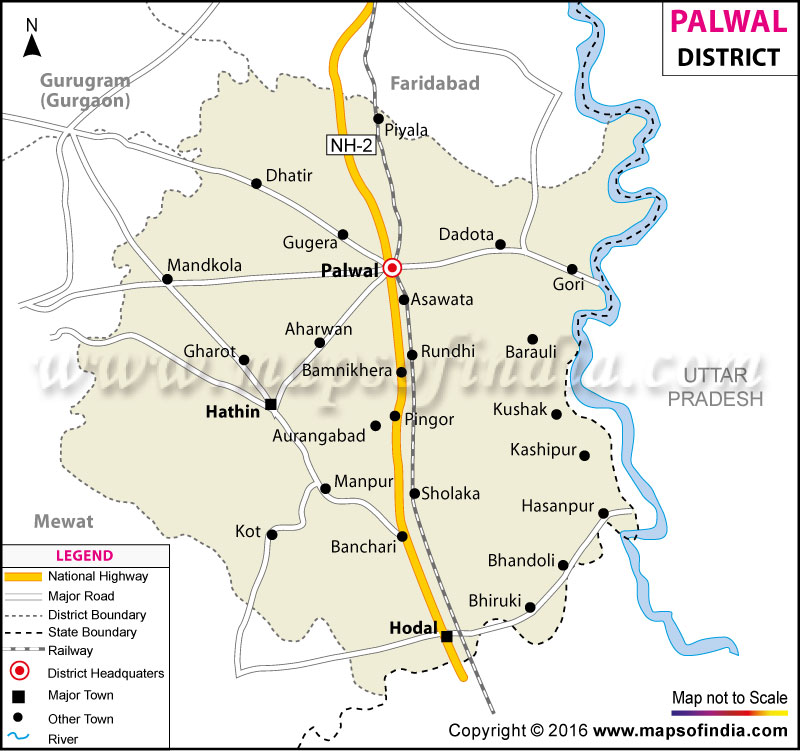
Palwal district operates within the larger administrative framework known as Faridabad Division in Haryana. For smoother governance, tax oversight, and public order - whether in towns or farming regions - the area is split into manageable segments. Three main subdivisions form its core setup:
Palwal Tehsil manages the region's main administrative zones. Its authority spans the primary government clusters located near commercial centers. Running through its heart are networks vital to trade and local governance. Oversight includes coordination of services across densely populated sectors. Functionally, it links rural inputs with urban economic flows
Hodal Tehsil handles the southern entry point near Uttar Pradesh.
Hathin Tehsil manages areas marked by unique cultural traits in its western sectors
Backed by assigned sub-units, these tehsils also rely on four focused development zones tasked with rolling out job initiatives in villages, health outreach efforts, and improvements to infrastructure. Each function operates within its own framework, shaped by regional needs and administrative coordination.
| Official Name | Palwal |
| Location | Haryana |
| Area | 1367 sq. km |
| Population | 1042708 (2011 census) |
| Language | Hindi, Punjabi, Haryanvi, Urdu , Mewati |
FAQs
Q1: How many villages exist within Palwal district altogether?
Among the countryside settlements counted in Palwal district, 282 individual villages unfold under local self-governance. These communities organize into 237 distinct Gram Panchayats, shaping rural administration from within. Spread beneath, the land divides neatly into three official subdivisions - Palwal, Hodal, and Hathin guiding oversight.
Q2: What is the Population of Palwal ?
As per recent census figures, Palwal district records a total population of 1,042,708 residents.
Q3: What is the District famous for ?
Back then, in April 1919, it was right here at Palwal Railway Station that British authorities took Mahatma Gandhi into custody - his initial political detention. Though known for that moment, the town holds older layers too, tied to figures and tales from the Mahabharata period. Among them stands Panchvati, an age-old temple site adding weight to its spiritual footprint. Beyond history and legend, commerce has long pulsed through Palwal, especially via cotton markets shaping its economic rhythm across decades.
Last Updated on : July 10, 2026
