




Introduction
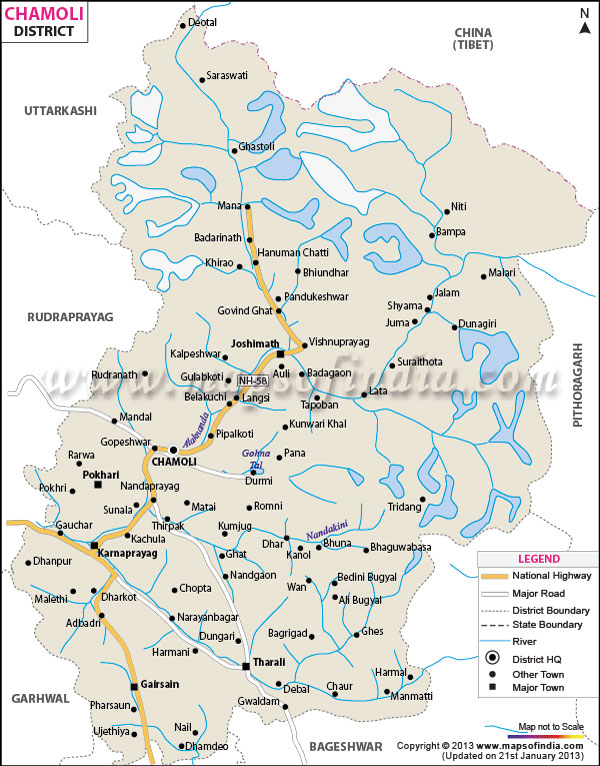
Chamoli is a beautiful district in the mountain range of Uttarakhand, India. It is known as the “Abode of Gods” for which it is the home to some of the most renowned temples and sacred sites in the country. The district is known for the Valley of Flowers and the sacred temple of Badrinath which we see. The town serves as a gateway for those which wish to see the high Himalayas and to go on long walks through the woods. It is a place that will give you peace from the noise of the modern world.
History
Chamoli has a great history which goes back to the ancient times when it is told that gods and sages roamed these mountains. In the old Indian books this area was a part of “Kedar-Khand” which was a sacred place people went to for peace. For thousands of years the high peaks of Chamoli have been a natural temple for monks and travelers in search of spiritual energy.
During the Middle Ages the land was ruled by the Katyuri Dynasty. That which we term as kings of that time are known for founding beautiful stone temples which had very detailed carvings. Later the area came under the Garhwal Kingdom which was ruled by the Panwar kings. Those rulers in turn built forts on hill tops to watch over mountain passes and protected the people from foreign invaders for many generations.
In the 1970s what made Chamoli’s history is the story of the Chipko Movement. In a small village named Reni which was home to local women led by Gaura Devi these women put their bodies between the tree cutters’ axes and the trees. That bold act brought global attention to Chamoli as a community which protected peace and it's environment.
Before the establishment of its present district status, Chamoli was a part of Pauri Garhwal. In 1960 the government decided to separate it out into a single district which at that time also sat at the border with Tibet; it was very large in size. This change also saw the rise of Gopeshwar as primary government town. It enabled the development of improved roads and also the building of more schools for the people in the high valleys.
The district’s history is also the history of the famous Badrinath Temple. In the 8th century Adi Shankara established this temple which has withstood many earthquakes and snowstorm. It is today still one of the most important historical and religious sites in India. It is a district which has transformed from a forgotten mountain destination to a player of key importance in modern India. Here history is not just in books; it is in the rocks, the trees and the sacred rivers.
Culture
In Chamoli culture which is very much a product of the mountainous setting and the memory of the ancestors we see people here which are known as Garhwalis. They live very simply, honestly and very much into hard work. Also because they live in such a high and rugged terrain which is also very remote they have developed a strong sense of community. There is a great degree of mutual help during harvest time and the long snowy winters which in turn has made the bond between neighbors very tight.
A very much separate element of their culture is the Ramman festival which takes place in the villages like Saloor Dungra. This is a religious theater which sees people in large heavy wooden masks and dancing to tell the stories of gods and demons. That is so unique it has been recognized by the world as a cultural treasure. The music which is played on Drums of the Dhol and Damau can be heard resonating through the valleys during these celebrations.
In the region of Chamoli what we have are “Jagars” which are more than just a form of entertainment; they are a means of communication with the local deities. The people there consider their land to be the “Bhumi” of the gods hence they preserve their traditions very strictly.
People’s clothing also tell of the mountain culture. Women in this region put on a “GhChamoli” with a long shirt and a large gold nose ring which they call a “Nath. That jewelry is a point of family pride and is out in full force at weddings. Men wear a traditional cap which we know as a “Topi” that is of the Garhwal region. Also these attires are designed to look beautiful as well as to keep the cold air at bay.
In Chamoli food is about health and warmth which is prepared from what the rocky soil produces. They use local grains like Mandua for thick rotis and “Gahat” dal for soups. In the hills which require a lot of energy for survival, their meals are very filling and natural. Also they use wild herbs from the forest which add flavor and health benefits to their daily cooking.
In short what we see is that the culture of Chamoli is of the land and of the gods. People there have great respect for trees, rivers, and peaks which they consider living. Even with the entry of the modern world the local fairs, traditional dances, and ancient rituals are the soul of the district. It is a culture which shows us how to live in peace with the giant mountains which surround us.
Language
Chamoli’s language is a beautiful representation of the high mountain spirit. In the villages almost all speak in Garhwali. An old language which is very melodic and sweet to the ear. Although it is related to Hindi it also has very unique words for things like mountain wind, rocky paths, and local wild flowers.
In the towns and at the markets Hindi is the primary language of business and communication with visitors. In the case of Chamoli which is a very holy temple which draws people from all over India, Hindi plays the role of a bridge. In schools Hindi is the language of instruction and for the government it is the language of choice. Most local people are fluent in both Garhwali and Hindi which they use to put travelers at ease.
In that area which is home to famous spots like Auli and the Valley of Flowers English is also becoming very common. Many young people who are into mountain guiding or hotel work speak English to better serve international guests. Also you will see that most students are very much interested in practicing their English with you. At the large temples and parks signs are usually in Hindi and English.
In the high altitude areas by the border some people also put forth Bhotiya dialects. This brings a different dimension to the local culture and is a reflection of our trade history with Tibet. As all the people of Chamoli we see to it that we are respectful and kind. We use simple words and warm smiles to make each guest feel like they are at home.
Geography
Chamoli is a magnificent and powerful geographic area. It is in the north of Uttarakhand and known for its large mountain peaks. This district also homes Nanda Devi which is one of the highest mountains in India. Because it is so high in the Himalayas the landscape is a mix of snow capped peaks and very deep valleys.
Rivers play a large role in the geography here. The Alaknanda River is the most which runs very fast through the center of the district. At what are known as “Prayags” it also meets with many other mountain streams. Over thousands of years these rivers have carved out deep channels through the mountains which in turn has given the whole region a very dramatic look.
In the most beautiful of the geographies is the Valley of Flowers. At high altitude which for many months is covered in snow. When the summer rain comes in the season the valley comes alive and is blanketed in thousands of colorful wild flowers. This area is very special, almost rare which is why people from all over the world come to see the natural beauty.
In Chamoli the soil is mostly of rocky and thin variety which is a result of steep slopes. For agriculture the local people have developed Terrace Farms on the sides of the hills. These look like green stairs carved into the mountains. As you go higher you see less of trees, until the dense forests of Oak and Pine give way to cold open areas which have only grass and small shrubs.
Here the weather is formed by high mountains. Summers are cool and short which in turn makes them the best for travel. In the monsoon heavy rain sets the rivers to roaring and the forests turn a deep green. Winters are very long and severe in which many villages are covered in thick white snow for several months.
Chamoli is a place which presents a great contrast. It has the calm beauty of a flower valley and the forceful power of rock faces. There is a mix of high peaks, rushing water and deep forests which makes it a top destination to go and see in India.
| Facts of Chamoli District | |
|---|---|
| State | Uttarakhand |
| District | Chamoli |
| Capital | Gopeshwar |
| Area (km2) | 8030 |
| Currency | Indian Rupee (INR) |
| Religion | Mostly Hinduism |
| Language | Hindi, Garhwali |
FAQs
Q1: Is Auli a part of Chamoli district?
Yes, Auli is a popular hill station in Chamoli which has world class skiing facilities. It also provides you some great views of the Nanda Devi peak and is connected to the town of Joshimath.
Q2: Can I visit Badrinath Temple at any time of the year?
No, the temple is closed through the winter for heavy snow and extreme cold. It reopens in late April or early May and runs through until the festival of Diwali in October or November.
Q3: What does the Chipko Movement refer to in our local history?
In the 1970s a great forest conservation effort took off in Chamoli’s Reni village. Women there clung to trees in order to stop them from being felled which in turn put the issue of environment protection in the world stage.
Q4: What to eat in Chamoli?
You should go for Mandua ki Roti (millet bread) and Gahat ki Dal (horse gram soup). Traditional Garhwali dishes are very nutritious and will keep the body warm in the cold mountain air.
| Major Districts of Uttarakhand |
 |
 |
 |
 |
| Uttarkashi District Map | Dehradun District Map | Nainital District Map | Tehri Garhwal District Map |
 |
 |
 |
 |
| Almora District Map | Pithoragarh District Map | Chamoli District Map | Haridwar District Map |
| other districts of Uttarakhand >> | |||
Last Updated on : September 02, 2026
| Buy this Map |
