

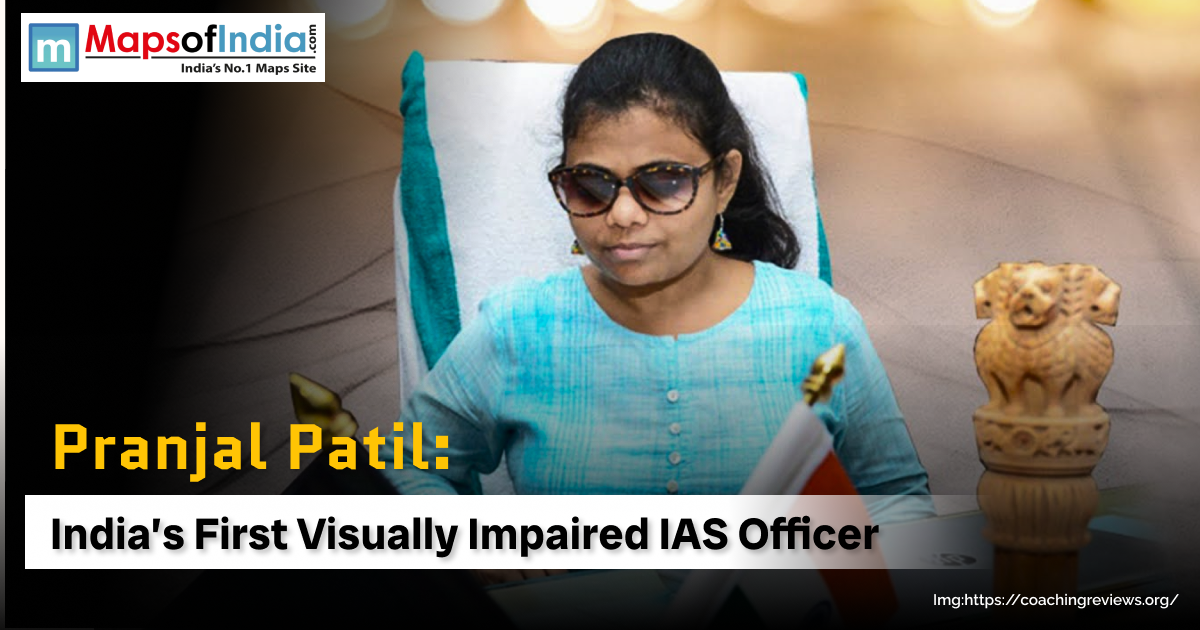
In the middle of India’s government work sits someone redefining what drive looks like. Meet Pranjal Patil – she broke ground as the nation’s first blind IAS officer. From going blind young, she climbed toward power, now running a full district. Hers isn’t just courage – it’s raw persistence in action. Others see limits; she sees paths, turning hurdles into fuel along the way.
Early Life and Background
Pranjal Patil came into the world in Ulhasnagar, close to Mumbai, in Maharashtra. Life started out normal, just like for plenty of kids – until things took a dark turn. When she turned six, an eye issue called retinal detachment left her blind. To many, that might’ve killed hope for everyday goals. Yet her mom and dad made certain she still felt strong, bold, ready for whatever. She was pushed toward normal schools instead of separate ones. That choice built who she became, fueling her courage when tough times came.
Education and Determination
Pranjal went to the Kamla Mehta Dadar School for the Blind in Mumbai, after which she moved on to St Xavier’s College. Right from the start, her sharp mind made her different. She earned a bachelor’s in Political Science, followed by a master’s in International Relations at Jawaharlal Nehru University, Delhi. From there, she wrapped up an MPhil while kicking off her PhD journey. Her years at JNU deepened her curiosity about how governments work. Because of this path, she saw a chance to make a real change across communities.
The Dream of Civil Services
The Indian Administrative Service ranks among the hardest careers around. Long stretches of studying, serious self-control, plus sharp concentration are needed. If you’re blind or partially sighted, things get tougher still. Still, Pranjal didn’t back down. She went ahead and took on the UPSC exam – a major challenge across the nation. She learned through audio tools along with online texts. Thanks to her family’s help as well as her stubborn drive, she passed the test – first one time, then again later – showing how grit can beat even tough setbacks.
Cracking the UPSC Exam
Pranjal passed the UPSC exam back in 2016, landing rank 733 nationwide. Even so, things didn’t go smoothly – she ran into bias when trying to move forward. The Department of Personnel and Training blocked her placement in the Indian Railway Accounts Service because of her eyesight issues. Still, she pushed through instead of backing down. That hurdle? She saw it as motivation, hit the books once more, determined to try again. In 2017, she took the test again – this round, she scored a higher position, landing at 124. Her win could no longer be questioned; right after, she got placed into the Indian Administrative Service.
Training and First Posting
Once picked for the IAS, Pranjal started intense preparation at the academy in Mussoorie named after Lal Bahadur Shastri. That phase included fitness drills, admin practice, and workshops on dealing with people. Even though she had a disability, she took on every challenge without hesitation – and ended up finishing strong. Her initial job role began as an Assistant Collector in Ernakulam, located in Kerala. Later on, she took up the role of Sub Collector in Thiruvananthapuram – this move grabbed attention nationwide because it showed others in India what’s possible.
The Role as an IAS Officer
Pranjal served as an officer with steady dedication and genuine care. People praised her efforts during her time in Thiruvananthapuram. Duties like managing land records, responding to emergencies, or supporting village administration fell on her shoulders. She has become a leader by bringing people together. She also made sure that everyone contributes there at the same time, keeping public well-being a priority. When 2020 came, she became the District Collector in Thoothukudi, Tamil Nadu. People across the nation felt a deep sense of pride. Not only did she join the civil service, but her role shook outdated views linking disability to limits in command.
Challenges and Overcoming Barriers
Pranjal faced many challenges in her journey. She did not get proper learning tools, and she dealt with different biases. At the same time, handling difficult workouts made things rough most days. Still, she pushed through without giving up. Tech became her ally – she picked up apps that spoke written words out loud. On top of that, she trained herself to move around places solo. Her confidence climbed every time she beat a tough situation. The thing that gives her tale weight isn’t just winning even with limitations, but how she flipped the script on what being capable really looks like.
Technology as an Enabler
Technology made a big difference in how Pranav got ahead. To tackle the obstacle of reading disability, she used spoken-word lessons, screen-reading apps, with that handy software that will help her to handle school tests and paperwork. What she does with tech highlights how vital access can be when it comes to learning or landing jobs. On top of that, she pushes officials to fix buildings and services so everyone fits in better. By doing what she does, she proves being able to get in on things isn’t charity – it’s just fair.
Inspiration for Future Generations
Pranjal Patil’s journey still lights a fire in countless hearts. To students who are facing the hardship of disability, she shows them how sheer willpower can help them overcome obstacles. Students from schools and colleges now look up to her and aspire to be like her. She proved that to achieve success, you need to have faith in yourself. By facing many hurdles and becoming successful, she made society rethink assumptions about disability, proving that talent wears many faces.
Breaking Stereotypes About Disability
Over the years, folks with disabilities across India faced few chances. Yet Pranjal changed the usual story. Not only did she push back on the idea that body strength equals success, but she also proved otherwise. When she became an IAS officer, talks grew – on access, belonging, who gets seen. Doing her job well showed that being disabled isn’t holding back – just another path through life. Her story? Proof that real inclusion works when people get the chance.
Conclusion: The Power of Possibility
Pranjal Patil’s path shows how grit can glow even through tough times. Instead of letting limits hold her back, she used them to push forward. Being the first blind civil servant in India, she represents chance, fairness, and boldness. People keep finding fire in her experience – dreaming big, acting harder. Through her steps, the country grasps real strength: any wall breaks if your thoughts aim high.