

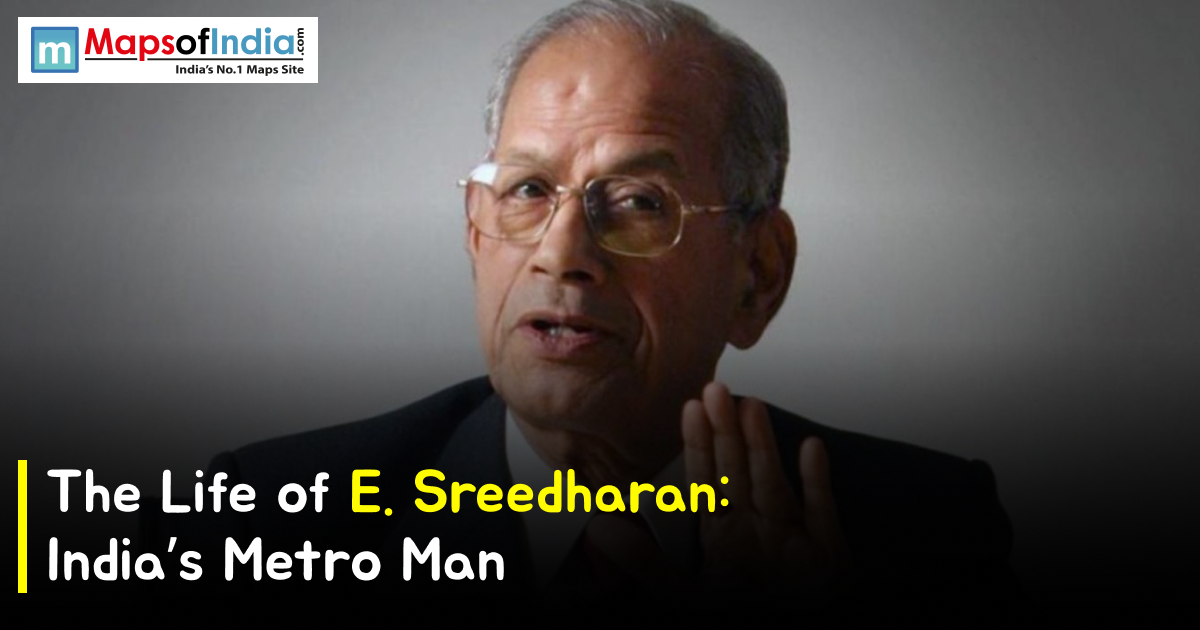
A storm hits hard in 1964. The Pamban Bridge vanishes under its force. Down goes a train full of people, swallowed by waves. Many think it cannot be fixed again. Still, one man steps forward without hesitation. By day forty-six, steel stands where water once ruled. What stands out is how it kicked off something remarkable. From Kerala, E. Sreedharan became known for getting things right. Cities welcome his touch on transport systems. People call him the Metro Man, not just respect, but trust follows too.
Birth and Family Roots
A small village in Kerala’s Palakkad district welcomed him at birth on June 12, 1932. Karukaputhur did not shout; it whispered through his beginnings. Right and wrong were not debated, but lived each day under their roof. Father Neelakantan Moosath fills his days by teaching, a role that gives him direction. Ammaluamma, steady and calm, manages the household without drawing attention. The values held closest grow from traditions handed forward over time. Going beyond what is asked becomes natural in this place.
Education Journey
His first lessons happen nearby. At Chathannur’s Government Lower Primary School, days begin early. From there, a shift takes him to Basel Evangelical Mission Higher Secondary School. Grades rise without much struggle. Learning sticks easily. Civil engineering becomes the next step, starting at Victoria College in Palakkad. The diploma arrives later from the Government Engineering College, Kakinada, today under Jawaharlal Nehru Technological University. With each year, understanding grows deeper.
Joining Indian Railways
Starting fresh with Indian Railways brought results. By 1953, he had passed the Indian Engineering Services test. In the year after that, Southern Railway took him on as a trainee engineer. Tasks in the beginning shaped his skills. Teaching happened for a short stretch at a technical school. Work at Bombay Port Trust added hands-on learning. Upward movement came fast. At just twenty-six, he lands a role as the youngest division head. People guiding him spot something different right away.
The Cyclone Disaster
A fury of a storm hits in December 1964. Across Rameshwaram, winds tear through with brutal force. India’s earliest bridge over water, the Pamban, bears the brunt. Whole sections give way under pressure. One by one, steel frames drop into churning waves below. Trapped on board, people aboard a passenger train vanish beneath foam and dark currents. Links between land snap without warning. Those walking holy paths find their journey cut short.
Pamban Bridge Restoration
Six months was their first guess. Then bosses cut it down to three now. Sreedharan steps in and takes charge without a word. Fishermen who know the sea point to where steel hides underwater. From those depths, crews pull up old beams. Meanwhile, fresh parts begin arriving, shipped in from far corners of the country. Fueled by relentless focus, progress never pauses. Each move forward comes from stubborn commitment. In just under seven weeks, trains will roll again across the span. Recognition arrives in the form of railway honours.
Kolkata Metro Planning
Back in 1970, fresh chances appeared. Not long after, Sreedharan took on the role of deputy chief engineer. Tasked with shaping a first-of-its-kind project, he worked on India’s initial metro rail in Kolkata. At that time, digging tunnels beneath cities was something nobody here had done before. Trouble from walkouts, along with mechanical snags, keeps getting in the way. Even when problems hit, movement forward never fully stops. When strikes shut down others, he stays on site, keeping at it.
Cochin Shipyard Success
After years in Kolkata, his path shifted south by 1975. Cochin Shipyard becomes the next chapter. What he discovers there lacks motion, stuck in stillness. Change begins under his watch, steady at first. Speed follows, where delays once ruled. The launch of MV Rani Padmini arrives early, a sign of a new rhythm. Quiet leadership makes things work again.
Senior Railway Leadership
Climbing higher through the ranks comes naturally. By 1987, he led as General Manager of Western Railway. Two years later, engineering oversight at the national level begins under his direction. Across India, tasks multiply fast. His service officially ended in 1990. Only months later, they bring him back. Key initiatives depend on what he knows.
Konkan Railway Vision
Facing harsh landforms, the journey begins. Along India’s edge runs a coastal ribbon, winding far without pause. Cliffs rise sharply where green gullies sink low beneath them. Waterways slice across thick jungle cover, shaping paths below. Steel rails stretch ahead seven hundred sixty kilometres, carved into wild earth. Building ninety-three tunnels will happen alongside more than a hundred fifty bridges. Experts from Britain said it could never work too hard, they claimed.
Executing Konkan Railway
Starting fresh, Sreedharan takes charge at Konkan Railway as both Chairman and MD. Despite doubts about steep costs and tough terrain, progress begins quietly. Teams form with clear goals instead of empty promises. Ideas shift how problems get solved in rugged landscapes. State rivalries fade when talks move beyond old arguments. Seven years pass before the building finishes. Right on time, also under cost limits. Remote areas are connected by rail lines.
Delhi Metro Leadership
It begins in 1995, when Sreedharan steps into the role of Managing Director at DMRC. Traffic in Delhi has reached the breaking point. A new kind of transport solution takes shape under his direction. Stations open crisp and tidy. Punctuality becomes normal. New tools and systems roll in quietly.
Delhi Metro Achievements
Back in 1998, construction began on Delhi’s underground rail. The first track welcomed passengers in 2002. That entire stage wrapped up in 2006 early, mind you, also below cost estimates. Growth didn’t stall after that. With phase two rolling out, new tracks stretched further. By 2011, rails spanned 190 kilometres. Now, countless riders move through cities each day without hassle.
Post-Retirement Projects
When he steps down in 2011, after sixteen years with DMRC, that’s not the end. Work keeps calling. Kochi Metro brings him on as Principal Advisor. The project finishes in just four years. Water-based transit becomes part of it. Solar panels go up, green walls rise between platforms. Guidance flows to Lucknow. Then, Jaipur gets similar support.
Major Awards
Award after award found its way over the years, both at home and abroad. In 2001, India’s Padma Shri came. By 2008, another Indian honour arrived, this time the Padma Vibhushan, one rung below the highest. Across Europe, France stepped forward in 2005 with the title Knight of the Legion of Honour. Then Japan added its voice through the Order of the Rising Sun.
Lasting National Impact
Biographies capture a legacy that echoes across the country. Books like Karmayogi and India’s Railway Man trace his path. Because of him, city transport evolved in deep ways. Today’s metro systems carry forward how he thought things should be built. Every day, the Delhi Metro moves vast numbers of people. Cleaner air comes from choices made long ago. When public efforts wrap up without delays or overspending, that’s when things stick. His mark lives on through roads, bridges, pipes built to last long after decisions were made.