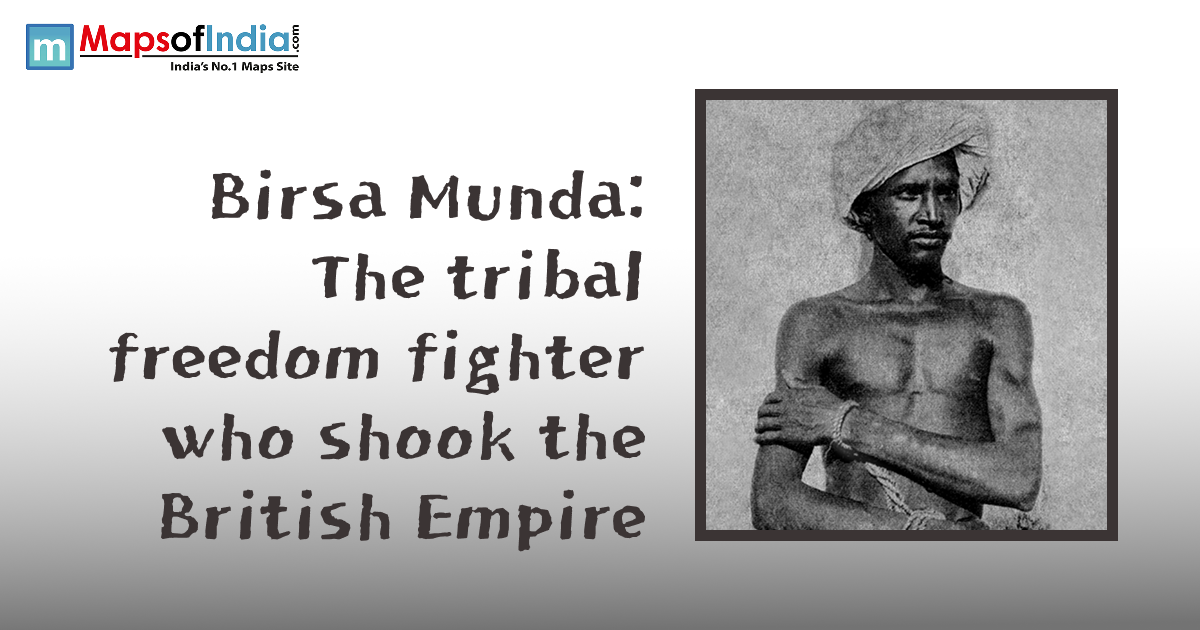
Birsa Munda: The Tribal Freedom Fighter Who Shook the British Empire
Abhishree Sharma December 15, 2025
In the time of British rule in India, a period full of control over both land and people, someone from Jharkhand stood up against imperial power. That man was Birsa Munda. To tribes across Chotanagpur, he wasn’t just a rebel; many saw him as a spiritual guide, a changer of old ways, even a living symbol of defiance. What grew around him - the Ulgulan, often called the Great Rising- shifted how resistance unfolded during India’s fight for independence. Even now, his presence echoes through countless lives.
Early Life and Roots in the Forests of Jharkhand
Birsa Munda was born on November 15, 1875, in a small settlement called Ulihatu, which is now a part of Jharkhand. He belonged to the Munda community. Through his community's teachings, he developed a deep bond with the land. He spent his childhood days in jungles near woods, slopes, and waterways. Things shifted when outsiders like lenders, estate holders, plus church preachers showed up under British rule, slowly breaking apart how things used to work.
The Colonial Impact on Tribal Life
During the colonial period, many land parts that belonged to tribal peoples were taken from them and given to zamindars or landlords. Communal ownership through Khuntkatti was replaced by laws that favoured private property. Tribals who were once free cultivators became tenants and labourers on their own land. The British imposed taxes and introduced outsiders, which eventually led to the social and economic exploitation of Adivasis. The Adivasis were not only subjected to poverty but also to the loss of their cultural identity. It was this very injustice that led rebellion to take root in young Birsas' mind.
Education
Birsas’ folks signed him up at a mission-run school where he first met Christian teachings alongside Western-style learning. They showed him how to read and write, yet the missionaries were pushing hard to shift tribal kids toward their faith. Birsa didn’t buy it; he spotted the trick fast - the new belief system aimed straight at wiping out native practices and beliefs. Once he walked away from classes, he returned home with fire in his heart - to restore honour to his people’s old ways. That moment sparked his rise as both a spiritual figure and a leader.
Rise of a Leader Among His People
By the time he was 20, Birsa had turned into a spiritual leader. He started preaching the crucial points such as unity, self-respect, and faith in the tribal gods. Villagers from the surrounding areas came to hear his preaching. He was against alcohol consumption, superstition, and social divisions. People whom he had converted into followers began to address him as Dharti Aba, i.e. Father of the Earth, a term that made it evident how much they revered him. Birsa motivated his people to get back their land and their identity.
The Birth of the Ulgulan Movement
The Ulgulan, or the Great Tumult, was Birsa's planned revolt against the British administration and landlords who exploited the people. The movement was started in the late 1890s and soon spread over the entire Chotanagpur plateau. The phrase "Abua Raj, Abua Disum," meaning "Our Rule, Our Land," became the people's war cry. The Birsaites, Birsa's followers, were bent on setting up Munda Raj and evicting the British. They had bows, arrows, and axes, and with these traditional weapons, they barged into police stations, government offices, and the houses of zamindars to destroy them.
A Fight for Land and Freedom
Unlike other revolts, Birsa's movement was not merely about politics. It was a matter of taking back land, identity, and dignity. The British had upset tribal land systems, which were the cause of tribal bonded labour. One of the things that the Ulgulan fought for was the return of the village as the unit of community ownership. Birsa motivated people to stop accepting the forced labour that was imposed upon them, to discontinue the payment of taxes, and to refuse working for landlords. His statement was straightforward, back to where you came from and lived freely.
Confrontation with the British Forces
The British administration was alarmed by the increasing power of the movement. They thought that Birsa was the main reason that they were going to lose their grip over the region. In 1899, the British reacted to the situation by launching a large-scale repression operation. Incidents of fighting broke out between Birsa's followers and British soldiers. The tribals, though brave, had very few weapons and were no match for the heavily armed British soldiers. A lot of the rebels were killed, and villages were set on fire. For several months, Birsa was able to dodge the authorities, as he kept moving through the forests and coordinating the uprising. However, in 1900, he was arrested in the Jamkopai forest near Chakradharpur.
Imprisonment and Death
Birsa ended up in Ranchi Central Jail after they caught him. At just 25, he passed away on June 9, 1900. No one really knows what caused his death. While British authorities said it was cholera, those who backed him believed poison killed him. His death left the tribe heartbroken, yet his legacy kept moving forward. Birsa became a symbol not just remembered, but lived through courage and sacrifice for others.
Representation in Art and Culture
Birsas' story shows up in tunes, dramas, or tribal dances across nearly every corner of India. Tribes use rhythm and movement to share their journey anew each time. Various movies and novels took inspiration from his experiences, making his name reach beyond India. Through these creative expressions, his message is being spread today also.
The Enduring Symbol of Resistance
The name Birsa Munda continues to stand for resistance to injustice. Yet his courage showed how silent voices might challenge strong rulers. For many tribal people, he’s more than history - he’s a soul leader. Because of this, demands for freedom and respect live on through today's fights across India.
Conclusion: The Eternal Flame of Freedom
Birsa Munda's life was short, but his effect was enormous. At his 25, he changed the history of India's tribes. His revolt was more than just about land or power. It was about the recovery of the right to live with honour. Today, his spirit is a powerful reminder that real freedom starts when people come up for justice. Birsa Munda was probably the son of the forests of Jharkhand, but his voice was like an earthquake that shook the empire and still inspires the nation.