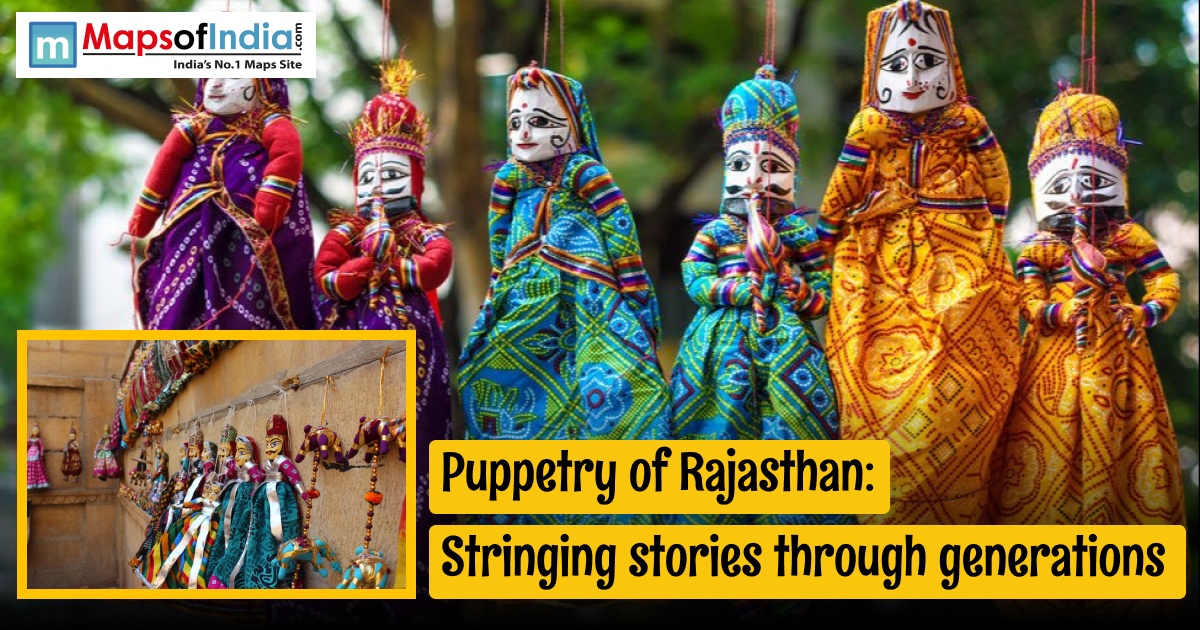
Colourful wooden puppets are dancing to the traditional music in the deserts of Rajasthan beneath the red sun. Kathputli, the puppet theatre of the Indian state, is the oldest recorded fable with the state of Rajasthan for several hundred years; Besides entertainment, it stands as a living tradition that preserves in its new performative formats the very same core-stories, characters, values, faiths, bonds, and metaphors of the last millennia. The puppetry of Rajasthan is not only a glimpse of the past, but also a reflection of the present as it merges the elements of the ancient art with the modern craft and oral literature.
The Origins of Kathputli
The name Kathputli is made up of two Hindi words - Kath, meaning wood and Putli, meaning doll. It was the first puppet show in the world and has been the topic of discussion for more than a thousand years. According to historians, the Bhats of Rajasthan were the first to create the Kathputli. The Bhats were originally the researchers and narrators of the past. They didn't stay in one place but went from one village to another telling stories of the powerful kings, gods, and heroes. To captivate their audience, they came up with the idea of puppets.
A Folk Art with Royal Ties
The puppetry was most prominent in the courts of Rajasthan, where it was highly influential as a medium of communication. Festivals and ceremonies were made livelier with the inclusion of puppet shows, and thus, the kings and landlords used to invite artists for these occasions. The entertainment of the upper class was the single-winged purpose of the puppet plays, but also, through them, extolled amongst the villagers the social and moral values. In the course of events, the servants of the storytellers took the lead in narrating the history and the myths as well as the fancies of the royal world.
Crafting the Puppets of Rajasthan
It is worth noting that the making process of one Kathputli puppet is quite an artistic work. Each puppet is made from scratch with the help of neighbourhood materials. The main part of the body, the wooden part, is carved out of the wood, and the face is painted in a fresh colour. Most of the time, the puppets are worked on with beads, mirrors, and sequins to give a beautiful look to them. One puppet is approximately 1.5 feet tall and has strings that are connected to the head, hands, and the back.
Music and Voice Behind the Strings
Music is one of the must-haves for a puppet drama. Long-established instruments like the dholak, sarangi, and morchang are used to keep the beat. The puppeteer will sing the folk song or will tell the story in a rhythmic way. The conversation is realized in the local dialect, thus the play is more genuine. Frequently, a puppeteer who is handling several puppets is also the singer as well as the narrator of the tale. Such multitasking skills require big talent and many years of practice.
Symbolism and Cultural Meaning
The performances of Kathputli are not just done for fun. They have a very deep cultural meaning. The strings of the puppets that operate them are usually taken as a metaphor for fate. The one who leads the puppet is the unseen force that is in control of people's lives. Quite a few shows make it their business to subtly touch on human behaviour, moral values, and social changes. Through satire and humour, puppetry becomes a way to express wisdom that is both ancient and relevant.
Regional Variations Across Rajasthan
The core of puppet theatre is the same, but the stylings differ from one place to another. Puppets in Jaipur and Jodhpur are decorated with heavy and bright colours and generally represent the characters of the royal family. In fact, the source of Udaipur's puppet themes is mainly from mythology. The puppeteers in Barmer and Jaisalmer use colourful material and happy faces to depict characters of their folktales. These changes in the art of puppetry are the differences in the lifestyle and traditions of the people, thus bringing each to have a unique underlying taste of the respective region.
Kathputli Colonies and the Life of Puppeteers
In the present time, numerous puppeteers' households can be found residing in the Kathputli Colonies situated largely in Jaipur and Delhi. These areas accommodate artists of old times who still do the performance at festivals, fairs, and cultural events. However, life is not easy here as the popularity of modern entertainment has led to a decline in audiences. Nevertheless, these groups are still very much aware of their origins. The zeal of these people is what makes the tradition prevailing, though it is met with changing times.
Government and Cultural Support
Appreciating the value of puppetry, the Government of India and various cultural organisations have taken the initiative of launching programs that provide the needed assistance to folk artists. The Rajasthan International Folk Festival and the Shilpgram Utsav are two such events where puppet shows are presented to an expanded viewership. These kinds of movements offer financial aid, mentor training, and get-togethers for the village artists.
Puppetry in Contemporary Media
The use of puppetry by modern artists and filmmakers as a tool to communicate their ideas is being rediscovered slowly. Along with the new stories, documentaries, short films, and stage shows are blending the use of traditional puppets. As the puppets are used in addressing social or environmental dependencies, artists make the craft, which is very old, still relevant in the current world. This combination of the old with the new is one way to bring in younger viewers while at the same time acknowledging the conventional ways.
Why Puppetry Still Matters
Where almost everything is done by way of screens and in a fast manner, puppetry is still able to offer something that cannot be found anywhere else. It is a way to bind people through a performance that is live performance, music, and the experience shared. Every play is a reminder to the spectators that storytelling does not have to be done through words only, but also through feeling, movement, and imagination. The lovely charm of a puppet that has been made by hand is a reminder of the simplicity and coziness of the folk traditions that have contributed to the making of the cultural Indian soul.
The Future of Kathputli
The question of how long the traditional puppetry of Rajasthan will be around depends on both preservation and innovation. The puppetry can be in good health if young artists are encouraged, given the right wages, and puppetry is integrated into the educational system. Another way technology can be of help is to record the shows and share them with people via digital archives. The partnership of artists, institutions, and the tourism industry is one way to guarantee that Kathputli doesn't stop changing but keeps evolving while being faithful to its origins.