




Introduction
On the edge of the Sutlej River lies Rupnagar, once called Ropar, a place where old stones whisper stories but traffic hums through busy lanes. Beneath farmland soil, clues from 4,000 years ago show people lived here when cities were just beginning elsewhere. Digging deep turned up remnants of streets, homes, pottery - signs life thrived long before today's towns formed. Instead of only farming tales, there are sacred trails too - the footsteps of Guru Nanak still echo near Gurdwara Bhatta Sahib. Not far off stands Tibbi Sahib, perched quietly on raised ground, holding silence like a memory. Between fields sown wide grow crops, yes, but also songs sung during harvest under open sky. Birds arrive each winter at Ropar Wetland, wings skimming shallow water, turning marshes into living maps of movement. Schools have opened doors beside factories sending smoke into daylight hours.
Stone tools rest in museums while motorbikes race down nearby roads without slowing. What was dug out of earth now shapes what rises toward air - one moment slow, the next rushing forward. Music travels through generations, carried by voices rather than textbooks. Meals unfold slowly, each flavor rooted in soil and season. History does not sleep under glass; it moves, changes, adapts alongside people. Ruins whisper stories while rivers hum beside them. Temples hold silence, yet speak volumes after sunset. Every path leads somewhere old, yet somehow new. Life grows around ancient stones like vines on walls.
History
Rupnagar is one of the oldest towns in Punjab. The city is said to be founded by Raja called Rokeshar who ruled the region during the 11th century and he named the city after his son Rup Sen. Recent excavations from the archaeological survey of India revealed that the city is as old as the Indus valley civilization and was a well developed town during this. In history. During the proto-historical Punjab Rupnagar is the only excavation site which can claim the status of a city. Recent excavations from the area reveal Earthen bares, statues, coins which go back to the Harappan civilization crossing the Sutlej river. Archeologists say that these things belong to the Chandragupta, Kushan, Hoon and the Mughal period. One of the rare findings from the area is a seal of marble on which there are three letters engraved in the sindhi script showing that language developed much earlier in the region. Another is a statue of a woman who is shown dressing her hair . All of this shows that the people living in this town around 4000 years ago were fully civilized and well cultured. Archaeologists and historians say that the first man descended from the mountain in the north to the plains and settled at Ropar. Hari Singh Rais of Sialba conquered Ropar in 1763 AD and established his state at that time. Later his son Charat Singh made Ropar as the capital of the state. It came under the rule of sikh chief Hari Singh after the fall of Sirhinf in 1763. The most famous ruler from the reign was Raja Bhup Singh who fought in the Anglo Sikh war. The British won and they confiscated the state of Raja Bhup Singh.
The war of Guru Gobind Singh with the Mughal tyranny is a major point in the history of Roper district. It is in this district at sarsa Nangal that he parted with the family and went to Chamkaur Sahib. Kiratpur Sahib is another important town in this district which was established by the 6th Guru Sri Guru Har Gobind Singh after buying the land from Raja Tara Chand of Kehloor. This place has a great significance for all the Sikhs and is visited annually by many people. At Gurudwara Patalpuri Sahib sikhs from all around come to immerse the ashes after death. After the Anglo Sikh war in the mid 19th century when Ropar (present day Rupnagar) was confiscated by the British it became a part of the British Empire and underwent significant changes. The city was made to integrate with Ambala district as a tehsil and during the British rule we see the establishment of a structured administrative system including revenue collection and law enforcement in Rupnagar. Infrastructure development including roads and highways and bridges to improve the connectivity and military movement in the region was the major initiative of the Britishers in the region. Since Rupnagar was near to the Sutlej river the British made it a key transit point and introduced irrigation projects to boost agricultural productivity of the region.
Culture
Rooted in time, Rupnagar's culture draws from old civilizations, farming ways, religious depth, alongside present-day shifts. From beneath the soil at Ropar, fragments of the Indus Valley rise - silent proof of beginnings long before now. Spiritual life flows through Sikh teachings, carried forward in places such as Bhatta Sahib, where quiet devotion meets shared duty. Tibbi Sahib stands apart, not by size but presence, holding stories of sacrifice and unity close. Faith moves visibly during Gurpurabs, when streets fill with song, prayer echoes under open skies, meals serve all without distinction. Baisakhi arrives each year - not only as harvest joy but renewal of identity, stitched into dance, rhythm, and gathered voices. Hola Mohalla strengthens bonds differently: through display of skill, endurance, collective resolve shown beyond words.
Rooted in fields, Rupnagar's way of life grows from soil. Beside the Sutlej, wide stretches of land feed families whose days follow seasons. Songs rise at dawn, carried by voices shaped through years of harvests and rain. Threads weave stories too - in cloth stitched by hand, patterns handed forward without words. Clothes worn today repeat designs once seen on grandmothers’ backs. Craftsmen shape objects still used daily, their methods unchanged over decades. Culture lives here not in museums, but between rows of crops and fingers at work.
Floating through winter skies, flocks settle at Ropar Wetland, their presence quietly woven into stories told across generations. Far beyond mere habitat value, these waters mark rhythms observed in village gatherings and quiet rituals alike. Emerging beside fields once tilled by hand, newer neighborhoods host schools and factories that shift how habits form and fade. Old patterns do not vanish here - they reshape slowly under different daylight. What remains clear is that land and life continue adjusting without announcement.
Language
Rupnagar - often called Ropar has a rich linguistic diversity. Punjabi is the mother tongue of people here. It functions both officially and culturally within the region. Communication flows through Punjabi at home, in classrooms, administrative buildings, while interactions unfold in markets and community events. Gurmukhi letters form its written shape, linking present speech to centuries-old spiritual writings, village stories, poetic recitations passed down generations. Identity weaves into expression here; seasonal celebrations like Baisakhi or Lohri pulse with native lyrics, movement rooted deeply in local custom. Elsewhere in towns, especially near commercial hubs or transit points, voices often shift toward Hindi, familiar due to work patterns or family movements across regions.
Often serving as a bridge for travelers from different regions, communication gains strength through popular media such as Bollywood productions. Despite limited presence in daily talk, English holds steady importance within schools, government offices, and career environments. At places like IIT Ropar, usage leans heavily on English; meanwhile, youth frequently mix it into Punjabi chats, showing shifts in how speech evolves. In this setting, multiple tongues interact closely - Punjabi stays central to identity here, whereas Hindi and English stretch beyond local boundaries. Rooted traditions stand clear, yet external inputs flow smoothly, shaping a place where voices differ but connect naturally.
Geography
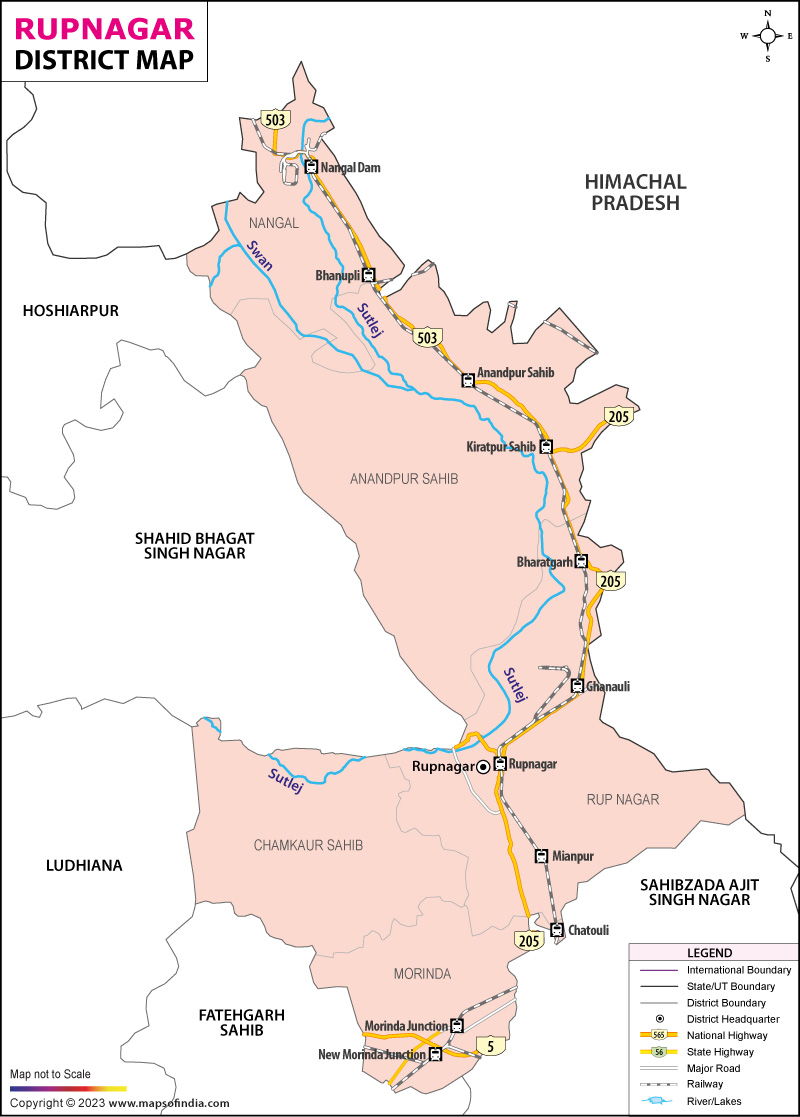
Known locally as Ropar, Rupnagar forms part of Punjab’s rural stretch where flat farmlands meet gentle slopes rising toward the Shivalik range. Among ancient traces lies Rupnagar, once part of the Indus Valley network - an early sign of human life long found footing here due to location. Water from the river fed communities in past times - it also drew exchange of goods and ideas over generations. At present, terrain guides planning alongside progress in visible ways. Institutions such as IIT Ropar now stand within reach of old floodplains, pointing toward shifts in regional purpose. Alongside them, the Satluj flows through systems built to draw energy and water supply steadily into farmlands. Despite growth near administrative centers, open landscapes endure. Fertile fields meet flowing rivers here, with marshes bordering gentle slopes. This mix supports farming life while sheltering varied natural habitats. Ancient traces linger beneath evolving infrastructure patterns. Progress moves alongside tradition without replacing it.
Summer heat builds slowly here; then rain arrives midyear, soaking the earth deeply before cooler air spreads across the district during winter months. Rich deposits left behind by ancient floods have made the land ideal for growing key staples such as wheat, paddy, and corn, mirroring patterns seen throughout Punjab's countryside. Fields across the lowlands undergo continuous farming; meanwhile, livestock roam the Shivalik slopes where trees are managed sustainably - this contrast shapes how soil serves people.
| Facts of Rupnagar District | |
|---|---|
| State | Punjab |
| District | Rupnagar |
| District HQ | Rupnagar |
| Population (2011) | 684627 |
| Growth | 0.00% |
| Sex Ratio | 915 |
| Literacy | 82.19 |
| Area (km2) | 1400 |
| Density (/km2) | 488 |
| Tehsils | Anandpur Sahib, Chamkaur Sahib, Nangal, Rupnagar |
| Lok Sabha Constituencies | Anadpur Sahib |
| Assembly Constituencies | Anadpur Sahib, Rupnagar, Chamkaur Sahib (SC) |
| Languages | Punjabi including Pwadhi, English, Hindi |
| Rivers | Sutlej |
| Food | Sarson da Saag, Makki di Roti, Butter Chicken, Chole Bhature, Lassi |
| Lat-Long | 31.147006,76.501722 |
| Travel Destinations | Gurdwara Shri Keshgarh Sahib, Gurdwara Patalpuri Sahib, Gurdwara Charan Kamal, Gurdwara Shish Mahal, Gurdwara Sri Takhat Sahib, Gurdwara Harmandir Sahib, Gurdwara Manji Sahib, Gurdwara Babaan Garh, Gurdwara Baba Gurditta, Gurudwara Bhatha Sahib, Gurudwara Tibbi Sahib, War Memorial Ranjit Singh Bagh, Bhakra Dam, Virasat-e-Khalsa, Nangal Lake, Gurudwara Damdama Sahib, Gurudwara Shahid Ganj Sahib, ASI Museum, Sri Naina Devi Ji Temple etc. |
| Government Colleges/Universities | Government College (Ropar), Bela College of Pharmacy, Government Nursing College, DAV College, Ropar Institute of Management And Technology, Bk Institute of Nursing, Rayat Polytechnic etc. |
FAQs
Q1: Which are the top tourist spots in Rupnagar?
Some of the most loved places in the city are Gurdwara Shri Keshgarh Sahib, Gurdwara Patalpuri Sahib, Gurdwara Charan Kamal, Gurudwara Shish Mahal, Gurdwara Sri Takhat Sahib, Gurdwara Harmandir Sahib, War Memorial Ranjit Singh Bagh, Bhakra Dam, Virasat-e-Khalsa, Nangal Lake, Gurudwara Damdama Sahib, Gurudwara Shahid Ganj Sahib, ASI Museum, and Sri Naina Devi Ji Temple.
Q2: Rupnagar has which type of climate?
Rupnagar district sees little rain outside the south-west monsoon period. Summers bring high temperatures, while winter months are marked by low ones. Four distinct periods shape the yearly cycle - cold weather lasts from November through February. March onward ushers in rising heat, continuing until June. Late June marks the start of the south-west monsoon, lasting until mid-September. A shift follows, stretching from mid-September into mid-November, easing between wet and dry phases.
Q3: Which are the major Archaeological findings at Rupnagar?
A marble seal from Rupnagar stands out - three Sindhi characters carved into its surface suggest linguistic growth began sooner than expected here. Shown adjusting her hairstyle, a female figure appears in another artifact discovered at the site.
Last Updated on : May 08, 2026
