






About
Panj which means five, and ab which means water. The name refers to the five rivers that once ran through historic Punjab.
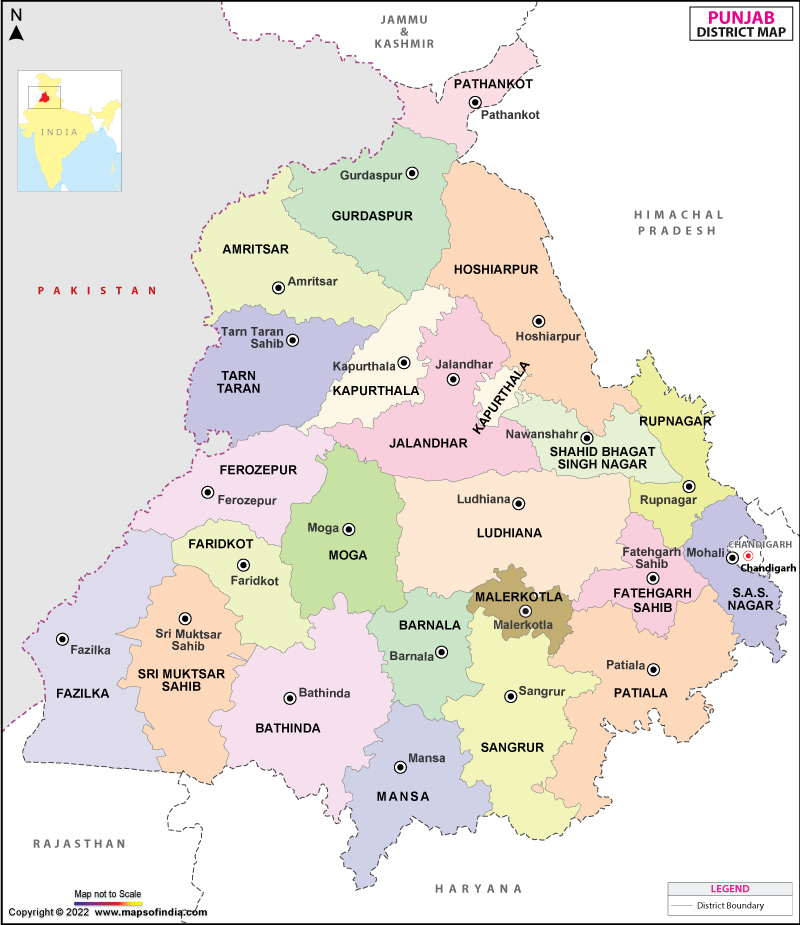
Punjab is bordered by Himachal Pradesh, Haryana, Rajasthan and the Union Territory of Jammu and Kashmir. Pakistan is to the west of it. Chandigarh is the capital for Punjab and Haryana which though is a Union Territory and does not a part of either state.
Punjab has a very old past in terms of trade, farming, religious movements and freedom struggles. Presently it is balanced between its past traditions and modern education, industry, transport and business. While agriculture still is the base of the state’s economy, in terms of trade, manufacture and services cities like Ludhiana, Jalandhar, Amritsar and Mohali are doing very well.
History and Culture
Punjab has a vast historical background of over 5000 years. It was a part of the Indus Valley Civilization which is one of the world’s oldest urban civilizations. In and out of the greater Punjab area you can see archaeological sites which tell us of early communities, farming, trade and town life.
Over the years various rulers and empires have had control of parts of Punjab. You can see the Achaemenid Persians, Greeks, Mauryas, Kushans, Delhi Sultanate and Mughals at one point or another. The region’s location between Central Asia and northern India made it a passage for trade and military campaigns.
Sikhism started in Punjab at the end of the 15th century with the messages of Guru Nanak Dev Ji. In the early 1800s Maharaja Ranjit Singh founded the Sikh Empire which had its capital in Lahore. He ruled over the Punjab region which at the time was put under one administration. Upon his death the British took over the Sikh Empire which played out in the Anglo-Sikh Wars.
Punjab was at the fore in the Indian freedom struggle. In a very tragic incident of British rule which took place on 13 April 1919 British forces opened fire into a crowd at Jallianwala Bagh in Amritsar. The massacre which left many dead and wounded became a large scale turning point in the struggle against the foreign rule.
In 1947 the Partition of India took place which saw the historic Punjab region split between India and Pakistan. Many people crossed the new border at that time and many families lost their homes and relatives in the violence. What is today known as East Punjab is part of India and West Punjab is in Pakistan.
Lohri is a very popular celebration in the winter time. People come together by the bonfires, they sing folk songs and enjoy foods like peanuts, popcorn and sweets which include jaggery. Also many families tie the knots of marriage and celebrate a new birth with traditional songs and gatherings.
Bhangra and Giddha are in fact two famous Punjabi folk dances. Bhangra puts in play very energetic movements to the beat of the dhol which is a traditional drum. Giddha is a performance which mainly women take part in as they sing folk verses called boliyan which they also say while dancing.
In Punjab it is a tradition for people to welcome guests in and share food. Also at Gurdwaras you will find langar which is a free community meal that is open to all, no matter what your religion, caste or background is. This practice is a display of Sikh values of equality and service.
Economy
Punjab’s economy is a mix of agriculture, manufacturing, trade, public services and other business segments. The fertile soil, irrigation canals and tube wells they have in the state support large scale agriculture in many areas. While agriculture still is a key sector, they also have growth in industries and services which in turn provide employment and income.
Government Sector
In Punjab the government is a key player in the economy. State governments’ departments which include education, health care, agriculture, transport, public safety and rural development report. Government run schools, colleges, hospitals and offices are present across the state.
The Punjab government has put in place a number of agricultural schemes which also include irrigation projects and rural roads as well as village development programs. These programs benefit people from urban and rural areas. Also they have a network of agricultural universities and research centers which they use to better farming practices and also to pass on to the farmers what they have learned regarding crop care.
Government has roles in admin, police, education, health and also in public services. At the local level you can see that municipal councils and village panchayats play out very important functions which include sanitation, road repair within the local area, water supply and public infrastructure.
Public Sector
Public sector entities support Punjab’s transport, power supply, farming and industrial development. Government and state run bodies are into sectors like electricity, roads, irrigation and other public services.
Punjab State Power Corporation Limited (PSPCL) which runs the electrical supply and related power services in the state. You can see that reliable electricity is key to homes, factories, shops and farms which include those that use electric pumps for irrigation.
Punjab Roadways along with other public transport options see to it that people travel between cities, towns and villages. Also these services see to it that workers get to the industrial areas, students reach the colleges and visitors get to their tourist destinations.
Public and commercial banks as well as other Government related entities serve the needs of the farmers, small businesses, and families; they get people into having their accounts, enabled to get loans from us and in transfer of money. Also public institutions’ play a role in growth projects’ development and in the roll out of Government programs.
Services Sector
The services sector which includes tourism, education, health care, banking, transport, retail, information technology and telecommunication has seen growth in cities like Chandigarh’s periphery which includes Mohali, Ludhiana, Amritsar, Jalandhar and Patiala.
Education is a job generator for teachers, college staff, researchers and support workers. In Punjab they have universities, engineering colleges, medical schools and professional training institutions. Also students from all over India come to the state for higher education.
Health care is a large component of the services sector. In Punjab you can see government hospitals, private hospitals, clinics, diagnostic centers and pharmacies which health care is made available to the population. In big cities there is a large number of specialist medical facilities.
Tourism in Amritsar which sees the Golden Temple and historical sites as primary draw. Also it is a factor at large for local economy which does include hotels, restaurants, travel companies, taxi services, guide services and local shops. Also we see that religious events and festivals play a role in which local businesses do well.
Tourism
Punjab draws in travellers to its religious sites, historic landmarks, museums, and food festivals. They have cities which are very much alive and also the quiet villages and sites related to India’s history. Also the state is a very popular setting for those who wish to study up on Sikh heritage and Punjabi culture.
The Golden Temple also known as Sri Harmandir Sahib is a primary site of worship for Sikhs all over the world. It has a gilded roof which is in contrast to a holy pool in the middle of the complex. It is a place of pilgrimage for people of all types which comes to pray, meditate and also to have free community meal.
Jallianwala Bagh in Amritsar is a memorial to those that perished and were injured in the 1919 mass killing of April 13. The site is a resource for guests which details a key point in India’s freedom struggle. The grounds and memorial structures present a picture of the crowd which gathered there.
At Amritsar’s border of Attari which is a site of a daily flag lowering ceremony by the Indian and Pakistani border forces. The event is a draw for large audiences which look at the co-ordinated effort and show of patriotism.
Anandpur Sahib is in Rupnagar district which is very important for Sikhs as a pilgrimage site. Here in 1699 Guru Gobind Singh Ji founded the Khalsa. It is a place which draws visitors to see it’s gurdwaras which are full of history and to learn about its role in Sikh history.
The town is a host to large crowds which gather during Hola Mohalla which also sees religious gatherings, martial arts displays and processions. Ludhiana is a large industrial center in Punjab. It is home to textile, hosiery, bicycle and machine manufacturing industries. Also for visitors we have local markets, parks and sites which tell of the region’s farm and industry past.
Patiala has a royal past, traditional clothing and music which it is known for. At Qila Mubarak which is one of the main historical sites you can visit. Also see the gardens, old structures and local markets which sell Punjabi wear, juttis and other typical items.
Demographics
In the 2011 Census of India Punjab reported a population of 27,743,338. The state has a mix of urban and rural communities which include many residents that live in villages and smaller towns. The population figure from the 2011 census is the key official reference for state level demographic data.
Punjabi is the primary language and is used in Gurmukhi script. Hindi and English also play a role in business, administration and public communication. In some regions there are local forms of Punjabi that are very well distinguished.
Sikhi is the main religion in Punjab which is followed by Hinduism. Also in the state are Muslims, Christians, Jains, Buddhists and other religious groups. You can see that religious sites, festivals and community events play a large role in day to day life.
Punjab’s large farming community is a feature. Many families are into crop production, dairy farming, farm equipment, food processing and the business which support agriculture. Also it is true that in the urban and rural areas more people are employed in education, health care, manufacturing, retail, transport and other service sectors.
The State has a large Punjabi community which in turn is present in countries like Canada, the UK, the U.S. and Australia. Also these communities maintain ties with Punjab through family get togethers, cultural programs, business and financial support.
Administration
Punjab is part of the Republic of India. In this country the role of the Governor is that of the constitutional head of the state which is in contrast to the Chief Minister who heads the elected government. Also you can see that the State government runs departments which look after issues related to education, health, agriculture, transport, law and order and local development.
Punjab has a single chamber legislature which the Punjab Legislative Assembly uses to pass state laws and also look into government policies. In Punjab’s case there is a single legislative body which is charged with the introduction and study of laws that affect the state. Also elected Members of the Legislative Assembly which put forward the state's laws put forth by their respective constituencies.
Chandigarh is the capital of Punjab and Haryana. It administers separately as a Union Territory and is the home to both state governments. In Chandigarh which is also the location of the Punjab and Haryana High Court, both states and the Union Territory are served.
For the sake of administration Punjab is divided into districts, subdivisions, tehsils and local bodies. District administrations run public services and also see to the government programs. Municipal corporations and councils take care of urban services and in villages panchayats support the local administration.
Punjab is represented in the Lok Sabha, which is the lower house of India’s Parliament, also by its members in the Rajya Sabha, the upper house. These representatives participate in creation of national laws and bring to the fore issues related to the state. The government provides for the public in terms of schools, hospitals, roads, water supply, farming support and public safety. Also it works with the central government on national programs and development projects.
| Category | Details |
|---|---|
| Official Name | Punjab |
| Capital | Chandigarh |
| Population | 27,743,338 |
| Area | 50,362 km² |
| Religion | Sikhism, Hinduism, Islam, Christianity, Jainism, Buddhism and other faiths |
| Language | Punjabi, Hindi and English |
FAQs
1. What is the capital of Punjab?
Chandigarh is the capital for Punjab. Also it serves as the capital of Haryana and is also a separate Union Territory.
2. What language is spoken in Punjab?
Punjabi which is written in the Gurmoo script is the primary language of Punjab. Also used are Hindi and English.
3. Which religious places are known in Punjab?
In Amritsar is The Golden Temple and in Anandpur Sahib are the gurdwaras which are very important to Sikhs. Also many visitors go to other historic gurdwaras which are in the state.
4. What issues does Punjab face economically?
Punjab is dealing with issues of groundwater depletion, farm income drops, youth unemployment and the push for more jobs out of agriculture. You see in industry, skill development and services a chance for greater employment.
5. Why is Punjab famous?
Punjab is a land of agriculture, home to Sikh tradition and the Golden Temple, Punjabi music, Bhangra, Giddha and we find here a great deal of traditional food. Also the state is a large contributor to India’s wheat and rice production.
Last Updated on: November 12, 2026
