

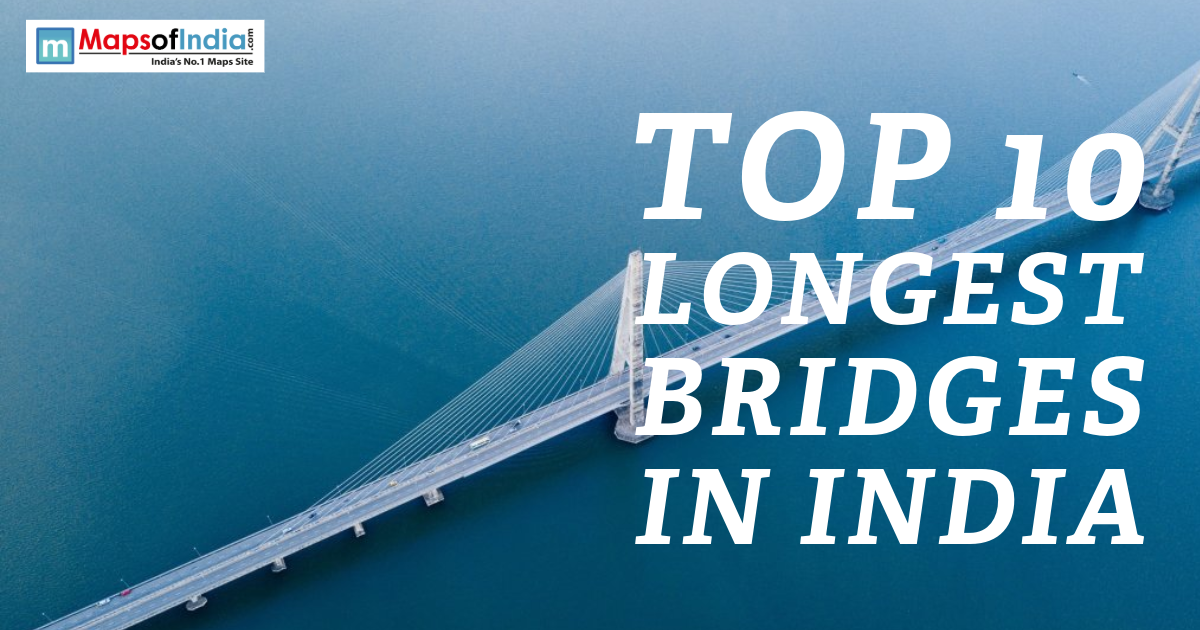
Once in India, there were only difficult crossings, but now towers and structures tower over the landscape. New paths are now hard and straight above deep riverbeds. Spans are now built one after the other on the waterways in the east, longer than the previous ones. Floating ribbons connect faraway shores over the open sea along the coasts. These constructions have removed the old detours from travel and made the journey slower these days. On the mountainside, roads cling to heights, and bridges leap gaps without hesitation. They are not just crossing points for vehicles to go into remote areas. Constructors experienced extremely difficult conditions but succeeded in what didn’t look possible decades ago.
Bhupen Hazarika Setu Dhola Sadiya, Assam
Built above the Lohit River, the Bhupen Hazarika Setu is 9.15 kilometres in length from the Dhola in Assam to Sadiya in Arunachal Pradesh. It is also called the Dhola-Sadiya Bridge in the Tinsukia district. It was opened for road transport in the year 2017 and has made way for cars safely, even during wet weather conditions. Travelling to these north-eastern corners was a long trouble earlier. Passage was a matter of the weather; a steady fixed route exists now, whatever the weather. Cars are the only means of transportation from Dibrugarh, which is approximately 80 km away. It was an extremely long, thin connection miles away from here several decades ago.
Kacchi Dargah Bidupur Bridge, Bihar
A long expanse of concrete skims the air above the Ganga near Patna. It measures about 9.76 kilometres and connects Hajipur with the south bank of Patna. In the past, transportation across the river was accomplished by ferry, but now that is done in mere minutes by car. There are no detours or delays between north Bihar and south Bihar. Roads converge and flow into it from the edge of the capital. Travel moves more quickly here, moving without any real awareness of it, changing the dynamics of the regions as they connect. It is broad and connects together communities in which cars used to lumber in circles. This is a building that stands in the midst of urban planning. Not only steel and concrete, but a trail that’s formed by modern engineering thinking. It’s now smoother, running over the forceful Ganga.
Mahatma Gandhi Setu, Bihar
The Mahatma Gandhi Setu starts from Patna and goes to Hajipur in Bihar through the Ganga. It was opened some decades ago in 1982, but its function hasn’t weakened over the years. It is 5.75 kilometres long and was once India’s longest bridge. In the present-day, movement in this part is still very much dependent on the structure. From the centre of Patna, travelling to the location is easy. It still takes more than just vehicles after all these years. The bridge has been standing since the 70s and is a landmark for the development of the city after the independence movement. Not only is this steel and concrete, but decades of movement pass underneath its frame.
Bandra Worli Sea Link, Maharashtra
The Bandra-Worli Sea Link is a long bridge that spans the waters in Mumbai. Stretching six kilometres, it joins the westside suburb of Bandra with Worli down south. This route opened in 2009, and now takes significantly less time than it did originally. A bridge crosses over the Arabian Sea with vehicles driving on it. A bridge stretches over the Arabian Sea, with cars driving on it. Its lanes, blue waves, open sky, all dotted with views. It is connected and still the backbone of the city. The structure is designed to be visually striking and a representation of modern life in Mumbai. Not only steel and concrete, but also a turning point for the way people get around the city and travel in new ways that many didn’t imagine.
Bogibeel Bridge, Assam
Bogibeel Bridge is a bridge that connects Dhemaji and Dibrugarh in Assam across the Brahmaputra River. This is the longest railway train signal and road spanning bridge in India, measuring 4.94 kilometres. It was opened in 2018 to traffic and has changed the topography of access in the Upper Assam and bolstered military preparedness near the frontiers. It is accessed by road from Dibrugarh. This was a stealth upgrade to transport for locals and troops in the northeastern section and performed its task quietly.
Vikramshila Setu, Bihar
Vikramshila Setu is situated over the Ganga River at Bhagalpur. It is four point seven kilometres long and extends from Naugachia to Bhagalpur, and the adjoining areas in the north. It was opened in the year 2001; its name is derived from an ancient learning centre, Vikramshila University. It is easy to reach the structure from Bhagalpur town. The exchange of goods and travellers is now easier within the region. Respecting old paths but not retarding the current traffic flow, like an old path that has been rebuilt for the current traffic.
Vembanad Rail Bridge, Kerala
Vembanad Rail Bridge, the one that is stretched near Kochi, extends over water that sprawls in Kerala. It is long but stealthy in its ability to connect two locations, without fanfare, in India. Here, the views develop gradually over the lake and sky and are achieved with mangroves and light. It is traversed by trains, which run between Ernakulam and Kottayam like normal breaths. Not for show, but most sighted on horseback as it passes by the reeds and shores of the village. A string of steel above wetlands, which was doing its job under the clouds.
Godavari Arch Bridge, Andhra Pradesh
The Godavari Arch Bridge is situated over the Godavari River in Andhra Pradesh and is located across the broad waters of the river. It is one of the longest arch-shaped crossings in Indian Railways. The sharp edges are lured into the sweeping curves and reveal glimpses of calm water, surrounded by steel and sky. It’s easily accessible by nearby roads from the town. A metal ribbon that hangs over the course of nature, rising like a slow breath between the banks.
Munger Ganga Bridge, Bihar
There is a long bridge across the Ganga River south of Munger. It connects two parts of Bihar, once separated by water, and was constructed where the tracks of both railways and roads meet. Since the opening, travel is quicker, and the distance is shorter between places. The way to get there is to take regular routes out of Munger. It’s not only steel and concrete, but it was a silent game-changer when it began providing connectivity over the river.