Different regiments of the Indian Armed Forces, contingents of several Indian para-military forces and other civil forces, take part in the parade.

The cadets and regiments are known for their unison walk during the Republic Day parade. They practice extensively to coordinate their movements and take care of all the details to make the parade look magnificent for the viewers.

Camel mounted soldiers are also a part of the 26 January parade. The Republic Day celebration is a moment of pride for every Indian citizen.

The military might of the country is also displayed during the Republic Day celebrations.

Latest weaponry of the Indian army such as missiles and tanks are also showcased in the celebration of 26 January.
On January 26, a great celebration begins, with splendid parades featuring regiments from the Indian Army, Navy, Air Force, police, and paramilitary forces. These spectacular exhibitions take place on Kartavya Path (previously Rajpath) in Delhi. The event not only showcases India's impressive military capabilities, with cutting-edge missiles, aircraft, and weapon systems, but it also includes thrilling Air Force sky shows and mesmerizing visuals representing each state. The venue has a seating capacity of 77,000, with 42,000 seats reserved for the general public.
What is the importance of India's Republic Day?
Republic Day commemorates the establishment of India as an independent, secular, and democratic republic. The Constitution of India became the governing instrument of India on January 26, 1950, replacing the Government of India Act of 1935.
The day is especially significant because, on January 26, 1930, the Indian National Congress proclaimed the Declaration of Indian Independence (Purna Swaraj). Additionally, On this date in 1965, Hindi was proclaimed as the nation's official language.
How to Purchase Republic Day 2024 Parade Tickets Instantly?
Every year, Indians look forward to participating in the Republic Day events. People must purchase tickets to see the spectacular Republic Day procession.
Online ticket sales for the Republic Day Parade 2024 began on January 10, 2024 and will run through January 25, 2024.
The processes to buy Republic Day tickets online in 2024 are as follows:
- Visit the official Ministry of Defence website.
- Sign in or register with your name, email, mobile number, and date of birth. Verify identity with an OTP on your registered mobile.
- Choose the event: FDR Republic Day Parade, Republic Day Parade, or Beating the Retreat.
- Enter attendee details: name, address, age, gender, and a photo ID (driving license, passport, voter ID, PAN card, or Aadhaar card).
- Select ticket category (up to four per transaction): ₹500 for reserved seats, ₹100 for unreserved seats, ₹20 for restricted-view unreserved seats.
- Complete the transaction using wallet, debit/credit card, online banking, or UPI.
- Receive a confirmation email and SMS with booking details and a QR code upon successful payment.
- Download and print your e-ticket. Bring it and the original photo ID for entry. Scan the QR code at the gate.
How is Republic Day observed around the country?
Apart from the main festivities in the capital, Republic Day is observed at many levels throughout the country, including municipalities, districts, panchayats, colleges, and workplaces.
- People in Mumbai attend the Republic Day Parade in Shivaji Park in Central Mumbai.
- People in Bangalore commemorate Republic Day at the Field Marshal Manekshaw Parade Field, where a parade and cultural fair are held.
- People gather in Kolkata to watch the Republic Day procession, which takes place all along Red Road towards the Maidan.
- Republic Day celebrations in Chennai are held at Marina Bay and Kamaraj Salai.
Who is going to be the Chief Guest at the event?
-
French President Emmanuel Macron has been invited to attend this year's Republic Day ceremonies as chief guest. On January 26th, President Macron will attend the Republic Day Parade as the Chief Guest, followed by the 'At Home' Reception held by the President of India at Rashtrapati Bhavan.
The theme for the Republic Day 2024 parade is 'Viksit Bharat' and 'Bharat - Loktantra ki Matruka', emphasizing India's dedication to democracy. The parade will begin at 10:30 a.m. on Friday, January 26, at Kartavya Path in New Delhi and is expected to continue approximately 90 minutes.
Blogs about Republic Day

Writing a Great Republic Day Speech : Looking to write a terrific Republic Day speech this 26th January? Every nation has its own way of celebrating its freedom and independence. India too has its own way of celebrating both. Being a diverse country it took 3 years for India to make its own constitution. Finally, it was in 1950 that India got its own constitution. Since then, Republic Day is celebrated on 26 January every year. Being a national holiday of India,…
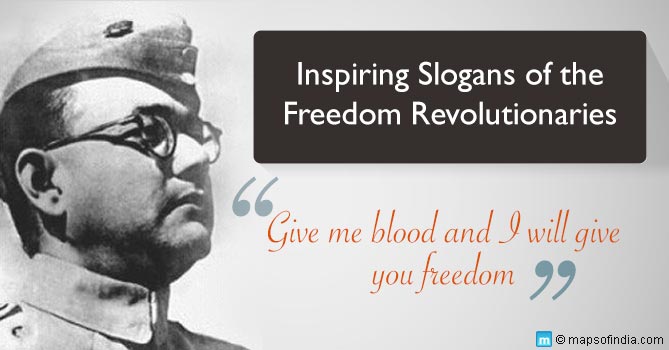
11 Famous Slogans of Indian Freedom Fighters : Starting with the revolt of 1857, the journey for India’s freedom was scrupulous, and also a long one. After fighting for over a century (1857-1947) we, Indians, got our freedom back. How can we forget the Jallianwala Bagh massacre in which thousands of innocent Indians were killed? Hundreds of fearless fighters sacrificed their blood and soul for the attainment of independence. It has been 74 years since India got Independence, and yet, the powerful words…
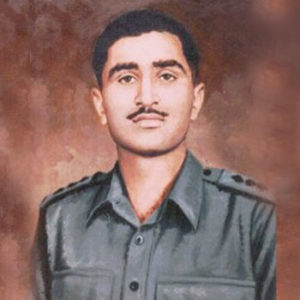
India’s Heroes | List of 21 Param Vir Chakra (PVC) Medal Awardees : The best day to remember, pay homage, and celebrate the best and bravest soldiers independent India has produced is on the 26th of January, India’s Republic Day. India may not be celebrating this day every year, were it not for the supreme bravery shown by the 21 recipients of the Param Vir Chakra (PVC) Medal, India’s highest recognition of the bravest acts on the battlefield. Here is the complete list of 21 awardees who earned…
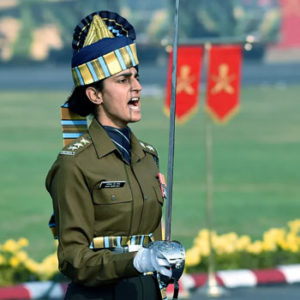
Follow Captain Tania Shergill & Join Indian Army | SC Clears Permanent Commissions for Women : This year’s Republic Day Parade will remain special for Captain Tania Shergill and India as a nation, as she became the first Indian Army female officer to take charge as the Adjutant of the Republic Day parade. The day, 26 January 2020, saw her lead the men’s contingent as well. As a parade adjutant, she was responsible for the Republic Day parade, a prized appointment that remains an envy of every serving Indian Army officer.…
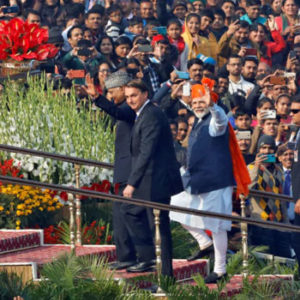
Republic Day 2020 Parade Highlights : The Parade as it unfolded PM Modi arrives at the War Memorial at India Gate and pays homage to the bravery and sacrifices of the soldiers who gave their lives in the line of duty. 0955 Hrs: President of India Ram Nath Kovind and the Chief Guest for the Republic Day Parade celebrations, President of Brazil Jair Messias Bolsonaro, welcomed by the President’s Bodyguard (PBG). Later, PBG escorts them down Rajpath to the Chief Guest…
 |
|
|

|

|
|
Last Updated on : January 25, 2025
Events in India