

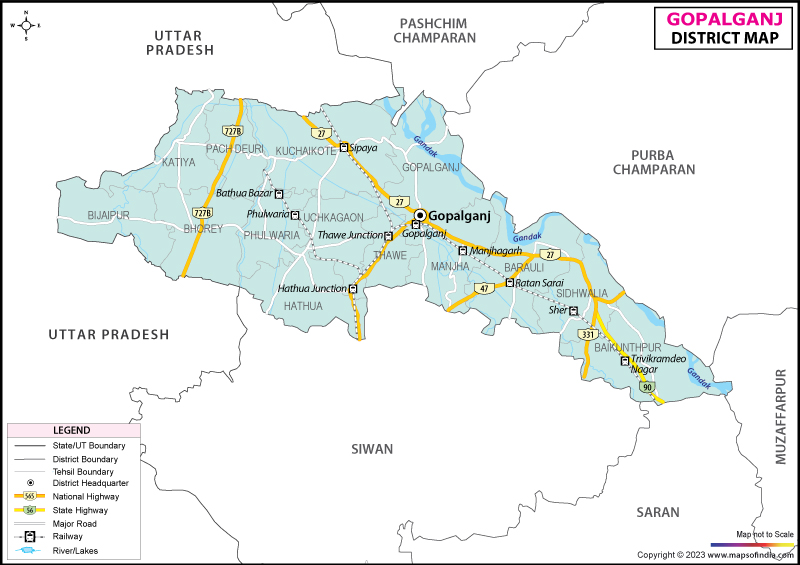





About
Among Bihar's northern reaches, Gopalganj emerges through rich soil, threaded rivers, while village life holds steady. Near Uttar Pradesh, movement across cultures finds footing here, tied by trade, custom, daily exchange. Part of the Saran division, fields dominate - rice, sugarcane stretch wide - while influence grows beyond farm borders. Politics pulses within its towns; lineage, community rhythms shape how things unfold on the ground.
Flowing across the landscape, the Gandak River along with smaller streams feeds the farmland that sustains most residents here. Centered on a modest urban core, Gopalganj serves both governance needs and daily trade, yet rural rhythms shape broader community patterns. Shaped by seasonal rains, low-lying areas often face waterlogging when river levels rise each year. With fertile ground comes risk - floods arrive regularly, tied closely to natural cycles rather than human control.
Known more for politics than fame, Gopalganj has sent notable leaders into Bihar’s spotlight. Yet step closer, and it mirrors countless Indian villages in rhythm and view. Open farmland rolls onward, broken only by clusters of homes and scattered trees. Weekly haats hum with activity when farmers arrive bearing crops, baskets balanced carefully on shoulders. Over time, old customs do not vanish - instead, they shift slowly, making room without breaking form. Progress appears subtly: a new roadside shop, an updated school roof, a phone charging under a shaded awning. Tourism rarely points here; national reports seldom pause. Still, influence grows - not through noise, but presence. Here, life holds steady because people stay close, habits run deep, yet quiet endurance speaks louder than words ever could. Not driven by speed or noise, existence moves with soil rhythms, shaped more by weather patterns than urgency. What matters grows slowly - formed through repetition, tied to cycles others might overlook. Stability arrives without fanfare, built less on change than on returning.
History and Culture
Long before modern borders took shape, the soil of Gopalganj lay within realms that held sway over north India. Shifts in power passed through these villages just as seasons do. Centuries unfolded here under changing rulers, each leaving quiet marks beneath the surface. While official papers name it only lately as its own district, people have lived, farmed, and traded across this ground for ages. History did not begin with documents; it ran long before them.
Later came Mughal control, following earlier shifts under the Delhi Sultanate during medieval times. Local customs began shifting - quietly reshaped by layers of imperial presence. Architecture carried traces; governance bore echoes too. Colonial administration bundled the territory into broader provinces. Land policies shifted sharply, redefining rural economies. Independence brought division - a new district formed. Gopalganj slowly built structures distinct from past frameworks.
Folk melodies rise during harvests; stories pass from elder to child without written trace. Though rooted in faith, festivals unfold as much more - moments when neighbors meet, laughter spreads, bonds deepen. Community thrives where ritual and gathering become one.
Festivals in rural areas still pulse with energy, drawing crowds year after year. While commerce happens here, it is song, dance, and storytelling that fill the air with rhythm and motion. Clothes worn at celebrations often speak of heritage - plain weaves carrying deep meaning. What stands out is how custom and joy blend without effort, generation after generation.
For days on end, wedding events across Gopalganj unfold through layers of custom and care. These gatherings thrive on shared moments - chanting blends with ceremony while neighbors join in rhythm. Instead of standing back, women shape much of what keeps these customs alive. Whether leading folk melodies or tending daily rites at home, their presence holds steady.
Tradition does not resist change here - rather, it shifts alongside market growth, seasonal migration, school reforms. A farmer checks weather updates on his phone before performing harvest rites unchanged since his grandfather’s time. New brick homes rise beside ancestral huts made of clay and thatch.
Economy
Farming forms the backbone of Gopalganj's economy, thanks to rich land and reliable water supply. Life in the district revolves around agriculture - it defines daily routines, influences community roles, while shaping how people earn and live. Stability often comes through public service roles, which many view as secure and respected. From education to health, facilities managed by officials support daily life across regions. Though sometimes slow, these systems keep communities running smoothly. Rural programs focused on farming or construction spark activity where it is needed most. Power flows quietly through town halls, shaping how people live and work.
Among public sector setups in Gopalganj are banks, along with cooperatives and state-backed farm agencies. Access to loans reaches farmers through these channels, followed by improved availability of seeds, nutrients for crops, and updated cultivation methods. When it comes to feeding low-income households, the role of ration networks becomes clear. Standards of life shift slowly where countryside initiatives take root.
Slowly, the service industry gains ground, particularly within towns and smaller settlements such as Gopalganj. Alongside government efforts, privately run schools and medical centers begin appearing, adding momentum to education and health care. Retail outlets, small enterprises, transportation providers - each plays a noticeable role in economic activity. Growth appears most clearly where populations cluster, feeding demand for daily goods and mobility.
Farming still shapes the local economy most, where people grow plenty of rice, wheat, maize - also sugarcane. Long ago, sugarcane started mattering here; years passed, problems arrived.
Farming cows for milk, along with raising livestock, brings extra earnings to families in the countryside. While local workshops that process food or make handcrafted goods can be found, they remain limited in growth.
Back home, money arriving from workers abroad helps many households stay afloat. Often, people from the area find jobs far away - sometimes in different states - and that income flows back into village life, quietly shaping its financial rhythm.
A shift has begun, slowly - Gopalganj's economy now balances age-old farming with newer service work. Change creeps in through quiet steps rather than sudden leaps. Farming still holds ground, yet services grow beside it. This blend shapes how people earn, live, adapt. Diversification appears, not forced, just unfolding.
Tourism
Gopalganj does not draw large crowds, yet hidden within are spots meaningful to those who know the area. Some sites speak to tradition, others reveal quiet landscapes shaped by time. Each place holds a piece of identity formed through generations. Though overlooked on many maps, these locations matter deeply nearby.
Thawe Mandir stands out - not just any shrine, but one deeply tied to the worship of Goddess Durga. Though quiet most of the year, crowds begin arriving from surrounding regions as Navratri draws near. Spiritual energy builds once the festival starts; prayer fills the air, rituals unfold at dawn. By midweek, what was stillness turns into steady movement - chanting, offerings, night-long vigils. Not spectacle, but devotion shapes these days. When the moon wanes, so does the gathering - slowly emptying back into ordinary time.
Along the Gandak River, stretches of land beside the water offer quiet beauty while hosting key moments in religious life. When Chhath Puja arrives, crowds gather at these edges - not rushing, but moving with calm focus through their devotions. Ponds near homes, scenes of country villages, besides yearly fairs, slowly reveal daily living far from cities. Though such places rarely appear on tourist maps, still they show true habits, customs rooted deep in the region’s way of being.
Though work continues on improving tourist facilities, room remains for expansion - particularly around faith-based and heritage travel experiences. Progress moves slowly, yet opportunities appear where traditions run deep. With time, such efforts could shape how visitors engage locally.
Demographics
Home to many, Gopalganj's people are changing shape over time - much like the rest of Bihar. Population shifts here mirror wider regional trends, quietly unfolding through generations. A mix of ages, backgrounds, lives - each adding nuance to the area’s human landscape. Growth comes not in bursts, but steady waves across villages and towns alike.
Farming communities make up most of the country's residents, many settled in small village clusters. Where cities appear, they grow slowly - fueled by rising trade and work opportunities nearby.
Spoken across Gopalganj, Bhojpuri holds strong as the primary local tongue. Meanwhile, Hindi appears widely in schools and government settings. Among certain communities, Urdu finds regular use. This mix shapes a varied language landscape. A large share of young people mark the current age structure, especially within prime working years. Opportunities arise alongside difficulties - job creation, schooling needs, city planning must adapt. Shifting demands emerge where growth meets pressure on systems meant to support them.
Administration
Split into multiple tehsils and blocks, Gopalganj district organizes its administration for smoother operations. While tehsils handle broader oversight, blocks focus on local needs - each layer shaped by practical management demands. Governance flows through these units so services reach people without delay. How tasks are shared depends on location, population, and infrastructure. Each subdivision operates under this framework, adapting routines where necessary. Structure supports function here, quietly shaping daily administrative work.
Running through its structure are several administrative layers handling tasks like growth planning, maintaining peace, or overseeing community needs. Divisions appear alongside blocks and village councils - each stepping in where governance requires attention.
Across the district, hundreds of villages make up its rural foundation. At each village, governance takes shape through Panchayati Raj institutions. These bodies open space for residents to join discussions that guide decisions and growth efforts locally.
| Facts of Gopalganj District | |
|---|---|
| Official Name | Gopalganj |
| Location | Bihar |
| Area (km2) | 2033 |
| Population | 2,562,012 |
| Language | Hindi |
FAQs
Q1: How many villages are there in the district?
Gopalganj district has over 1,500 villages.
Q2: What is the population of the district?
The population of Gopalganj district is over 2.5 million.
Q3: What is this district famous for?
It is famous for its agricultural productivity, Bhojpuri culture, and the renowned Thawe Mandir, a major religious site in the region.
Last Updated on : June 24, 2026
