






About
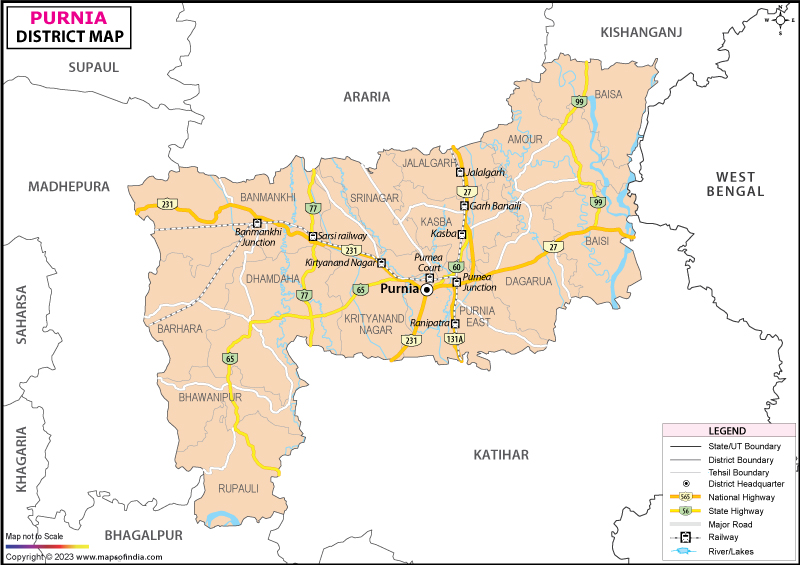
Purnia sits in the northeast corner of Bihar, a place shaped by deep history and lively traditions. Not far from West Bengal and close to Nepal, it matters - not just on maps but in markets too. Though small among divisions, it connects with Araria, touches Katihar, brushes past Madhepura, and meets Kishanganj at edges. Through time, position gave rise - trade flowed here, farms thrived, ideas moved across villages. A hub? Not officially labeled so - but functionally, yes, for generations.
Purnia might come from "Purna-Aranya," a term pointing to full woodland - hinting at ancient thickets across the area. Rivers such as Kosi and Mahananda helped shift those woods into rich farmland through decades. Now, green fields stretch widely here, fed by earth that grows much, alongside ways old and new lived side by side. Though trees faded, their legacy stays in soil and scenery alike.
The city hosts the district headquarters, functioning both as a center for administration and trade. Connected through extensive roadways along with railway lines, access to regions within Bihar and nearby areas remains strong. Growth persists even though floods occur regularly while infrastructure often falls short. Progress shows clearly now in schooling, medical services, and transportation links. What defines this place - unpretentious living, farming roots, mixed traditions - gives weight to its role across Bihar’s economic and social framework.
History and Culture
Purnia's story stretches deep into antiquity, shaped by centuries of change. Once nestled within Mithila, it shared a legacy rich with learning and artistic expression. Under medieval powers, control shifted through empires like the Delhi Sultanate before passing to Mughal hands. Traces of those eras linger today - not in books alone, but in buildings, customs, and daily life across the area.
Under British control, Purnia grew into a key hub for administration. One of the first areas marked out by colonial authorities in Bihar, it saw early institutional setup. Governance models arrived alongside methods for gathering taxes, along with roads and buildings that laid foundations for today’s layout. Resistance took root here too, as residents and regional figures joined protests challenging foreign authority. Though quiet now, echoes remain in its streets and records.
Purnia's cultural fabric includes traditional music alongside folk dances. Love, seasonal changes, or spiritual faith shape much of the region’s local singing. Bamboo craftsmanship along with handmade artwork survives here, even if less marketed than elsewhere. These expressions continue quietly, without fanfare.
Festivals in the district care little for spectacle; connection matters more. Gatherings in villages, small fairs, or regular market days do far more than trade goods - they let stories move between people, music pass hand to hand, old habits live without effort. Long celebrations mark weddings, unfolding across multiple days, each step shaped by both ancestral Maithili forms and routines handed down quietly through kin.
Festivals bring out sarees on women, dhoti-kurtas on men - customs held close through generations. Yet among youth, jeans appear just as often, shirts replacing older forms, hinting at shifts beneath the surface. Evening tales once shared near flames now find their way into phone screens or city conversations. Even so, those stories survive, carried forward despite changing backdrops. In Purnia, daily rhythms shift like dust in wind, barely noticed. Still, what matters most stays rooted. New ways do not erase the past - they simply take space beside it.
Economy
Purnia's economic foundation rests heavily on farming, yet elements like state-run operations and administrative work play supporting roles. While expansion into varied fields has occurred slowly, crop cultivation still shapes much of the local livelihood. Government employment adds stability, whereas public initiatives contribute steady inputs. Growth in service-related jobs has emerged quietly, though farmland continues to dominate daily life across villages. Shifts are visible, just not dramatic - change moves at its own pace here.
Most jobs in Purnia come from state-run offices, which also help push growth across the region. Instead of private firms, it is schools, clinics, water projects, and building units that hire many locals. Because of aid plans focused on farming villages and city frameworks, daily life has slowly improved here. Projects such as wiring towns for power, paving routes between settlements, and clean restroom drives show clear changes on the ground.
Government-run organizations add value to the local economy through various operations. Financial access reaches the city and countryside alike thanks to banks, postal services, and member-owned groups. Support for farming comes via credit options, government aid programs, alongside risk protection tools. Distribution networks run by farmer collectives deliver essential inputs such as seed stock, nutrient supplements, along with updated machinery.
Little by little, Purnia's service industry gains ground, mainly within towns. Growth stands out in schooling and medical care, thanks to new campuses, learning centers, and clinics opening up. Alongside them, shops selling goods, movement networks like taxis or buses, and modest-sized ventures add value locally. Expansion rises where activity clusters, shaping how money flows nearby.
Purnia's economy centers on farming, shaped by rich land and suitable weather. Crops including rice, wheat, maize, and legumes thrive here. In some zones, jute grows widely instead. Flooding troubles parts of the region, particularly near the Kosi River, often halting farm work. Even so, upgrades to water supply networks continue alongside trials of updated crop methods.
Tourism
Purnia might not top travel brochures, yet hidden within lie spots worth seeing. Though overlooked by many, its roots show clearly in temples and old landmarks scattered across the area. Where history meets landscape, small shrines sit beside riverbanks shaped by time. Visitors often come not for fame, but for quiet moments among familiar sights. From village pathways to forgotten ruins, each place tells something different. Not grand like cities, still it holds what nearby towns sometimes lack.
Found near the heart of the region, the Mata Puran Devi Temple may hold a key to how the district got its name. This sacred space draws visitors who look for spiritual comfort through prayer and ritual. When festival seasons arrive, activity surges - roads fill, voices rise, colors multiply. Celebration pulses through the grounds, turning quiet pathways into streams of movement.
Walking through Line Bazaar in the district reveals more than shops - it shows how people live, eat, and interact every day. Though known for trade, its real value lies in the rhythm of ordinary moments. Here, culture unfolds in smells, sounds, and routines rather than displays. What stands out is not commerce alone, but the pulse beneath it. Close to the Kosi River, the area draws attention through quiet green spaces that stretch beyond built-up zones. Though untouched by major tourism infrastructure, such places provide calm views and moments of rest away from city pace.
Demographics
Purnia district holds a broad mix of residents, shaped by the cultural patterns common across northeastern Bihar. Around three million individuals reside here, most settled beyond city limits. Life in villages centers on farming routines, neighborhood bazaars, and tightly connected households instead. Meanwhile, growth starts within Purnia town along with smaller towns - altering how some live, learn, besides work gradually now then. Despite shifts elsewhere, rural habits remain steady under new influences already present nearby long ago.
Years of slow progress mark the district's rising literacy, yet hurdles remain - more so in remote villages and poorer communities. Not only public classrooms but nonprofit drives have helped lift learning numbers step by step. In recent times, attention turns more toward schooling for girls, bringing quiet shifts across households. What once seemed distant now appears real: knowledge opens doors far beyond local borders.
Situated where it is, Purnia shows a blend of tongues shaped by place and heritage. Hindi appears frequently in speech, yet Maithili shares space alongside Urdu in daily use. Near boundary zones, voices sometimes carry Bengali into talk, adding another layer. Switching what is spoken comes naturally there, guided by the listener rather than habit. Who one faces often shapes which words emerge during exchange.
Among the villages and towns, multiple communities coexist, shaped by distinct beliefs yet connected through everyday interaction. Festivals unfold in varied forms, meals follow differing patterns, routines carry unique marks - each reflecting long-standing backgrounds. Growth appears gradually across Purnia, new structures rising beside older ways. Still, life stays close to the land, guided by inherited rhythms rather than outside models.
Administration
Split into multiple tehsils and blocks, Purnia district organizes its administration for smoother operations. Included within the larger Purnia division, it shares regional ties with neighboring areas such as Katihar, Araria, and Kishanganj. Governance here flows through layered local units, each managing specific duties. Regional coordination links these districts under one administrative umbrella.
Among the key areas within Purnia are Purnia Sadar, Banmankhi, along with Dhamdaha. Found inside each of these regions, blocks exist alongside panchayats - managing tasks tied to governance at ground level. While administrative work unfolds locally, organization remains rooted in layered structures across zones.
Most of the area consists of numerous small villages, highlighting its countryside nature. Despite their size, these settlements operate under elected gram panchayats responsible for running public programs and handling community concerns. Where towns appear, governance shifts - municipal authorities take charge of roads, waste systems, and city-level utilities. Though different in structure, both forms support daily life across regions.
Law and order remains a priority in Purnia's administration, while attention also flows toward growth and resident well-being. Digital tools now play a role - side by side with community involvement - in shaping how decisions unfold behind the scenes.
| Facts of Purnia District | |
|---|---|
| Official Name | Purnia |
| Location | Bihar |
| Area (km2) | 3229 |
| Population | 3264619 |
| Language | Hindi |
FAQs
Q1: How many villages are there in the district?
The district has around 1,226 villages spread across its various blocks and subdivisions.
Q2: What is the population of the district?
The population of Purnia district is around 3 million people.
Q3: What is this district famous for?
Purnia is famous for its fertile agricultural land, diverse culture, and its role as a gateway to northeastern Bihar.
Last Updated on : June 24, 2026
