


About
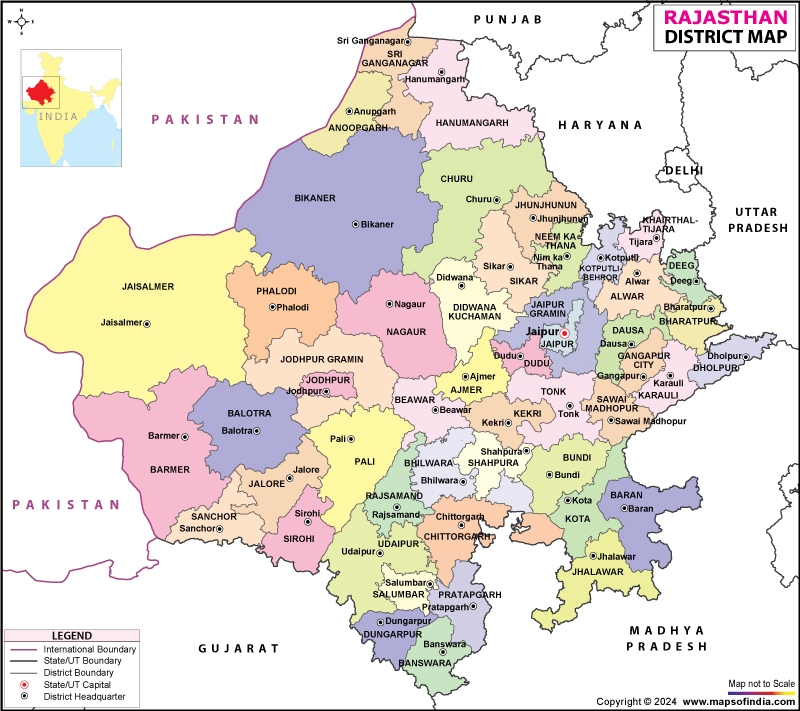
Rajasthan is the biggest state in terms of area in India. It is in the north western part of the country and is known for its forts, palaces, deserts, lakes and colorful traditions. Jaipur is the capital of Rajasthan. The state borders Punjab, Haryana, Uttar Pradesh, Madhya Pradesh and Gujarat. Also it has an international border with Pakistan.
Rajasthan which is of an area of about 342,239 square kilometers. In many parts of the state the climate is dry and the Thar Desert which is a large element of the west of the state. Also in the state is the Aravalli Range which is very old mountain range in the world and which runs through it.
Rajasthan is a state which has had a very rich past as well as present cultural identity. Its cities have famous old buildings, traditional markets, play home to great folk music and dance and also are a treat for food lovers. Jaipur, Udaipur, Jodhpur, Jaisalmer, Ajmer and Bikaner see high footfall from Indian and foreign tourists.
History and Culture
Rajasthan has a past of many kings, forts and valiant rulers. Out of which certain regions were ruled by Rajput clans at various times like the Sisodias in Mewar, the Rathores in Marwar and the Kachwahas in Amber. These states built up forts, palaces, temples and other historical sites which today are major tourist attractions.
Chittorgarh Fort is at the core of Mewar’s history. In Jodhpur we have the grandeur of Mehrangarh Fort and near Jaipur the beauty of Amber Fort. These sites also play out stories of past battles, royal dynasties and the way of life in former times.
During the medieval time we see that many Rajput states were at war with each other and also allied with some rulers. Some Rajput rulers allied with the Mughal Empire but also there were those which went to war against it. Maharana Pratap of Mewar is a prominent figure in Rajasthan’s history for his struggle against the Mughals.
During the time of British rule what we see is that most of the region was made up of princely states. Post Independence in 1947 these states joined the Indian Union. This process did not happen over night. Over a series of stages they integrated into the Indian Union. It is in 1956 that Rajasthan became a state in the form we know today.
Rajasthan has a vibrant culture which is seen in its clothes, festivals, music, dance and crafts. The traditional wear is of bright colors, turbans, ghagras and odhnis. Also local dress varies in each area.
Folk music is a big part of daily life and at our celebrations. In the case of Manganiyar and Langa players, they are known for their folk songs. In Rajasthan the dance Ghoomar is the most known, also the Kalbelia dance which is known for the fast moves and flow of their black costumes.
People mark out Teej, Gangaur, Diwali, Holi and the Desert Festival of Jaisalmer. At the Pushkar Fair which is also a great attendance we see live livestock trade, local crafts, cultural shows and traditional activities.
Hand made crafts are a very large component of what culture is in Rajasthan. In that state hand made pottery in blue, jewelry, leather goods, carpets, block printed fabrics and embroidered items are produced. Also these products support local economy and at the same time they are a support which keeps traditional crafts alive.
Economy
Rajasthan’s economy is based on agriculture, mining, manufacturing, tourism, trade and services. With large expanse of land and natural resources you can see a great diversity in the type of work. Also the state produces in crops, textiles, cement, jewelry and a variety of other goods for both the Indian and foreign markets.
Rajasthan is a home to large deposits of zinc, lead, copper, gypsum, limestone and marble. The mining industry supports factories and also provides for job growth in many districts. Also the state is very positive for solar and wind power which we see in the large amount of sunshine we get and right wind conditions in many areas.
Government Sector
In the government sector you can see state departments, public hospitals, schools, colleges, police forces and other government offices which also include the local health and welfare agencies. Also in this sector you can see that they provide for the needs of the residents and at the same time serve as a source of employment for a variety of backgrounds which range from high skilled to low skilled.
The Rajasthan government is into roads, drinking water, irrigation, education, health care, rural development and public welfare. You see that government schools and hospitals serve in all towns and villages. Also at work are local bodies like municipal councils and village panchayats in the management of public services.
Government still is a top career choice for young people in Rajasthan. State level recruitment includes teaching, administration, policing, health care and other departments. These posts serve public services and also provide for the income of many families.
Public Sector
In the public sector you can see government owned companies and organizations which are into power, mining, transport and finance. In Rajasthan State Mines and Minerals Limited we see activity in mineral development and mining. Also Rajasthan Rajya Vidyut Utpadan Nigam Limited is into electricity generation.
Public utility companies which are owned by the state are the ones that provide home, farm and business with electricity. In Rajasthan you can see that the government has put in place bodies which support industrial growth and investment. These agencies are involved in the development of infrastructure, they support manufacturing units and they also provide the services that industry requires.
Services Sector
The services sector which includes tourism, banking, education, health care, transport, retail, information technology and communication services. Also it is the primary employer in cities and in small towns.
Tourism is a key element in Rajasthan’s services sector. Hotels, restaurants, travel agents, guides, taxi operators and local stores profit from tourists. In the jewelry, textile and handicrafts trades you can see support for shops, wholesalers and online sellers.
Transport and in trade Rajasthan is linked to other Indian states. They have roads, railways and airports which facilitate movement of people and goods. As towns grow and more businesses open up, services also grow to employ large number of residents.
Tourism
Rajasthan is an iconic tourist destination in India. People from all over the world visit to see its forts, palaces, desert cities, lakes, temples, game parks and traditional markets. What you will get out of your trip depends on what part of the state you visit which in turn ranges from the desert dunes of Jaisalmer to the lakes of Udaipur.
Jaipur which is also referred to as the Pink City is the capital of Rajasthan. It is home to Hawa Mahal, Amber Fort, City Palace and Jantar Mantar. Also the city has report of busy markets which sell jewelry, textiles, pottery and traditional footwear.
Udaipur is known for its lakes, palaces and Aravalli hill views. Lake Pichola, City Palace and Fateh Sagar Lake are major attractions. Also many visitors come for the boat rides, old streets and historic buildings of the city.
Jodhpur which is referred to as the Blue City has many of its old town homes painted blue. Above the city sits Mehrangarh Fort which gives you great views of the surrounding area. Also of interest to visitors are Jaswant Thada, Umaid Bhawan Palace and the local markets.
Jaisalmer is in the Thar Desert and is known for it’s golden sandstone structures. At Jaisalmer Fort, Patwon Ki Haveli and the Sam Sand Dunes you can see great points of interest. Also included in desert trips are camel rides, folk performances and night stays in camps.
Pushkar is known for Pushkar Lake, the Brahma Temple and also its annual fair. In Ajmer we find the Ajmer Sharif Dargah which is a very important site. Many tourists include in their itinerary both these towns in the same trip.
Ranthambore National Park is a top destination in Rajasthan for wildlife. There you may see tigers, deer, crocodiles and a great variety of birds. Also visit Sariska Tiger Reserve, Keoladeo National Park and Desert National Park which are very much what nature and wild life lovers are looking for.
Tourism is a job creator in hotels, transport, food services, handicrafts and guiding. Also it brings in income for small shops and family run businesses. Visitors should honor local customs, follow park rules and out of waste at historic sites or in natural areas.
Demographics
In the 2011 Census of India which reported that the population of Rajasthan was 68,548,437. Also the state has a mix of urban and rural communities which includes many which are rural and thus residents are into farming, animal husbandry, trade and other local trades.
Hindi is the primary official language which is used in government and educational institutions. Many also speak in regional languages and dialects which include Marwari, Mewari, Dhundhari, Harauti, Mewati and Shekhawati. Rajasthani is put forth as a general term for the related languages and dialects which are spoken in the state.
Hinduism is the main religion in Rajasthan. In the state also you will find Muslims, Jains, Sikhs, Christians and other faiths. You can see in their local life religious festivals, temples, mosques, dargahs and celebrations of various religions.
Jaipur is the biggest urban center and the capital of the state. In Jodhpur, Kota, Bikaner, Ajmer and Udaipur you will find other large cities. Rural areas play a key role in Rajasthan' s economy and culture especially in farming, livestock rearing, crafts and local trade.
Administration
Rajasthan has a parliamentary form of government like that of other Indian states. The Governor is the head of the state in terms of the constitution, and the Chief Minister heads the elected government. Also the State has a Legislative Assembly which passes laws within the state’s jurisdiction.
Jaipur is the home to the state capital and we have key government offices there. The state administration runs through departments which are in charge of education, health, finance, agriculture, transport, police and also other public services.
In terms of administration Rajasthan is broken up into districts and more local units. At the district level, collectors and other district officials are in charge of many government functions which include revenue work, public administration and the delivery of services. Also it is to be noted that the number and boundaries of these districts may change as per government notifications so for present district information it is recommended to refer to the official state records.
In urban settings you can see the presence of municipal corporations, municipal councils and municipalities. Also in rural areas they have panchayati raj institutions which include gram panchayats, panchayat samitis and zila parishads. These local bodies which run the local administration take care of issues like sanitation, local roads, waste collection and other public services.
Rajasthan has representatives in both houses of the Indian Parliament. Also it has a High Court which has its main seat in Jodhpur and a branch in Jaipur. The courts deal with issues of the Constitution and Indian law.
FAQs
1. What is the capital of Rajasthan?
Jaipur which is the capital of Rajasthan also has traditional markets and is home to historic buildings and it’s old pink colored city.
2. Which desert is found in Rajasthan?
In the Western part of Rajasthan which is a large area the Thar Desert spreads. In Jaisalmer and Barmer you will find large desert areas.
3. What is the language of Rajasthan?
Hindi is the primary official language. Also people speak regional languages and dialects which include Marwari, Mewari, Dhundhari, Harauti and Shekhawati.
4. Which are the primary sources of income in Rajasthan?
Agriculture, mining, manufacturing, tourism, trade and services are large components of Rajasthan’s economy.
5. Which of Rajasthan’s famous dishes is there?
Dal baati churma is a very popular dish from that state. Also very well known are gatte ki sabzi, ker sangri, laal maas and pyaaz kachori.
6. What national parks and wildlife reserves are there in Rajasthan?
Ranthambore and Sariska which is home to tigers, Keoladeo and Desert National Parks are the state’s top wildlife destinations.
Last Updated on: November 12, 2026
Places to Visit in Rajasthan