






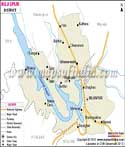
About
Bilaspur lies low among green hills shaped like waves, part of the Shivalik mountains in Himachal Pradesh. About 1,167 square kilometers stretch across its land, touching Una, Hamirpur, Mandi, along with Solan at shared edges. Cutting right down the middle, the fast-moving Satluj River defines how people move around here. This river runs through it all, shaping paths where folks go, because nothing shifts without its presence. Bilaspur's name carries weight because old stories and long-ago events shaped its meaning. Far back in the 1600s, people built the first settlement close to a cave tied to Maharishi Vyas - writer of the Mahabharata - who gave his name to that spot: Beas Gufa. Over time, what began as Vyaspur shifted sound by sound through how locals spoke it. Centuries passed before spelling settled on Bilaspur instead. What grabs attention in Bilaspur is the clean layout of its newer areas. After the famous Bhakra Dam went up during the 1900s, the old seat of power vanished under water as Gobind Sagar Lake swelled. Now perched high at 673 meters, a fresh city rose in its place - thought out down to each lane and corner. People often point out it was India's initial attempt at mapping a town into mountain terrain, complete with broad zones, neat shop rows, while lake light glimmers far below.
History & Culture
Bilaspur's story begins deep in the past, tangled tight with an old hill kingdom called Kahlur. A ruler named Bir Chand started it all near the year 600, far back when empires rose slowly - he came from warrior blood, part of the Chandel line that once held lands in Chanderi, tucked inside today’s Madhya Pradesh. With grit and smart talk among warring clans, he claimed what became Kahlur. Over generations, power moved often - perched first here, then there, living behind stone walls at places such as Kot Kahlur and Sunhani. Then, under Dip Chand’s watch, things settled. After India gained freedom in 1947, Bilaspur entered a shift shaped by borders and decisions. Owing to work already underway on the huge Bhakra Dam, it stayed apart when neighboring hill regions moved differently. By 1948, control shifted directly to the center, pulling it out of regional groupings. Then in 1950, status changed again - this time labeled a standalone "Part C" state.
Cultural Identity and Traditions
Their everyday speech? That’s Kehluri - also called Bilaspuri - a tongue from the Indo-Aryan family shaped by the region's former kingdom. Festivals spark color across towns when people gather in rhythm, dancing under open skies. Sounds rise from hand-played instruments passed down through years. Each event holds its own pattern of speech, gesture, movement - never quite the same twice. Neighborhoods shape these moments without scripts or stages. Life pulses loudest where tradition meets daily routine. A festival rooted in livestock trading now pulses with music and color. Spring brings it to life each year, either in March or come April. Back then, a colonial officer named W. Goldstein gave it shape in 1889. His aim? Boosting prized cattle commerce. Time shifted its rhythm, though. What grew instead was something far louder, wider, deeply local. Wrestlers clash on dirt mats while drums roll nearby. Stalls burst with handmade goods, spices, cloth - each one a small world. Singers hurl ballads into the air like challenges. People arrive by bus, bike, foot - from villages scattered across north India.
Economy
Out here, fields stretch wide where families grow crops step by step up the hillsides. Government-backed projects quietly shape daily life, offering steady work away from the soil. Instead of just sticking to old ways, people now find chances in shops, transport, and small offices. Roads link villages to town centers, making movement easier than before. Not everyone depends only on rain-fed harvests anymore. Opportunities pop up where concrete meets countryside. Growth hums along without fanfare, tucked between mountains and markets.
Government Sector
Bilaspur runs on government jobs. Offices handling state matters sit here. Schools and hospitals serve the area. One big shift came when AIIMS opened its doors. That hospital brought new chances to work - for doctors, staff, helpers alike. Care improved because of it. Stability grew too, thanks to steady roles tied to running such an institute.
Public Sector
Bilaspur has long carried a strong public sector presence, shaping much of its economy. Not far behind stands the Bhakra Beas Management Board, running the vast machinery of the Bhakra Dam and linked hydropower stations. Jobs - plenty of them, both skilled and clerical - flow from that complex into local households. Away from water, earth plays its part; minerals drawn from the ground fuel big industries nearby. Take cement works sprouting at the edges, like ACC Gagal just beyond the boundary - they hum steadily, feeding regional demand without fanfare.
Services Sector
Outpacing other industries, Bilaspur’s service industry grows fast thanks to new roads and rising visitor numbers. Growth rests firmly on three key supports. Most visitors come to see sacred sites or explore the lakeside trails. Because of them, small inns stay busy through the season. Transport providers keep moving people from place to place. Eating spots fill up during peak hours. With each passing month, businesses tied to travel find steady work.
Tourism
Bilaspur draws visitors who love deep spiritual moments just as much as those chasing heart-pounding excitement. Some come for sacred spaces that speak quietly to the soul, others for massive feats of human design standing tall across the landscape.
Major Tourist Attractions
High on a three-sided ridge, above flatlands near water, sits an old holy place tied to fierce devotion. Some say the goddess’s gaze landed right here long ago. Stone paths wind upward sharply - others ride vehicles up paved lanes - or float into view on sky wires gliding slowly through air. Each year, crowds swarm toward its doors when drums beat loudest nine times over seasons turning. Holiness hums in the slanting shadows between rocks and prayer flags flapping hard under open skies. Standing tall at 226 meters, Bhakra Dam rises like a giant from the landscape. Not built just for water control but as proof of what India could do after independence. Its massive walls hold back more than just river flow - they carry decades of ambition. When the spillways open, noise fills the air, sharp and sudden. From above, the reservoir stretches out flat and wide, reflecting sky in broken pieces. People who come here often fall quiet, eyes fixed on the scene below. Down by the Satluj River, off to the left near the newer part of town, lies a rocky hollow shaped by time. This place - called Vyas Gufa - is thought to be where the old seer once stayed, eyes closed, mind still. Some come because they love what happened long ago; others are drawn by quiet inner paths. Though simple in form, it holds weight for those who value both past whispers and silent reflection. From up high, Bandla Hills rise fast past the town, known far and wide - not just for steep slopes but as a top spot where paragliders take flight. Soaring off its edge pulls you into open air, with views that stretch - town rooftops fanning out beneath while the river winds like a ribbon down below.
Demographics
Backed by India's national census figures, the picture shows steady learning levels across age groups. Education plays a strong role here, much like in other parts of Himachal Pradesh. Trends seen locally often match those found across the region. Numbers come straight from government records, adding clarity to how lives are lived. Life moves at its own pace, influenced by tradition and gradual development. Population : Total 381956. Males 192764. Females 189192. Sex Ratio 981 Females Per 1000 Males. Literacy Overall: 84.59 Percent . Male Literacy 91.16 Percent. Female Literacy 77.97 Percent. Main Languages: Kehluri, Bilaspuri, Hindi. Rural Population 93.42 Percent. Urban Population 6.58 Percent.
Administration
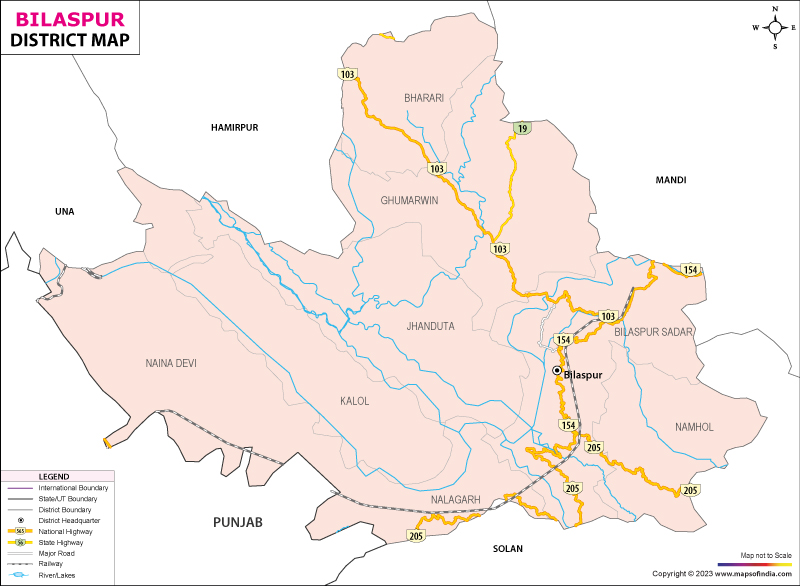
Bilaspur district splits into smaller parts so things run without hiccups. One person leads it all - the District Magistrate keeps watch up close. Law works better when areas are carved neatly apart. Rural progress leans on focused blocks doing their job quietly. Each piece fits - tehsils and subdivisions follow a clear path. Order comes from structure, nothing left to chance. Bilaspur Sadar forms one part of the area's layout. Another section goes by Ghumarwin. Jhanduta makes up a third portion. Swarghat, also known as Shri Naina Devi Ji, completes the set.
Tehsils of Bilaspur
Split into key areas, the system of income collection and management runs through major tehsils along with smaller subdivisions. These units act as central points for handling regional oversight.
Bilaspur Sadar
Ghumarwin
Jhanduta
Shri Naina Devi Ji (Swarghat)
Bharari
Namhol
| Official Name | Bilaspur |
| Location | Himachal Pradesh |
| Area | 1167 sq. km |
| Population | 381956 (2011 census) |
| Language | Kahluri, Hindi |
FAQs
Q1: What is the number of Villages in Bilaspur District, Himachal Pradesh?
Beyond the edge of town, time settles into quieter beats - here in Bilaspur, 1093 villages dot the landscape across its administrative patches. Even when split by boundaries, every patch keeps close to open land and habits passed through seasons. While oversight divides, roots grow deep where soil meets routine.
Q2: How many people live in Bilaspur district altogether?
Exactly 381,956 folks show up in the headcount for Bilaspur district. That total splits into 192,764 men, then 189,192 women, making up the remainder. Not estimates built on assumptions - these figures arrived through actual counts run by government teams. Each individual appeared on official records drawn within the district's borders.
Q3: What is the district of Bilaspur famous for?
Bilaspur grabs notice near a giant concrete marvel in northern India. Standing tall, the Bhakra Dam pins back the river’s rush. This hold shapes Gobind Sagar Lake - wide waters held tight by human design. Once part of the historic Kahlur kingdom, echoes of older times linger in local lore. Among its quieter claims stands the distinction of hosting India’s initial structured hill settlement, quietly shaped by design.
Last Updated on : July 10, 2026
