







About
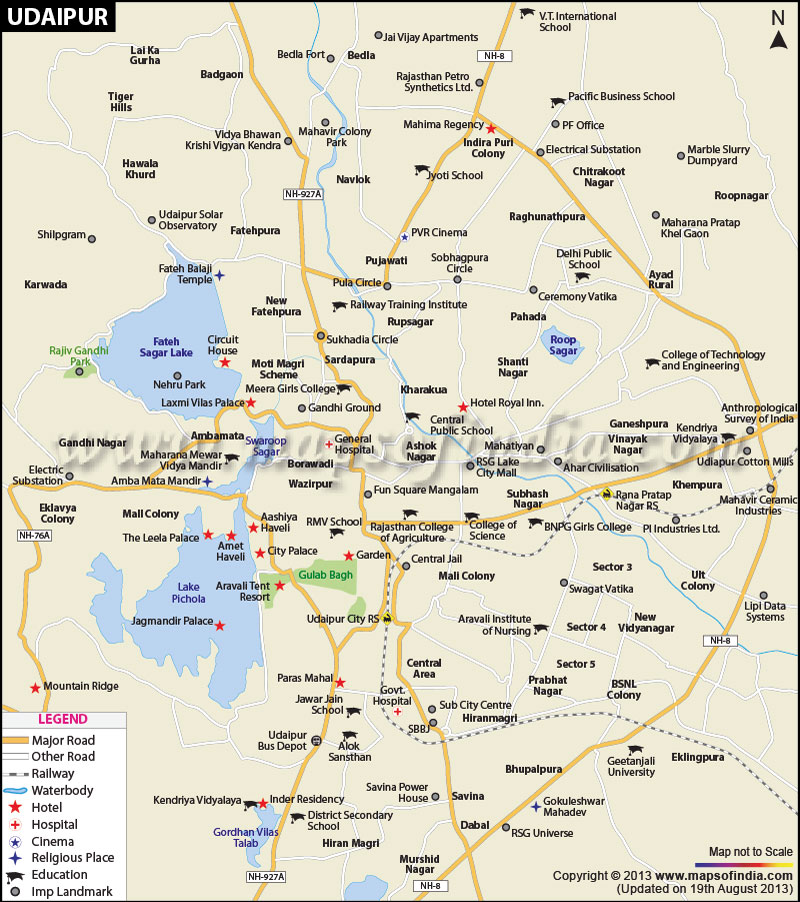
Lakes define Udaipur - this patch of Rajasthan wears its water like a quiet secret. Not far from desert dust, it holds pools built long ago on purpose. Back in 1559, a ruler named Udai Singh II picked these green folds between mountains for his seat of power. Safety played a role - the land here hides behind the stone shoulders of the Aravallis. What rose was more than palaces; it became a shielded heart for Mewar's reign. Water links one basin to another, turning scarcity into something rare. Glassy lakes hold up grand palaces like mirrors, framing a skyline shaped by time but alive today. Not just relics define this place - its past fights echo through narrow lanes where new stories unfold daily.
History and Culture
Udaipur’s past breathes the stubborn courage of the Mewar rulers. After Chittorgarh endured wave after wave of attacks from Mughal forces, a shift became clear - survival demanded new ground. A lone ascetic near Pichola pointed toward sheltered land where water met stone, whispering possibility into the air.Drama-filled pages of India’s past often turned right here. Just beyond here, time stops at Haldighati in 1576 - its echo lingers now. At the front stood Maharana Pratap, son of Udai Singh II, holding ground as Akbar pushed westward. Not deterred by Raja Man Singh’s vast Mughal force, the Rajputs held their line. Victory tilted toward the empire that day. Still, pride stayed rooted in those who would not bend. Even when outnumbered, retreat wasn’t in his nature. Pride in freedom carved his legacy into stone. A horse named Chetak galloped through danger, shielding his rider until breath gave out. That bond between warrior and steed lives on, whispered in villages, remembered across time. Old stories live loud here, passed down through song and step. Not just Ghoomar but Bhavai too moves like memory made visible. Voices carry history in Mewari, shaped slowly by time, not textbooks. Miniature art thrives on patience - each line drawn with care, every hue pulled from earth. Festivals do more than glow; they gather people into rhythm. Music does not perform - it belongs. Paintings show courts, gods, land - not as scenes but as breath. This place speaks without shouting. Colors stay sharp because roots run deep.
Economy
Udaipur's economy mixes old ways with new paths, shaped by customs alongside factories and fresh industries. Moving beyond farming roots once tied to landowners, it now thrives on minerals dug from the earth, goods made in workshops, travelers drawn to its lakes, along with offices offering support work.
Government Sector
It’s the job of government offices to keep things running smoothly across the region, handling both nature and business matters. With so many mineral deposits under Udaipur’s land, groups such as the Department of Mines and Geology watch every step - from permits to digging, plus rules about pollution. On top of that, state agencies take care of lakes, forests, roads, and big construction plans, trying to stop progress from tipping too far one way. Many people find work inside these systems - city councils, local courts, and regional offices - all dealing with services, countryside projects, and how towns grow.
Public Sector
Udaipur stands out in government-run industries by hosting key offices and large-scale activities. Not far from the city center, Hindustan Zinc Limited runs its main operations - once fully state-owned, now privately managed but still tied closely to India’s industrial roots - and ranks among the biggest global firms making zinc and lead together. Another big name based here: Rajasthan State Mines and Minerals Limited, a publicly owned company digging up rock phosphate, lignite, limestone, and gypsum across the region. Over decades, these companies laid down deep foundations - roads, housing zones, entire neighborhoods - while offering lasting work in skilled roles to many people born nearby.
Services Sector
Udaipur's economy now leans heavily on services, a shift driven by constant movement behind the scenes. Tourism kicks things off, pulling in not just visitors but entire networks - hotels both grand and small, tour planners, guides who craft moments people remember. Financial work, banks, stores - they’ve stretched wide across the city, feeding daily trade and quiet transactions alike. Care for health and pursuit of degrees are turning into major draws too; clinics with many specialties open up, schools that teach medicine grow, universities run privately fill with faces from nearby regions.
Tourism
Udaipur grabs attention worldwide because people keep coming back to see its palaces. Not just buildings - these places feel like pages out of a painted storybook. Water lakes sit quietly between stone steps and domes that reach up slowly. Travelers find themselves walking paths shaped centuries ago. What stands today was built with care most modern work forgets. Postcards rarely do justice, yet they still try. You can feel history without needing a guidebook nearby. This city stays full because moments here stick longer than expected.
Major Tourist Attractions
Up above Lake Pichola’s eastern edge, the City Palace stands firm, built only of stone - slabs of granite wrapped in marble. Open courtyards lead to wide rooms, joined by corridors where ivy spills from overhead. Shapes shift as you move, now rigid like warrior strongholds, then gentle with imperial elegance. Around every corner, a new view appears, light cutting across etched surfaces. Stillness holds here, even as details keep unfolding. In the heart of Udaipur lies Lake Pichola, shaped centuries back by people at work. Floating on a small island named Jag Niwas is the well-known Taj Lake Palace, shining as if made of light itself. The water moves slowly near its base, giving the marble structure a look of floating free. Not many spots feel this calm - yet here it simply exists, doing nothing at all. Downhill pulls the water through these fountains - no pumps, just weight and slope. Where shade once held up carved stone roofs, soft green blades now cover the earth, growing thick where royal women walked. They called it the Garden of the Maidens, built quiet, set apart for female grace far from public eyes. Pink lotus blooms drift in circular basins, reached by streams flowing without any engines.
Demographics
Udaipur city counts 30,68,420 people living there.For every thousand men, women were listed at 928. Among children below six, girls stood at 866 per thousand boys. Udaipur's population reached 662,992 in 2019, based on estimates. Lately, more people have been moving there - its pleasant climate plays a big part, while the calm surroundings also pull newcomers in; popular nearby attractions add fuel too. Most people in Udaipur can read and write - about 90 out of every 100. That's well above India’s overall figure, which sits at just over 74. For men there, it's even higher, nearly 95 percent able to read and write. Women are close behind, with more than 85 percent reaching that mark . Out here, words carry history in every syllable. Mewari leads as the main local speech, home to almost half the people - about 44.2%. Wagdi comes next, used by just over a quarter of residents. Hindi holds steady at 13.12%, not trailing too far behind. Rajasthani, in its broader form, shapes daily talk for one out of nine locals. Diversity like this doesn’t happen by chance - it grows from deep ties to heritage. Tribal presence runs strong across villages, especially among the Bhils. Nearly every second person outside towns belongs to Scheduled Tribes. Udaipur stands central, then, when it comes to tribal life west of the plains. Roots matter. So does recognition.
Administration
Deep inside the setup, Udaipur district splits into layers that flow downward like water through stone. One level fits neatly beneath another, built to keep things moving without snagging on chaos. Running it all is a senior official, trained at national expense, whose job touches nearly every rule and plan in motion here. This person wears two hats - one for calm, one for progress - balancing court duties with field decisions daily. Power flows upward from villages scattered wide, yet direction comes down firmly from the top tier. Governance hums quietly where towns thicken and also out beyond roads, near silent hamlets tucked between hills. One way to handle the large area is by breaking it into smaller parts called Tehsils. Though there were once just eleven, more have been added over time through changes made by officials. These original ones stayed key players in local control throughout history.
Girwa includes Udaipur's city spread along with nearby valley areas. Once a key mountain area, Gogunda held strategic importance long ago Jhadol (densely forested tribal belt),Kherwara (southern gateway zone),Kotra (remote western tribal pocket).
Farming thrives just northeast of here, where soil feeds crops through seasons. Rich earth spreads across that stretch, giving roots room to grow without much fuss.Vallabhnagar (prominent eastern plains region),Sarada and Lasadiya (mineral-rich southeastern regions). Most of the district’s area is covered by small countryside communities, grouped into 2,471 officially recognized villages spread through different tehsils. Each one falls within a local self-governance system known as Panchayati Raj, managed by nearby Gram Panchayats. From village roads to farm aid, basic services get delivered thanks to this close-to-ground setup. Water access, job programs, farming support - these things move smoothly because authority rests nearer to where people live. Rural and tribal residents benefit directly since decisions happen just down the road, not far off in distant offices.
Udaipur Facts
| Area | 11724 Sq. Km. |
| Population | 30,68,420 |
| Population Density | 242/km2 (630/sq mi) as Census January 2011 |
| Language | Hindi, Rajasthan ,Marwari , Urdu |
| Official Languages | Hindi |
| Literacy Rate | 61.82 (census 2011) |
| Sex Ratio | 958 |
| Time zone | IST (UTC+5:30) |
| Pin code | 313001 |
| Area code | 294 |
| Lat Long | 24.5800° N, 73.6800° E |
| Religion | Hinduism, Islam, Jainism |
| Festivals | Mewar Festival, Shilpgram Crafts Fair, Teej |
| University | Mohan Lal Sukhadia University, Sir Padampat Singhania University and Maharana Pratap University of Agriculture and Technology |
| Sports | Luv Kush Indoor Stadium(Badminton), Maharana Pratap Khel Gaon (Basketball, Volleyball, Tennis, Kho-Kho, Kabaddi, Handball, Archery, Rifle shooting, Judo - Karate, Boxing, Swimming, Squash) |
| Airport | Dabok airport (Maharana Pratap Airport) |
| Railway Station | Udaipur City (UDZ), Udaipur Railway Station |
| Tourist Attractions | Chini Chitrashala, Dilkhusha Mahal, Durbar hall, Jagdish mandir, City Palace Udaipur, Lake Palace, Saheliyon-ki-Bari, Gulab Bagh and Zoo, Neemach Mata Temple, Doodh Talai |
| Nearby Tourist Attractions | Nathdwara, Ranakpur, Chittorgarh, Haldighati, Kumbhalgarh, Mount Abu, Eklingji, Kumbhalgarh Wildlife Sanctuary |
| Popular Things | Fateh Sagar Lake, Rangsagar Lake, Pichola Lake, Swaroopsagar Lake, Dudh Talai Lake, Udaisagar Lake |
| Notable People | Maharana Udai Singh |
| National Highway | NH-8, 76 |
FAQs
Q.1:What number of small settlements exist across Udaipur's territory?
Most of Udaipur's area is made up of countryside settlements - around 2,471 according to India’s national headcount. Spread unevenly among several administrative zones, these small communities fall under village councils that handle growth projects, basic services, building needs, along with support initiatives for indigenous groups.
Q.2:How many people live in Udaipur district altogether?
Udaipur city counts 30,68,420 people living there. Scattered through valleys and slopes of the Aravallis are villages where tradition shapes daily rhythms. Towns here pulse with markets, movement, stories passed on without pause. Nearly half a percent shy of five percent of the state's total resides within these borders. People live close to land, some tucked deep in hillside settlements, others near lakes reflecting city lights. Udaipur's area, known for lakes, sits.
Q.3:For what the Udaipur famous for ?
Perched amid hills and water, Udaipur carries the name "City of Lakes" along with a reputation as India's White City. Its beauty unfolds through grand palaces that rise like stone poems from centuries past.
Last Updated on : June 22, 2026
| Find Distance from Udaipur to other Indian Cities | |||
