







About
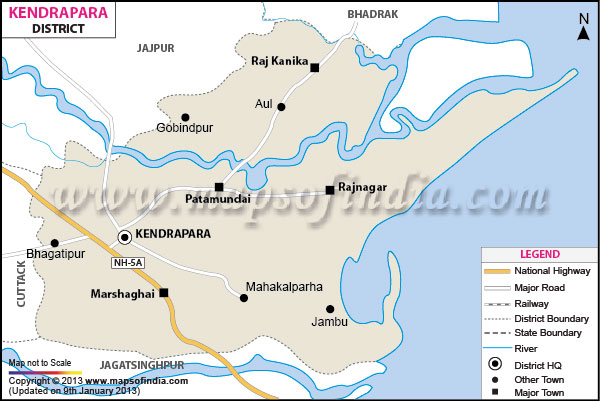
Kendrapara in the coastal area of Odisha which has a large network of rivers, agricultural land and fishing villages. Also known for its mangrove forests and wildlife which attract visitors from all over the country does this district. Kendrapara town which is the district headquarter also is the main center for educational, administrative and business activities.
Kendrapara has an area of 2,644 sq km. In the district many villages are to be found and mostly people live in rural areas. Agriculture is the primary occupation for many families. Also a large section of the population is supported by fishing which is due to the district’s river network and coastal location.
In Kendrapara’s case the main draw is Bhitarkanika National Park. Also the district is home to the Gahirmatha Marine Sanctuary which is a noted spot for mass nesting of Olive Ridley turtles. These natural assets have brought attention at national level to Kendrapara and has made it Odisha’s preeminent wildlife destination.
Religious practices which still play a large role in what we see today as the identity of the district. In Kendrapara we see the influence of the Tulasi Khetra which includes the famed Baldevjew Temple. Also in the picture are the festivals, local fairs and temple celebrations that bring the communities together.
The district also profits from it’s geographic location. Rivers like the Brahmani, Baitarani and Mahanadi which play into the economy through agriculture, transport and fishing. Water is still to this day the most precious resource in Kendrapara and has supported local communities for many years.
Today in Kendrapara we see a mix of agriculture, fishing, wildlife conservation and cultural practices which still play a very large role in the district’s growth and put it at at a unique atypical from other districts of Odisha.
History & Culture
Kendrapara’s history is tied in with that of coastal Odisha. In the ancient past and in local tradition this area is referred to as an important religious center. Also the district’s association with Lord Balram has played a great role in shaping local beliefs and practices.
For many years Kendrapara was a part of Cuttack district. In the 20th century we saw the formation of a separate district which finally took place in 1993. That change enabled local administration to put more focus on development and public services.
The Baldevjew Temple is a major historical and cultural landmark in the district. Thousands of visitors go to the temple annually. At the temple also which is a center for religious events local traditions are shaped.
Culture in Kendrapara is that of the coastal Odisha. We see that festivals play a very large role in society. There is celebration of Durga Puja, Ratha Yatra, Dola Yatra and Gaja Lakshmi Puja in the district. Also we find villages as well as towns organize cultural programs, fairs and community events during these times.
Traditional music and in fact many folk performances still do have life in many areas within the district. We also see that religious songs, village dramas and local festivals are very much a part of the scene. That which we may term cultural events is a uniting force between different community groups.
Hand weavings also play a role in what the district is known for. We see a lot of golden grass products, terracotta items, home made crafts. Women’s groups play a big part in the local craft activity, also it is them which play a role in hand on conservation of our traditions.
In Kendrapara food is a reflection of its coastal setting. Rice is the primary food in most homes. Fish is a very important element in local diet which is made available by the nearby rivers and coast which are very prolific. Also coconut is very much a part of local cuisine.
Fishing cultures have had a rich array of traditions which we still see today. Fishermen, their boats, rivers and seasonal rhythms have defined the daily life in many villages.
In that which is today the district we see growth in the fields of literature, music and social reform. From Kendrapara we have contributors in the form of writers, artists and cultural figures which in turn have enriched the state’s intellectual and artistic heritage.
In spite of changes in lifestyle many traditional practices still do in Kendrapara which in turn gives the city a distinct cultural identity.
Economy
Kendrapara’s economy is based mostly in agriculture, fishing, forestry, tourism, education and local trade. Agriculture still supports large sections of the population which also is true for rivers and coastal resources that employ many fisher folk.
Rice is the leading crop in the district. Also grown are pulses, oilseeds, vegetables and horticultural crops. In some areas coconut farming has become a very important activity.
Fishing is a large component of that district’s economy. We have marine and inland fishing which supports many families. Also fish markets which in turn present business opportunities for traders, transport workers and small business owners.
Wildlife tourism is also a great source of income for local people. In Bhitarkanika National Park and Gahirmatha Marine Sanctuary we see that tourists’ money goes to support hotels, restaurants and transport.
Government Sector
In Kendrapara district the government is the largest employer. In that area government offices, schools, colleges, hospitals and administrative departments absorb the workforce.
The district administration is in charge of public services which include education, health care, agriculture, land records, rural development and social welfare. Also these services reach out to urban as well as rural populations.
Schools and colleges which are run by the government provide for educational needs in the whole area. To that we see a role also for the teachers, administrative and support staff which is very important in this picture.
Government health facilities also serve as job providers. In the district health care providers which include doctors, nurses, technicians and other health workers render their services.
Public investment in roads, bridges, flood protection systems, irrigation projects and public buildings also fuels economic growth. We see in this also the creation of both short term and permanent jobs.
In Kendrapara which is a very prone to cyclones and floods disaster management programs are given a special focus. The government departments are into putting forth projects related to coastal protection and emergency response.
Public Sector
Public sector banks are made available for the use of farmers, students, business owners and self help groups.
Banking also in to agricultural loans, education loans and small business growth which they put forward. They also provide a platform for savings and to access the needed financial aid.
Electricity supports homes, schools, health centers, industries and commercial establishments. Also water supply is of great importance as agriculture is very heavy on water resources.
Transportation systems connect villages to markets and admin centers. Public bus services which which people use to get around different parts of the district.
Public health facilities which serve the community by providing health care to large numbers of residents every year. Also the government supported programs which include that of child welfare, maternal health and disease prevention are run through out the district.
Services Sector
In Kendrapara the services sector has been growing steadily. In that area education, health care, retail, tourism, transport and financial services are which employment is put to.
Educational facilities have grown in our district. We have schools, colleges, coaching centers and training institutions which attract students from all over.
Healthcare sector has seen great growth over the years. In that time we have seen the rise of hospitals, clinics, diagnostic centers and pharmacy which in turn has created jobs.
In Kendrapara town and other market centers retail trade is very much a part of the local economy. We see here that which which go into the lives of the locals such as that of agricultural products, home appliances, clothes and everyday essentials are sold.
Handicraft items produced by local communities also feed into the service economy. Also small businesses which deal in traditional products support many families.
Tourism
Tourism in Kendrapara district has seen great growth. What puts the district on the map is it’s natural beauty.
Gahirmatha Marine Sanctuary is also a great draw. Here we see an international phenomenon play out as thousands of Olive Ridley turtles come to nest. This natural wonder draws in researchers and wildlife enthusiasts.
Baldevjew Temple is a major religious site in the district. It attracts thousands of people annually and also plays a key role in local tourism.
River tourism is a hit with visitors. In mangrove areas we have boat rides which also serve as a platform to see wildlife and natural scenery.
Bird watching has been on the rise in recent years. In the course of migration many species of birds come to the district.
The district’s natural setting still has great appeal to those that enjoy wildlife photography, ecological study and nature tourism.
Demographics
Kendrapara is a district which sees a large population in its towns, villages and coastal areas. In 2011 Census it was reported that we have over 1.43 million in the district which made it one of the most dense in Odisha. Agriculture and fishing are the main sources of income for many and also still a great section of the population lives in rural areas.
In the case of Kendrapara there is an atypical feature which is its balanced population which tilts slightly in favor of women. The census reported that we have 1,006 females for every 1,000 males which is a stand out feature. Also in many parts of India what is seen is a lower female population.
In Kendrapara most people lived in rural areas. Agriculture and fishing dominated the social structure.
Kendrapara is the primary urban center. Also there were smaller towns and market centers which contributed to the economy.
Odia is the most used language in the district. Also in various communities local dialects are spoken.
School attendance is on the rise which is a result of educational expansion. We see that in many parts of the district which has also seen growth in school and college enrollment.
Religion plays a role in social life. We see that temples, festivals and traditional celebrations are very much a part of community activities.
Administration
Kendrapara district is run by the District Collector and District Magistrate which include supervision of government departments, development projects, public services, revenue collection, law and order, and welfare programs in the district.
According to reports by the district administration Kendrapara has 3 subdivisions, 9 tehsils and 9 community development blocks. Also the district has 230 Gram Panchayats which play a key role in village administration and local development.
Kendrapara is home to 2 municipal corporations and 1 Notified Area Council (NAC). These urban local bodies provide services which include roads, sanitation, drainage, street lighting, water supply and waste management.
In Kendrapara district there are over 1,500 villages which put forth the rural character of the area. Also local governments in association with various government departments run development programs in these villages.
The present nine tehsils are Kendrapara, Aul, Rajkanika, Rajnagar, Mahakalapada, Pattamundai, Garadpur, Marsaghai and Derabish. They also serve to run land records and which facilitate the delivery of government services.
| Facts of Kendrapara District | |
|---|---|
| Official Name | Kendrapara |
| Capital / District Headquarters | Kendrapara |
| Area (km2) | 2644 |
| Population | 1,440,361 |
| Religion | Hinduism, Islam, Christianity, and other faiths |
| Language | Odia, Bengali, Hindi |
FAQs
1. Where is Kendrapara located?
Kendrapara which is in the east of Odisha at the coast. It also borders a number of districts and the Bay of Bengal.
2. Which river systems influence Kendrapara?
The district’s economy is in great part supported by rivers which include the Brahmani, Baitarani and Mahanadi. Also these rivers support agriculture and fishing.
3. Why does coastal protection issue matter in Kendrapara?
Cyclones and floods are a common occurrence in the district. Coastal protection programs help to reduce damage.
4. Why is Kendrapara district famous?
Kendrapara is known for Bhitarkanika National Park, Gahirmatha Marine Sanctuary and the Baldev Jew Temple. Also the district is home to extensive mangrove forests and wildlife.
5. How does the local economy benefit from fishing?
Fishing provides employment for fishermen, traders, transport workers and market businesses.
Last Updated on : August 24, 2026
