


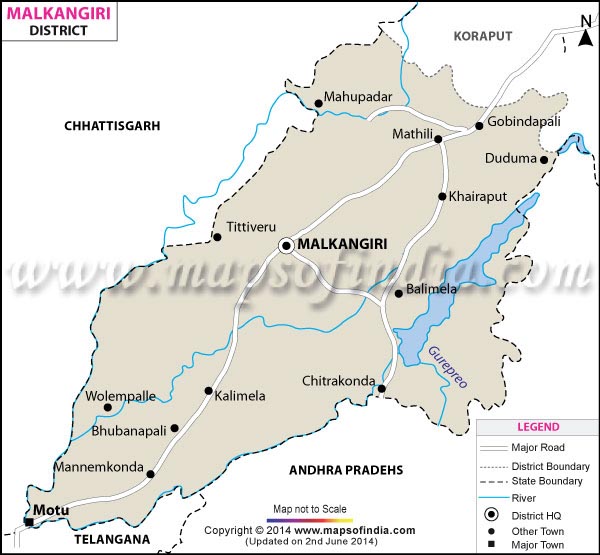





About
Malkangiri which is in the south of Odisha. It is home to tribal communities, forests, rivers and hilly areas. The district’s border with Andhra Pradesh and Chhattisgarh gives it a place of importance in eastern India. Also because of this location Malkangiri has developed cultural ties with people from many parts.
Malkangiri is the home of the district administration and also the primary center for administration, education and trade. While the district is mostly rural in character, in the recent past we have seen growth in terms of improved roads, communication and public services which are a result of various development projects.
In many people’s consciousness Malkangiri is known for its large tribal population. For generations many tribal communities have been a part of the district and they still practice many of their traditional ways. Their festivals, agricultural practices, food and art is what also defines the district.
Agriculture is a mainstay for most of the population. We see paddy, maize, pulses and oil seeds as very common crops. Also fishing is a source of income for many families which live by the rivers and water bodies.
The district is a setting for great natural beauty. We see that forests which are extensive in area and rivers like the Sabari and the Kolab which play a role in agriculture and daily life dominate the landscape. Also for many years these natural resources have been the base of social and economic life in Malkangiri.
Today in Malkangiri we see progress in education, health care, transport and public services which also sees to it that tribal culture is preserved.
History & Culture
For centuries tribal communities have been at the core of Malkangiri’s history. What we find in the records is that many tribal groups had made these forest areas their home well before the present day administrative boundaries were drawn.
For a long time that area was isolated due to its great forests and tough terrain. As a result many traditional practices survived which were not affected by large scale external influence.
During the time of the British the region was administered as a whole yet many villages ran by their own traditional systems. Post independence the area became part of Koraput district.
Malkangiri became a separate district in 1992. That administrative change which saw it split from other districts has enabled the government to better address local development and infrastructure issues as well as public welfare.
Culture in Malkangiri is that of the tribal communities which include Koya, Bonda, Paraja and Gadaba. Each of these groups practice their own set of customs, festivals, clothing and social practices.
Dance and music are still at the core of our community life. In festivals, weddings and harvest times you’ll hear traditional music played on native instruments. Also very popular are group dances which you see in many villages.
Weekly in village settings which still put forth very important forums where people buy and trade in agricultural produce, crafts, home made goods these also serve as agents in which traditional culture is maintained.
In Malkangiri food habits are very much based on what is produced in the agriculture and from the forests. Rice is the primary element in the local diet which also includes vegetables, pulses and fish.
The district has also been influenced by that of Andhra Pradesh and Chhattisgarh which is visible in language, food and trade.
Economy
The economy of Malkangiri is mostly based on agriculture, forestry, government services and welfare programs. In that which large part still is rural, farming supports many families.
Paddy is the main crop in that district. Also grown are maize, millet, pulses and oilseeds. The seasonal farming which we see in that area provides employment to large sections of the population.
Forest resources are a source of income for local people. In many villages many families collect from the forest what they need bamboo, honey and medicinal plants which in turn support family income.
Fishing also plays an economic role in some areas by which local businesses, small markets, and retail stores has grown over past years.
Government Sector
Government services is the largest employment sector in Malkangiri. In that district we find district administrative offices, schools, hospitals, police departments and welfare agencies which also serve as job providers.
In that which is very large tribe population in that district, the government programs focus on education, health care, nutrition, housing and rural development.
Government agencies that deal with tribal welfare, agriculture and public health have a presence in the district through local offices and field staff.
Road building, bridge development, irrigation projects and rural infrastructure programs also create employment.
Public Sector
Public sector organizations play a large role in Malkangiri. Public sector banks serve farmers, students, self help groups and small business owners.
Public transit services which link rural areas to urban centers also improve access to schools, hospitals and markets.
Electricity and water services are extending into more areas of the district. Also public health facilities and government schools are a source of employment and basic services.
Irrigation and rural development agencies also put out various schemes for farmers.
Services Sector
In Malkangiri the services sector has grown slowly. Education, health care, retail trade and transport are the sectors which have seen this growth.
Schools and colleges are now reporting higher enrollment of local students. In our district health care is provided by hospitals, health centers and clinics.
In and around Malkangiri town as well as other market centers retail shops, hotels, transport services and local businesses have developed.
Tourism does also create economic opportunities. We see that which of our natural and cultural sites host foreign guests is in fact good for the local economy as it supports the business, food services, and transportation.
Tourism
Tourism in Malkangiri is a part of natural setting which includes rivers, hills and tribal culture. Though this district does not see a large number of visitors as in some other parts of Odisha it does have many sites which appeal to those who prefer natural and cultural tourism.
The main attraction in district is the Balimela Reservoir. After the installation of the Balimela Dam we got this large water body which has become a very recognized landmark in Malkangiri. The reservoir also supports fishery and at the same time it enhances the natural beauty of the district.
Satiguda Dam is also a very popular spot. The area which goes around the dam is a favorite for it’s peace and beauty. Also it is a great place for local residents to visit on weekends and holidays.
In that district also you will find tribal villages. Visitors which are into local traditions put in effort to learn the customs, festivals and day to day life of tribal communities there. These communities also still practice many cultural elements which have been passed down for generations.
Forests and hilly regions in the district are a hit with nature enthusiasts. In many parts of Malkangiri large scale urban development is not present which in turn gives visitors a chance to see a different facet of Odisha.
In different areas of the district religious sites see a visit from local people during festivals and special occasions.
Road connectivity has improved which in turn has made travel easier for people visiting different parts of the district. The tourism sector is still in development and we see great growth potential.
Demographics
In the 2011 Census of India report Malkangiri district had a population of 613,192.
In the district most people live in villages as opposed to in towns. Also in the district agriculture, forestry and fishing still support many families.
The district is home to the largest tribal population in Odisha. Tribes play a key role in our society and also influence local cultures, languages and traditional practices.
Odia is a very common language here which is used widely, also we see that several tribal languages are used in day to day communication. This social make up of the district is what we see.
Malkangiri town is the primary urban center. In the outlying areas you will find smaller towns and market centers which in turn connect nearby villages to educational and health care resources as well as government offices.
The district has seen progressive growth in education and health. Government programs and welfare schemes have improved access to schools, hospitals and other public services.
Administration
Malkangiri is run by the District Collector and District Magistrate. The district administration runs public services, development projects, revenue matters, law and order and welfare programs.
According to the district administration Malkangiri has 2 revenue divisions, 7 tehsils and 7 Community Development Blocks which in turn run the administration for the district.
The district has a network of 111 Gram Panchayats which carry out many village level development projects and local administration.
Malkangiri has 1 municipality and 1 Notified Area Council (NAC) which in turn run roads, sanitation, drainage, water supply and waste management.
The district is home to over 1,000 villages which is a mark of its very rural character. Local government bodies work with the government departments to implement development programs in these villages.
The seven tehsils are of Malkangiri, Chitrakonda, Khairput, Mathili, Motu, Kalimela and Podia.
| Facts of Malkangiri District | |
|---|---|
| Official Name | Malkangiri |
| Capital / District Headquarters | Malkangiri |
| Area (km2) | 5791 |
| Population | 613,192 |
| Religion | Hinduism, Christianity, Islam, and traditional tribal beliefs |
| Language | Odia, Koya, Kui, Telugu, Desia |
FAQs
1. Is Malkangiri mostly urban or rural?
Malkangiri is a very rural district. In which the majority of the population lives in villages.
2. What languages are spoken in Malkangiri?
Odia is a very popular language in that district. Also many tribal communities use their own traditional languages.
3. Which places should one visit in Malkangiri?
Balimela Reservoir and Satiguda Dam are very popular in the district.
4. What is the role of tribal culture in Malkangiri?
Tribal groups have been the formulators of the district’s traditions, festivals, music, dance and social practices for generations.
5. Why is Balimela Reservoir important?
Balimela Reservoir is a base for fishing and water management. Also it is what may term the top tourist attraction in the district.
Last Updated on : August 24, 2026
