







About
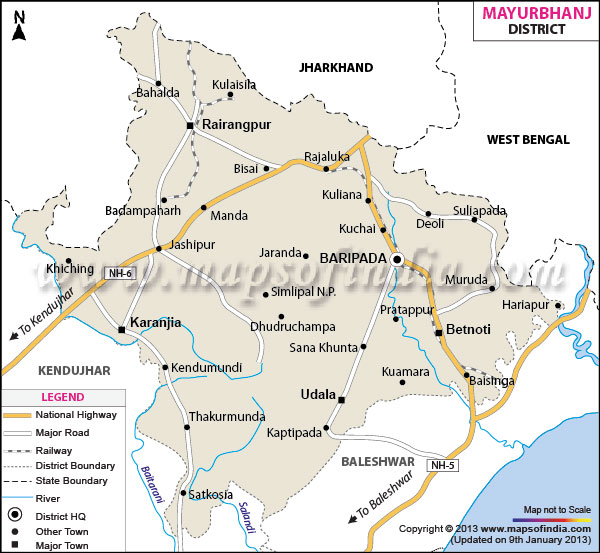
Mayurbhanj is the largest and most naturally beautiful district of Odisha. It is in the north part of the state and borders West Bengal and Jharkhand. Baripada is the headquarters and also a very important center for education, trade and administration. Mayurbhanj is home to great forests, hills, tribal culture and wildlife.
Mayurbhanj is home to many tribes. In the district we find a large number of tribal communities which still very much into their traditional practices, festivals, music, dance, and crafts. The Santali, Ho, Munda, Bhumij, and others are the cultural assets of Mayurbhanj.
Mayurbhanj in fact has a unique place in Odisha’s cultural past as far as Chhau dance is concerned. In Mayurbhanj we see a very popular traditional dance form which is known for its vigorous movements, music and which tells stories from mythology, nature and also from everyday life.
Mayurbhanj is known for its simple living, dense forests and very much in touch with nature. In terms of past, present culture and natural beauty, Mayurbhanj is one of the most interesting in Odisha.
History & Culture
In Mayurbhanj’s history the Bhanja rulers play a preeminent role. The Bhanjas ruled the region for many years and they were key players in Mayurbhanj’s political and cultural past. Former princely state of Mayurbhanj had Baripada as a very important center.
The rulers sponsored education, art and public works in that region. Over the years of princely rule it was noted for the steps taken which improved schools, roads and other public services. In the history of Mayurbhanj we also see the changes which played out in Odisha during the colonial period.
Mayurbhanj was a part of Odisha after India won independence and in time grew into one of the main areas in the state. Baripada saw growth in the fields of administration and commerce, while other cities flourished from agriculture, trade and local services.
The culture of Mayurbhanj is very much that of its tribal population. Tribes in this area have their own customs, songs, dances, festivals and crafts. Music and dance play a great role in village life which is also true for the time of festivals and community gatherings.
The district is a home to a great variety of local handicrafts and forest based products. Bamboo, cane, leaves and other natural resources are used by local artisans to create household useful items and decorative products. Also these crafts provide a very good extra source of income for rural families.
Mayurbhanj’s culture is very much a part of the forest and village life. From generation to generation traditional knowledge related to plants, farming, food and local practices is passed down.
Economy
In Mayurbhanj economy agriculture, forestry, mining, small scale business, public services and tourism play key roles. Also in the large rural area which makes up the district farming is very important as a source of income.
Rice is a primary crop in Mayurbhanj. Also grown are pulses, vegetables, oilseeds and other crops which suit the local soil and weather. The produce supports not only farmers but also traders, transporters, labourers and local markets.
In Mayurbhanj forests also play an important role in the economy. Many rural and tribal families collect items like honey, bamboo, leaves, fruits and other forest produce. They use these products for local purposes as well which they also sell in nearby markets.
Baripada is a major commercial center. It has shops, markets, banks, transport services and small businesses which serve nearby villages. In Rairangpur, Karanjia and Udala local trade and services also are supported.
Government Sector
In Mayurbhanj’s economy the government sector plays a key role which is a result of the large population and extensive rural area in the district. In Baripada which is the district headquarter we have many government offices that deal with administration, education, health, agriculture, land records and rural development.
Government schools and health centers provide education for youth that live in all areas of Mayurbhanj. Public hospitals and health care facilities also serve town and village communities. In those institutions you will also find the main local work force.
Rural development in Mayurbhanj has a great economic impact. Government agencies are into roads, drinking water, housing, sanitation, farm support and other village based issues.
Public Sector
In Mayurbhanj the public sector is very much a part of banking, railways, electricity, health care, education and transport. Banks offer savings accounts, loans and other financial services to farmers, traders, students and families.
Rail transport plays a role in the connection of Mayurbhanj to other parts of Odisha and neighboring states. In Baripada and other rail stations people board which are for education, job, trade and other requirements. Also railways put local products into larger markets.
Electricity and water supply are the backbone which run homes, schools, hospitals, shops and small industries. In rural areas public utilities play a very large role which is that they are supported by the government as many families look to these for basic services.
In Mayurbhanj the forest and wildlife sector has a public role which is played out through Similipal. The government agencies are into protection of the forest as well as management of tourism and other activities in protected areas.
Services Sector
In Mayurbhanj the services sector is seeing growth as we see development of towns like Baripada, Rairangpur, Karanjia and Udala. In these towns which were once small are now to be found shops, banks, restaurants, hotels, clinics, coaching centers, transport businesses and repair services that cater to the needs of the local population and visitors.
Education is a key aspect of the service sector. In Baripada there are many educational institutions which in turn attract students from all over the district. That in turn supports hostels, rented rooms, food shops, book stores and local transport.
Local arts and crafts and tribal products that support small scale businesses. Hand made items, bamboo products, honey and other rural produce which women and men from the village craft are sold.
Tourism
Mayurbhanj is a district which is popular for its forests, wildlife, waterfalls, temples and tribal culture. In the area we find Similipal National Park and Tiger Reserve which is the largest attraction.
Similipal is a home to elephants, tigers, deer, birds and a large variety of wildlife. Also in the forest you will find rivers, hills and waterfalls. At Barehipani and Joranda Falls you can see some of the best natural beauty in the area.
Baripada is also a key to Mayurbhanj tourism. The town is known for its culture which also ties in with Mayurbhanj Chhau. Many visitors who are into Odisha's past and performance of traditional dance forms also come here to learn about it.
In that district also we see many temples and religious sites. At Deokund the waterfall and also the religious value is what it is known for, also we have other local temples which see large attendance during festivals.
Rairangpur and in Mayurbhanj which are also home to other rural and tribal communities. We see local markets, traditional crafts, village festivals and cultural performances there.
Demographics
In the 2011 Census report Mayurbhanj had a population of 2,519,738. The district had a male population of 1,256,213 and a female population of 1,263,525 which gives a sex ratio of *1,006 females per 1,000 males. Also in this district women were slightly more in number as compared to men. which also reports that women were in slight majority.
In most of Mayurbhanj’s area, the population lives in villages as opposed to towns. In 2011 we saw that 92.34% of the population was rural and only in the 7.66% that urban areas had residents. Baripada is the district headquarter and its primary urban center, also in the picture are Rairangpur, Karanjia and Udala which are other key towns.
In Mayurbhanj tribal population is a large component of social structure. In 2011 Census we saw 1,479,576 Scheduled Tribe residents which is about 58.72% of the district's total population. Also we have 184,682 Scheduled Castes which is about 7.33% of the population.
In the 2011 report the district saw a literacy rate of 63.17%. We also see that male literacy was at around 75.79% and female at 50.64%. This gap in literacy between genders points to the issue of need for more focus in the area of education in rural and tribal areas.
In Mayurbhanj most people live in villages and practice agriculture, forest based activities, daily wage work and small local business. Also it is the large rural population which makes farming and village markets integral to day to day economic life.
Odia is a very common language in the district, also many tribal groups speak their own languages. Santali is the main language of the Santal community which we also see in different areas, at the same time Ho and Mundari and other local languages are also used. This diversity in language is a result of the large tribal population and Mayurbhanj’s location near to Jharkhand and West Bengal.
Administration
The district is controlled by the district administration which is led by the District Collector and District Magistrate. The administration runs public services, law and order, revenue, education, health care, rural development and welfare programs in the district.
According to the district administration Mayurbhanj has 4 subdivisions, 26 tehsils and 26 blocks. Also the district reports 404 Gram Panchayats, 1 municipality, 4 NACs and 26 police stations which play a role in the administration of the city and rural areas.
In that district which has over 3,900 villages we see a large rural area in Odisha. Gram Panchayats and local bodies are key players in village development which includes drinking water projects, sanitation, roads and community welfare programs.
Baripada is the base for Mayurbhanj’s administrative and civic needs. The municipal administration is into roads, drainage, sanitation, waste management, street lighting and other civic services which they improve within the district; also the district administration is working to better public services and infrastructure across the entire district.
| Facts of Mayurbhanj District | |
|---|---|
| Official Name | Mayurbhanj |
| Capital / District Headquarters | Baripada |
| Area | 10,418 km² |
| Population | 2,519,738 |
| Religion | Hinduism, Christianity, Islam, and other faiths |
| Language | Odia, Santali, Hindi |
FAQs
Q1: Where is Mayurbhanj located?
Mayurbhanj is in the north of Odisha. It borders neighboring Odisha districts also to West Bengal and Jharkhand. Baripada is the district headquarter.
Q2: Which of the primary crops are from Mayurbhanj?
Rice is a major crop in Mayurbhanj. Also grown are pulses, vegetables, oilseeds and other crops. Agriculture provides for large rural families’ income.
Q3: In which language do people of Mayurbhanj primarily speak?
Odia is a very popular language in Mayurbhanj. Also there are many tribal languages which are used by local communities which include Santali and other regional languages.
Q4: Why should tourists visit Mayurbhanj?
Mayurbhanj has a little bit of everything; wildlife, waterfalls, dense forests and traditional tribal culture. There is also a large variety of native dance. Travellers can escape the city and see a more rural side of Odisha which is also at the same time very much in tune with local traditions.
Last Updated on : August 19, 2026
