







About
All great lands have a secret. Some hide it in high mountains, some under antiqued ruins! Tirunelveli is a place quite different. It lets history stream directly through the life-giving Thamirabarani river, telling stories, many of which have survived empires, dynasties and countless centuries of change. This amazing territory had already given birth to a civilisation in southern India before the advent of modern roads and city life.
Tirunelveli district is situated at the southern part of Tamil Nadu state, which is surrounded by virudhunagar, kanniyakumari, tenkasi and Thoothukudi districts, the majestic Western Ghats act as a natural barrier in the west. For centuries, farming, teaching and religion have existed here, in addition to trade, which has helped to create its unique identity.
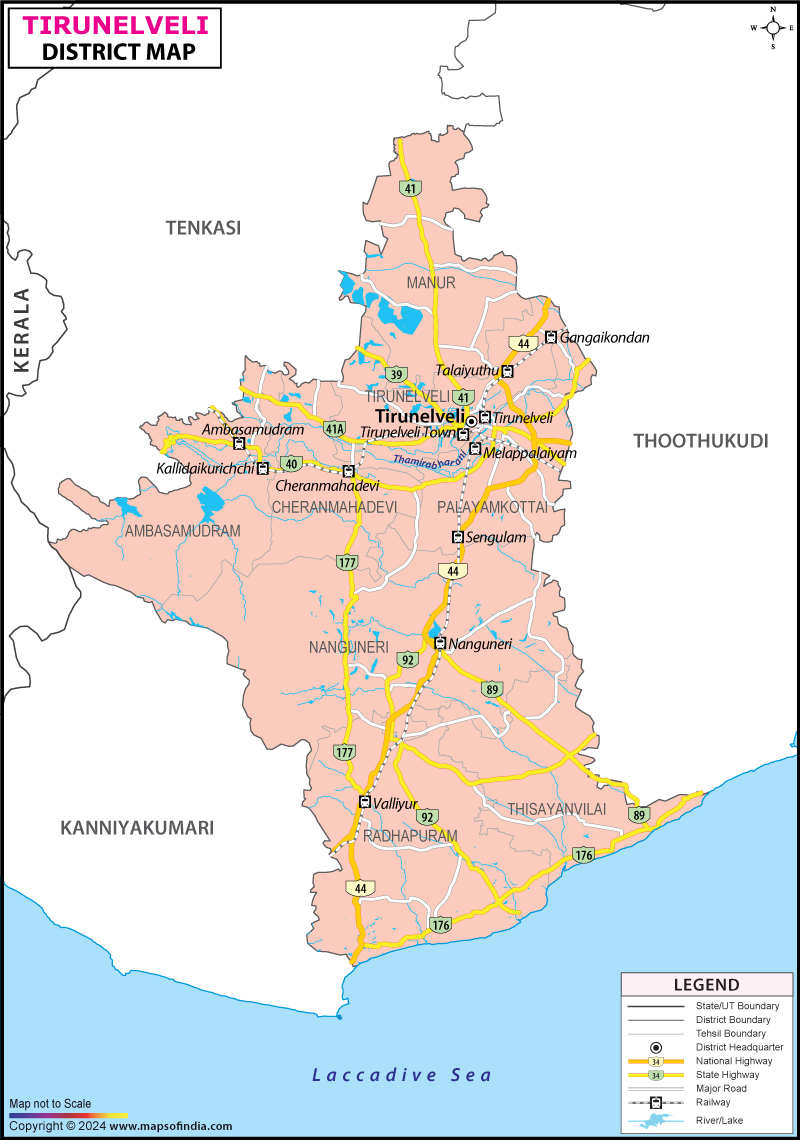
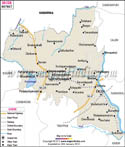
When anybody goes to look for a Tirunelveli district map, they will find a region of great harmony between its fertile plains, its meandering streams, its thick woodlands and its hill ranges. Another point is that the Tirunelveli district map also showcases strategic locations of the district between the Western Ghats and eastern plains, which is an explanation for the constant relevance of this district throughout history. From the point of view of nature, administration, and tourism, as well as geography, the Tirunelveli district map shows and explains a unique zone of human habitation and natural beauty that is still vital in everyday life.
History & Culture
The journey of Tirunelveli is like an epic with the stakes continually fluctuating from chapter to chapter. This is one of the significant settlements of the Pandya Kingdom, as per ancient Tamil literature. The banks of the fertile Thamirabarani River had led to abundant farming and highway trade connecting and linking this area with distant kingdoms and outside merchants.
The district had been the subject of successive rulings. Administrative and religious centres were developed and the Pandyas had influence after the Cholas, the Vijayanagaras and the Madurai Nayaks. A critical battleground of opposition to colonial expansion in the 18th century was the area. Tirunelveli was a significant part of the freedom movement against British rule, with freedom fighters and local chieftains rising against it.
One of the most prominent aspects of the district has always been religious harmony. The renowned Nellaiappar Temple continues to be one of the architectural wonders of the state and continues to be a popular tourist landmark as well as a historical landmark among pilgrims and historians.
A lot of cultural practices have been incorporated and entrenched in people's daily lives. Carnatic music, Bharatanatyam dances, folk dances and temple festivals have been continued for the preservation of the art tradition of the district. The people enjoy festivals and events like Pongal, Deepavali, Navaratri, in addition to the temple car festival; people wear bright clothes and enjoy the festivities with great devotion and happiness.
It is also the exclusive food of Tirunelveli. It is the world-famous Tirunelveli Halwa, which took the fame of the district and traditional dishes including rice, lentils and coconut grown in the local fields. All this is a representation of the rich agriculture of the region.
The Tirunelveli district map will clearly show that there is a close relationship between rivers, temples and historic settlements. All the villages have a story, all the streets point towards one of the ancient temples, and every landscape resonates with the past. In conclusion, a detailed Tirunelveli district map transcends its role as a geographical map and becomes a portal to centuries of cultural development.
Economy
The economy of Tirunelveli district is quite diversified and resilient, as it has gained strength from Agriculture, manufacturing and education, and a growing service sector is a major hope. The fertile lands of this district are irrigated with water from the perennial Thamirabarani waterway and extensive cultivation has been going on, forming a very strong livelihood base for this district.
Government Sector
The government sector has a significant role in employment and development. The education and healthcare, public welfare, infrastructure, and rural development are under the control of the district administration, with the management of revenues. Many government schools, colleges, hospitals and administrative offices provide stable jobs and the provision of public services to both urban and rural populations.
The government-funded, large-scale irrigation projects have helped to increase the productivity of farming in the district. The roads, water supply facilities, housing schemes and digital governance are continuously improved with development programmes, thereby bulking up the district's overall economy.
The Tirunelveli district map is a typical representation of its geography and economic activities, which includes the vast extent of irrigation systems that facilitate agricultural pursuits throughout the district.
Public Sector
The public sector has an important part to play as a contributor to the district's industry. Numerous economic stability players are in the electricity and distribution sector, in the transport sector, in the banking sector, and in the public utilities. The public sector is still focusing on educational and health care institutions that are helping the region to grow.
The district is also indirectly affected by various energy and industrial projects in the vicinity that boost overall economic development in the south of the state. Improved infrastructure has increased connectivity of both businesses and commuters.
Service Sector
Over the last few decades, the services sector has grown steadily. Education is counted among one of the significant strengths, as many schools and colleges have come up that have attracted students from nearby districts and even from abroad. There are also significant contributions to employment made by healthcare services, financial institutions, retail services, hospitality services and services aided by information technology.
Generally, agriculture is the main source of income for rural people. They are engaged in extensive cultivation of paddy, bananas, pulses, coconut, cotton, sugarcane and millets. Especially, banana cultivation is known nationally for its quality and production. Food processing, textiles, handlooms and traditional crafts activities add to the economic activities in small scale.
Another industry to rise is tourism. Hotels, restaurants, transport companies and local businesses provide services to the visitors who explore the temples, waterfalls, wildlife sanctuaries and hill regions of the district.
Now, from the perspective of a Tirunelveli district map, it is understood that the different sectors complement each other, ensuring long-term development in the area through such proximities as the agricultural areas, the transport routes, and urban bodies.
Tourism
Every traveller gets experiences that change from one place to another in Tirunelveli. Waterfalls roar suddenly in a peaceful temple town. Trees grow in the thickest of woods outside an organised field. Ancient stone architecture stands proudly beside vibrant modern streets.
Nellaiappar Temple is surely an identified landmark of the district. This magnificently beautiful temple complex consists of a towering gopuram, intricate engravings, the musical pillars and astonishing architecture dedicated to Lord Shiva.
The Manimuthar Falls attract tourists primarily for the waterfall that flows over cliffs down to the lagoon, amidst a verdant canopy of trees. There is also the Manimuthar dam that can be found nearby, which proves itself attractive, along with providing irrigation for the district.
Another favoured place to visit is Papanasam. The Papanasam Temple, the picturesque dam, lakes, and hills provide a rich spiritual and aesthetically fulfilling journey. The nearby Agasthiyar falls continues to be the favourite amongst the families and nature enthusiasts for its air of refreshment.
Tourism potential is also very high in the district, with the Western Ghats. Beautiful views throughout the year, lots of hills to climb for sights and hilly trekking roads through the forest for views.
Every tourist who visits Tirunelveli begins their tour with a Tirunelveli district map that makes it easy for them to visit the temples, waterfalls and protected forests of the district in an efficient manner. Having a reliable Tirunelveli map for the region is of utmost importance to know about if you're planning on taking a trip of more than just a day.
Demographics
Around 3077233 is the total population of Tirunelveli district in the 2011 Census. The district is a blend of an urban and rural population and agriculture still plays an important role in rural life.
With a literacy rate of approximately at 82.5%, the district has been focusing on the education and social development areas for quite some time. Schools throughout the district have made many contributions and made many strides to advance literacy and skills over a number of decades.
The major language used all over the district is Tamil. With the district's multi-cultural nature, English, Telugu, Malayalam and Urdu are widely used in the education, administration and business sectors of the district.
An analysis of the Tirunelveli district map and population statistics helps them to visualise the spatial evolution of the situation surrounding rivers, transport routes and prosperous agricultural regions.
Administration
The District Collector acts as the head of the District, supervising the revenue collection, Law & Order, Development Programme, Welfare Programme and delegating its departments that belong to various types of Government Programmes.
The present Tirunelveli district has eight taluks: Tirunelveli, Palayamkottai, Ambasamudram, Nanguneri, Radhapuram, Thisayanvilai, Cheranmahadevi and Manur, with the formation of Tenkasi district in 2019. Administrative structures are intact and play their role in making governance and public services run normally.
The district comprises some 425 revenue villages, having the role of administration, agriculture, rural development, etc.
The administrators, planners, researchers, and visitors of Tirunelveli district have used the current Tirunelveli district map regularly for insights into the jurisdictional boundaries, settlement patterns and transport network. It is through this incredible place that any experience begins and ends – it is information provided through a Tirunelveli district map, which has coupled geography and history in a very engaging story.
FAQs
Q1: How many villages are there in Tirunelveli district?
Tirunelveli district has approximately 425 revenue villages.
Q2: What is the population of Tirunelveli district?
According to the 2011 Census, the population of Tirunelveli district is 3,077,233.
Q3: What is Tirunelveli district famous for?
Tirunelveli district is famous for the Nellaiappar Temple, the Thamirabarani River, the Kalakkad-Mundanthurai Tiger Reserve, scenic waterfalls, banana cultivation and the iconic Tirunelveli Halwa.
Last Updated on : July 28, 2026
