







About
Viluppuram district is one of the most important districts in Tamil Nadu where ancient dynasties strode ahead under burnished skies, where the chime of temple bells continues to ring down the centuries, and topography naturally imprinted with history now traversed by highways at speed. It is situated in the north-eastern part of Tamil Nadu, literally it acts as, gateway for north and west side of Tamil Nadu from Chennai.
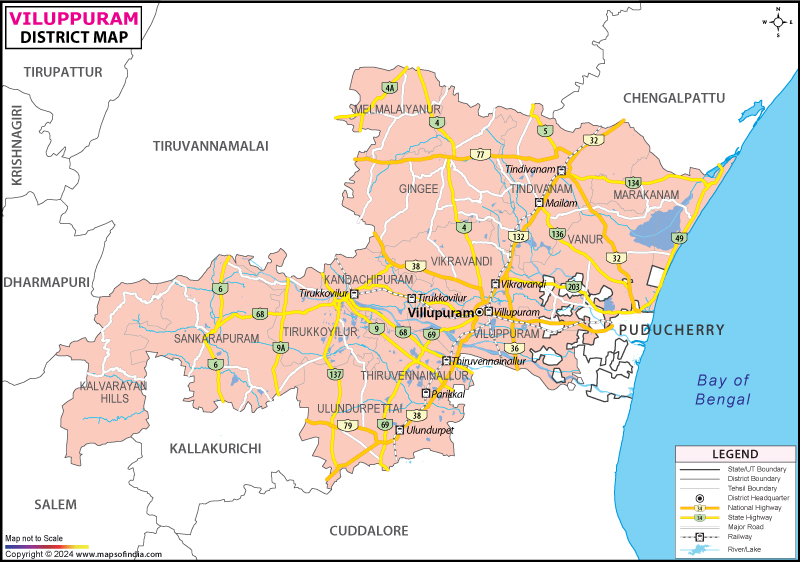
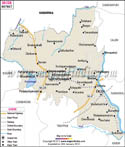
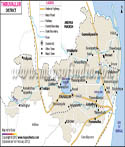
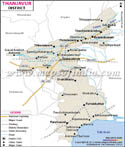
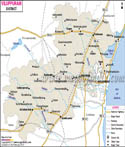
The district's history is like a terrific historical epic. The land is flat, with fields of crops extending out towards the horizon. Rocky landscapes are dotted with ancient forts. Roads serve as on foot avenues that have existed in some form for hundreds of years. In the meantime, industries, schools and businesses are still growing. The Viluppuram district map also shows us not only the administrative divisions of the district but a district that has long been a centre for the interactions between diverse cultures, kingdoms and economic regions of Tamil Nadu.
History & Culture
Viluppuram district has a history deeply intertwined with intrigue, conquest, devotion and change. This area is recognised as being a prominent region within the South Indian states, where there existed strong ruling dynasties, long before the coming of modern administrative divisions. The Cholas left their mark on the landscape through their architecture and culture. The Pallavas exerted an impact on religion, art and administration. The Pandyas and the Vijayanagara later enriched the area. Settlements developed over the ages along the trade routes and the strips of agricultural land. The strategic locations in the Viluppuram district in the old times are evident in this district map even today, which were related to the region's politics and trade.
Gingee Fort, surely, is an integral part of the district's story. The fort stands on rocky hills, rising steeply, and is often referred to as the "Troy of the East". However, its imposing fortifications were admired and feared by ambitious rulers. Nowhere is it more likely to be a historical thriller than in front of its walls. The importance of this strategic region can be understood from the Viluppuram district map and this is the main reason why the various powers wanted to control this region.
The district of Viluppuram is rich with values, continuity and culture. The temples host colourful festivals and thousands of people go to venerate them. The villagers actively celebrate along with folk songs and dances that are played in between. Amidst a combination of ancient traditions and contemporary lifestyles. Tamil continues to be the main culture which rules literature, performing arts and religion, and even social life. Pilgrimage visits to sacred centres take place all year round and local communities have retained their beliefs and practices over the centuries. The long-lasting association between heritage sites and settlements becomes apparent on the Viluppuram district map, which presents the cultural geography of the district with its rich heritage sites.
The diversity of religions has also helped to shape the district's identity. The temples are the sources of spirituality, while local communities also have churches and mosques to cater for their needs. Different festivals like Pongal, Deepavali, Navaratri and the festival of temple chariots are observed in full zeal. The streets are alive with colours, music, and worship. Those times are when history seems to come alive rather than to stand off.
Economy
The economy of the district is still largely dependent upon agriculture. Important parts of the population are directly or indirectly reliant on farming. Extensive cultivation of paddy, sugarcane, groundnut, millets and pulses. Seasonal fluctuations prevail in economic activities throughout rural regions. The agricultural areas marked on the Viluppuram district map show how fertile land plays an essential part in strengthening livelihoods and markets.
The Government Sector makes a significant contribution to economic development. Thousands of residents work in the district administration, education, health, revenue and law enforcement services, as well as public welfare programs. All programs and developmental efforts the government has undertaken for the rural population, increasing road access, upgrading infrastructure, upgrading irrigation and investing in social welfare have a direct effect on economic stability. The Viluppuram district map shows that public works are continuing to boost connectivity and enhance the quality of life as seen throughout the district.
However, the Public Sector participates via transportation services, electricity distribution, banking services and a number of state owned institutions. The development of public infrastructure has improved the roads, education and health facilities available. Not only does the investment enhance people's quality of life, but it also generates indirect jobs. Roads that are strategically placed, as observed on the Viluppuram district map, can be connected to higher levels of movement of goods and people.
The district's economy has grown to be dominated by the Services Sector. Significant levels of employment are provided in retail trade, education, healthcare, hospitality, logistics, financial services and information-based activities. Schools, along with other educational institutions, draws students from neighbouring districts, necessitating the need for housing services, transportation, and commercial services. Tourism enterprises are also a source of income for local people. The scope of the Services Sector grows more and more important, especially with the enlargement of cities and the rising demand for services from consumers. The transformation of this economy makes sense when viewed on the Viluppuram district map, showing the towns and semitowns that are growing.
The economy is also diversified by small-scale industries and agro-based industries. Local development is fostered by rice mills, food processors, handicraft artisans and construction-related businesses. These sectors form complementary resources and propel the economy into a healthy balance of traditional strength and new opportunity.
Tourism
The experience of any tourist in Viluppuram district creates an image of mystery, grandeur, spirituality and nature for those who enter. If that sounds like a movie plot, it is, for indeed, tourism in Viluppuram is a journey, just like a film. Each road appears to be a way to a different tale to discover. The Viluppuram district map is a great site for travellers interested in historical monuments, sacred shrines and beautiful places.
The iconic attraction of the district is Gingee Fort. The overall scene features large stone walls, tall towers, granaries, temples, and fortifications. Those who roam its rocky trails see its scenery and sense its history like a rapturous experience. It stands to reason that the fort was so prominent in the south Indian history in view of its strategically situated location in the Viluppuram district on the map.
Another important place of interest is Melmalayanur, which is renowned for the Angala Parameswari Temple. The pilgrims hail from various localities of Tamil Nadu to offer 'bhajana' and attend religious functions. In large occasions, it's something to behold. Lamps flicker.
The seaside lands around Marakkanam provide a unique enjoyment in themselves. There are salt pans scattered throughout the area and the landscape presents unique visual scenery. The coastal environment offers an opportunity to enjoy nature and traditional livelihoods. The place is also highlighted on the Viluppuram district map and the district is also connected with the seaside of the Bay of Bengal.
There are people who come to Thiruvakkarai with an interest in spirituality and geology. Vakrakaliamman Temple is visited by devotees and the Fossil Wood Park is visited by enthusiasts and researchers of nature. Fossilized wood samples are rather special fossils and provide rather special views into the past.
Other cultural sites, which are dotted around the district, add to the tourist experience. Numerous have inscriptions, sculptures and architectural elements that tell of the stories of medieval India in the South. Viluppuram district will be of interest to tourists seeking heritage, religious and cultural experiences.
Demographics
Viluppuram district is one of the big districts among Tamil Nadu with vast geographical extent and population. As per the Census of 2011, there were about 3.46 million people in the district prior to the subsequent territorial reorganisation that formed Kallakurichi district. The distribution by demography showed a predominantly rural nature, with a persistent, steady increase in urban centres. The following statistical patterns depicted on the Viluppuram district map indicate the equilibrium between the rural, urban and agricultural sectors.
About 71.9% of people in the state were able to read and write as per 2011 data, as shown in the Census. Previous investments in education have shown some positive progress in terms of educational outcomes in the district. The major language throughout the area is Tamil. English is also the key language of teaching, administration and business. The Tamil language is infused throughout the literature, the festivals, society and everyday usage, with the culture of Tamils.
Administration
Viluppuram District is structure under a system of with clearly defined responsibilities which will ensure effective governance and provision of public services. There is a District Collector who is head of the District and is responsible for both administration and development programmes and revenue and liaison with various Government Departments. The administrative structure shown in the Viluppuram district map is provided for the convenience of the district to plan and manage the social and geographical diversity prevailing in the district.
The district consists of different Taluk of the town, mainly Viluppuram taluk, Vanur Taluk, Vikravandi Taluk, Thiruvennainallur Taluk, Marakkanam Taluk, Tindivanam Taluk, Gingee Taluk, Kandachipuram Taluk and so on which changes with administrative changes on year to year basis. Prior to the formation of Kallakurichi, Viluppuram was one of the biggest rural administrative regions in Tamil Nadu with over 1400 villages. Panchayat Institutions are very important institutions of local government, rural development and community participation.
Rural connectivity projects, public welfare schemes, digital governance projects and infrastructure investments are further bolstering administrative efficiency. Being in the strategic location of the district also makes it important to the administrative and economic network of Tamil Nadu.
FAQs
Q1: What is the total number of villages in Viluppuram district?
Viluppuram district has more than 1,400 villages.
Q2: What is the population of Viluppuram district?
Viluppuram district had a population of about 3.46 million as per the 2011 Census.
Q3: What is Viluppuram district famous for?
Viluppuram district is famous for Gingee Fort, ancient temples, and its rich cultural heritage.
Last Updated on : July 28, 2026
