







About
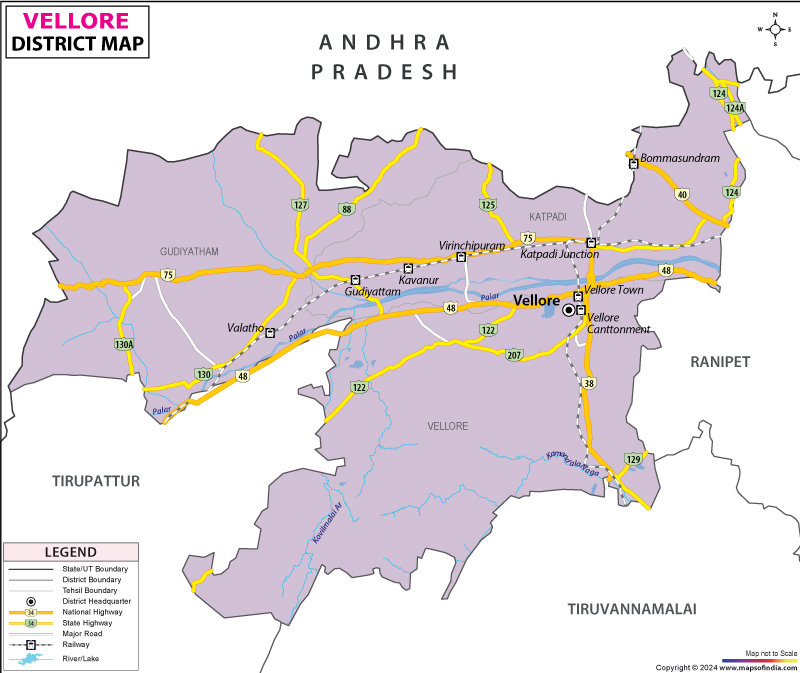
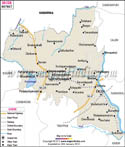
Vellore, located in the northeast of Tamil Nadu, carries significant historical weight and holds key geographic importance. Near the Palar River, it serves as a long-standing entry point into the region from the north. Though small in size, the town links large centers, making movement easier across states. One clue to its past hides within the name itself, drawn directly from features of the old countryside. From two Tamil terms stems the city’s title - “Vel,” pointing to thickets of spear-like Acacia that long covered its river plains, while “Oor” signals habitation among them. Known plainly as the home of the Velan woods, its label traces its roots into landscape memory. Some stories instead tie it to Murugan’s sacred lance, carried in myth far beyond temple walls. Now recognized worldwide by new labels - that of Fort City, also India's Medical Hub - it holds old stone ramparts beside clinics drawing patients across continents. Ancient battlements stand near universities shaped for global reach, forming a place where persistence meets change without losing balance.
History & Culture
Deep within South India, Vellore carries echoes of power struggles that altered regional trajectories more than once. Its position on key trade and military routes drew fierce interest across generations. Ruling clans such as the Pallavas, then later the Cholas, turned their eyes here, followed by expansions from the Rashtrakutas and Pandya forces. Power shifted like tides; no dynasty held it long without challenge. In the 1500s, imperial weight tilted toward this town when the Vijayanagara network elevated it as the seat for the Aravidu line. After that chapter faded, distant courts reached in - the Bijapur sultans claimed it next. Then came a brief dominion from Maratha commanders, followed by governance under Carnatic-based nawabs adjusting to changing loyalties.
Early in the 1500s, Vellore saw a shift when Chinna Bommi Reddy, together with Thimma Reddy, raised a powerful fortress for the Vijayanagara Empire. Despite originating under their direction, command eventually passed into the hands of the British East India Company, drawn by its unyielding structure to strengthen dominance in the Carnatic. Because of this role, the stronghold entered India’s narrative of self-rule. Inside those ancient stones, on July 10, 1806, native sepoys launched an intense outbreak - the first large-scale military pushback against colonial rule. Before sunrise, without warning, that moment signaled deeper unrest ahead, positioning Vellore as ground zero for resistance decades prior to the storm of 1857.
Among its lanes, traditions stretch back through layers of history - Tamil foundations layered beneath Telugu, Urdu, and Kannada influences left by changing dominions. Not just existing together, faiths move in step, shaping daily routines like breath. Stone-cut temples sit near aged mosques and churches built under British skies, all sharing the horizon without dispute. Seasonal shifts arrive with spectacle; colors spill into streets during festivals such as Aadi Pooram, one peak of devotion among many. At Jalakanteswarar Temple, boats glide through water rituals, adding motion to time-honored observances. What makes Vellore unique isn’t just its past, but how it tastes - biryani here is more than spice, built through time instead of speed. Then there's Mullu Kathirikai: small, tough-skinned, yet prized enough to earn protected status. Not by chance does this region hold on to old ways; belief, routine, and meals feed into something steady. The result? A place shaped slowly, where what came before still shows up daily.
Economy
Woven through Vellore’s economy are threads of industry and worldwide links, shaped largely by factories making goods for overseas markets. Medical care there serves far beyond local borders. Higher learning pulls students from many regions. Each part connects tightly, forming a system where production, treatment, and teaching shape daily life.
Government Sector
Backed by steady investment, the government underpins administrative functions across regions while boosting job availability locally. Urban growth sees consistent funding flow through district authorities, shaping roads, utilities, and services such as healthcare. Situated within Vellore are key federal and provincial departments alongside farming research hubs, plus an extensive bus transit framework managed by TNSTC. Support for heritage textile work arrives via organized structures - Co-optex being one example - that link weavers to broader economic streams.
Public Sector
Though much of Vellore’s economic strength comes from private companies, government-run operations still play a key role in shaping its industrial landscape. Located close by, Ranipet hosts a large BHEL facility producing boiler components - once under Vellore's administrative umbrella. Instead of relying solely on corporate finance, the area leans on state-owned banks and local credit cooperatives. These institutions provide vital funding, supporting everything from village-level farming to small manufacturing units across the region.
Services Sector
Nowhere more than in Vellore does the service industry shape economic strength, bringing in significant earnings from overseas. Despite shifts elsewhere, this city thrives on what it offers globally through expertise and support roles.
VIT stands among India’s top engineering schools. With many thousands of students arriving from around the world, its presence reshapes nearby property trends. That shift spills into shops, restaurants, and lodging services. Growth follows where so much demand gathers.
Tourism
Perched across rocky terrain, Vellore holds remnants of old battlements alongside shimmering places of worship covered in gold leaf. Among these stand calm retreats nestled in elevated landscapes, away from city noise.
Major Attractions:
Deep within its ancient walls, Vellore Fort rises from solid slabs of granite, crafted during the 1500s as a stronghold of strategic design. Encircling it, an unusually broad ditch once teemed with crocodiles, serving as both barrier and warning. Though built for war, the grounds hold quiet places of worship - among them, a temple stands beside a mosque, while nearby, a church shares space without conflict. Secluded inside, the old Tipu Mahal rests apart, holding memories of rule long past.
Hidden among the lower slopes of Malaikodi lies Sripuram Golden Temple, a recent addition to sacred spaces honoring Goddess Lakshmi Narayani. While not ancient, its presence stands out due to dazzling craftsmanship - more than 1,500 kilograms of gold leaf wrap every surface, applied carefully by skilled hands using age-old techniques. Though built in modern times, it ranks among Earth's grandest golden edifices. Surrounding the temple, vegetation forms a vibrant pathway shaped like a star, offering quiet contrast to the shimmer up close.
Jalakanteswarar Temple stands within the walls of Vellore Fort, rising quietly from centuries past. Built during the closing years of the Vijayanagara period, its form unfolds through careful craftsmanship. Stone surfaces burst with intricate sculptures shaped by patient hands long gone. Pillars rise high, each one home to figures pulled from old legends - part beast, part god, fully imagined. Instead of just prayers and silence, there is movement caught in rock - the dance of stories frozen mid-step. The Kalyana Mandapam waits further in, a space meant for ceremony yet never loud. Hewn wholly from a single mass of stone, it holds up its roof like memory bears weight.
Deep within the quiet stretch near Vellore - roughly 25 km out - a green haven unfolds beneath the Javadi Hills. Flowing falls appear here each season, drawing eyes upward through thick tree corridors. Instead of crowds, visitors meet winding trails plus caged wildlife up close in a compact zoo setting. Because of its calm rhythm, weekends fill quickly with those chasing fresh air over city noise.
Demographics
Vellore district stands out because of its high literacy rates, rooted in long-standing cultural interactions and consistent support for schooling. Shaped by two contrasting sides - vibrant cities and quiet countryside - the area balances modern energy with enduring customs. Where urban zones cluster tightly, rural areas spread thinly, both bearing marks of past transformations. Shifts over time echo clearly in how people live, whether near market streets or open fields.
Recent Census data, after the area was divided into three districts, shows Vellore has about 1,614,242 residents. Even so, it still holds together as one cultural unit, mixing city energy with country life. In towns and industrial hubs, over half - nearly 56 percent - of the people live, drawn by jobs in factories and service work. Away from those spots, the rest settle in farming communities, where fields shape everyday existence, supporting ways of living passed down through time.
What sets Vellore apart is its strong educational foundation. Nearly four out of five residents can read and write, a level similar to the overall rate across Tamil Nadu, showing how the area moves alongside wider developments. Among men, the proportion climbs higher - over eight in ten are literate. For women, it remains less, just above seven in ten, yet improvement here has been consistent through the years. Behind these shifts lie policies from authorities along with efforts by local groups raising understanding about learning's value. Slowly, gaps between genders have shrunk. Progress like this speaks of deeper societal movement - where schooling now matters more than before, not simply as needed but as a sign of changing views.
Most people in Vellore speak Tamil - it shapes daily routines, traditions, and social bonds across the district. Over eight out of ten residents use it at home, making it central to how identity forms here. The nearby borders with Andhra Pradesh bring Telugu into schools, markets, and even family gatherings now and then. Meanwhile, Kannada appears quietly - on shop signs, in conversations between traders from neighboring regions. Traces of older times linger too: Urdu lives on through religious practices and craft-based livelihoods.
Communities linked to tanning often pass down Urdu alongside skills handed down through generations. Even after empires faded, their speech patterns stayed rooted in certain streets, homes, and places of worship. Though less common, Hindi appears in classrooms - often carried by students arriving to attend college, shaping how speech blends across the region. Layered together, dialects and customs build a pattern, one showing Vellore has spent centuries absorbing shifts through movement and learning.
Administration
Running things smoothly, Vellore manages fast city expansion through a clear administrative setup. At the top sits the District Collector, leading operations out of the Collectorate building. Though growing quickly, services keep pace under this structure.
Now overseeing operations more efficiently, the district splits into two main Revenue Divisions - Vellore and Gudiyatham. These units break down next into six smaller administrative blocks known as Tehsils, or Talukas. Each division manages its share of local oversight through these subdivisions. Structure shifts like this often follow changes in regional planning.
Vellore City Municipal Corporation handles city governance through a network of distinct operational zones. Instead of centralized control, authority spreads across divisions that manage urban services separately. Rural administration looks different - here, three hundred thirty-three revenue villages fall within clusters known as development blocks. These areas operate with support from elected village councils called Gram Panchayats. Governance shifts form depending on whether the setting is urban or rural.
| Facts of Vellore District | |
|---|---|
| Official Name | Vellore |
| Location | Tamil Nadu |
| Area | 1336.42 sq. km |
| Population | 1556597 |
| Language | Tamil |
FAQs
Q1: How many villages are located in the Vellore district?
There are 317 villages in this district.
Q2: What is the population of the district?
The population of the district is 1556597.
Q3: What is the district of Vellore most famous for?
Vellore earns global recognition under the name "Fort City," anchored by a striking 16th-century fortress where the pivotal 1806 mutiny unfolded. Shimmering prominently sits the Sripuram Golden Temple, layered with exactly 1,500 kilograms of solid gold. Manufacturing also shapes its profile - especially the high-quality leather goods shipped worldwide.
Last Updated on : July 16, 2026
