






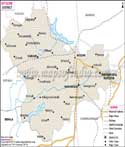
About
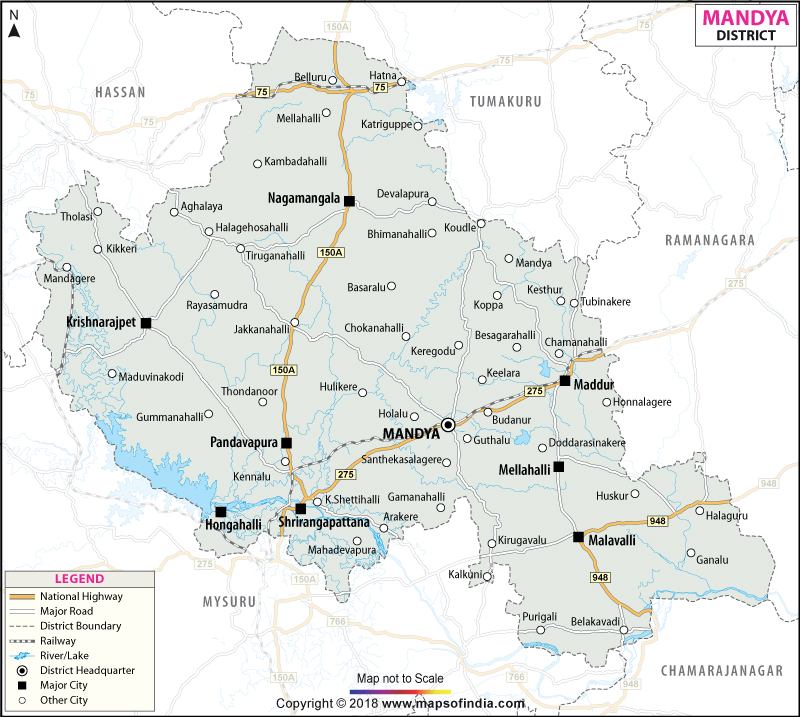
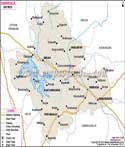
Mandya is proudly located in the southern plains of Karnataka with a perfect setting of green fields, a very well-developed past and a great landscape all around. It is one of the very few places where you can find a complete mix of agriculture, history and nature in harmony. From the busy capital of Bengaluru to the cultural and heritage site of Mysuru, it is Mandya that lies in between and that means, geographically and culturally, it is a very special location. Significance of the Title: Besides being internationally well-regarded, Mandya is also celebrated on the ground with an adorable nickname - "Sakkara Nagara" or "Sakkari Nadu". Its translation is "The City of Sugar" or "Sweet Land", as the term suggests. This name is not just a fanciful description - it is an accurate portrayal of the district's physical reality and its economic lifeblood. Mandya ranks high in sugarcane cultivation and is, on the face of it, not a surprising claim since it is one of the sugarcane belt districts in the country. The view of extensive, green sugarcane fields that are interrupted only by the ancient canals is the landscape signature of the area. The presence of huge sugar mills and traditional handmade jaggery (called "Alemane") processing houses not only gives the place its sweetness but also its identity.
History & Culture
The area of Mandya beneath which ground several mighty South Indian dynasties emerged and were also destroyed can be considered a microcosm of the region's history. The name "Mandya" is believed to have originated through legends, myths and stories from that time. As for the spiritual connection, one popular interpretation is that the area got its name from the sage Mandavya who undertook severe spiritual austerities (tapas) and thereby, through his spiritual powers the wilderness was turned into a centre of cosmic power. During the ancient Kritayuga the region was known as Vedaranya for the reason that it is said sages taught wild animals to recite Vedic hymns. Later, it was Vishnupura and finally, through gradual colloquialization of Mandevemu to Mandya. The Western Ganga rule encompassed central and southern parts of the erstwhile Mysuru state with governance in the Cauvery basin areas since the 2nd century AD up to around the 11th century. They called the affluent area of Gangavadi. After the Gangas, the Hoysala Empire rose to power when Bittideva (Vishnuverdhan), the legendary king, and Gangaraja - a very able general, expelled the Cholas. The Hoysalas have been credited for building Mandya full of monuments which they later lost to the Vijayanagara Empire, which became a major one in the 14th century. Befittingly, the reign of the Wodeyars of Mysore took over in the late 15th and early 16th centuries. After seizing Srirangapatna, Raja Wodeyar made it a royal court for his kingdom. The mid to late 18th century saw the aggressive rise of Hyder Ali and his son, the "Tiger of Mysore, " Tipu Sultan - the region was transformed.
Economy
Mandya's economy is largely dependent on agriculture. A little over half of the district's total land area is under cultivation. Millions of people are directly engaged in farming, and their source of livelihood is agriculture. Thanks to the KRS Dam's vast canal system that supplies water, farmers can have very profitable harvests with water-hungry crops. Sugarcane is the major economic crop and the rest are rice millet coconut, and vegetables per the season. However, the modern economy of Mandya has diversified across distinct sectors, which can be categorized cleanly into three primary segments:
Government Sector
The Government Sector is mainly responsible for the organization and funding of all the work about infrastructure development, agricultural stabilization, and civic management of the district. Administrative Operations: In Mandya City, there is a District Collectorate (Deputy Commissioner's Office), which is the main governing body and through it, the District Collector (Deputy Commissioner) oversees revenue collection, implementation of welfare programmes as well as law enforcement in the rural and urban local bodies. Irrigation and Power: Water Resources Department is charged with maintaining a system of hundreds of waterways that start near KRS and Hemavati dams. It may be remarked that Chamundeshwari Electricity Supply Corporation (CESC) manages local power distribution networks that feed domestic lines and the agricultural pump-sets in villages. Agricultural Support Extensions: The state government has set up many APMCs (Agricultural Produce Marketing Committees) throughout the seven taluks in cooperation with the Department of Agriculture to help stabilize farm prices, offer storage solutions, and allow farmers of paddy and ragi to directly sell their produce at purchasing centers.
Public Sector
The public sector in Mandya is Mainly occupied by agro-industrial developments designed for the processing of local produce. The Sugar Cooperative Movement: The historical nucleus of Mandya's public/cooperative industrial scenario is the Mysugar Sugar Company, Mandya, Nalvadi Krishnaraja Wodeyar : Mandya KMF Mandal District Co-operative Milk Producers
Services Sector
Mandya's services sector has soared with the completion of the Bengaluru-Mysuru Expressway, serving as a connector between rural agricultural activity and city-based commerce. Information Technology & Tech Parks: Being adjacent to Bengaluru and Mysuru, a series of satellite IT businesses and engineering consultant offices are now setting up shop along expressway corridors. They are employing technical graduates coming out of local colleges like PESIT Mandya. Hospitality and Highway Tourism: The expressway passing through Maddur, Mandya and ending at Srirangapatna has developed an immense range of hospitality infrastructure. It is the employment of thousands of people in hotels, gourmet restaurants, filling stations and handcraft bazaars that cater to daily commuters. Banking and Micro-finance: With major agricultural cooperatives societies and microfinance institutions supporting crop loans, equipment loans and financial services to micro-enterprises, there are very few villages in the district without a commercial bank presence.
Tourism
Mandya has the natural advantage of a landscape as well as history, making it a destination for tourists with attractions from ancient times to the wildlife parks and even the modern marvel of engineering. Tipu Sultan's Memorial at (Srirangapatna): The whole of this island-like town is like an outdoor historical museum. Chief spots are the Dariya Daulat Bagh (Tipu's summer palace that is constructed entirely with the wood of teak trees and is decorated with a collection of amazing pictures on the walls - frescoes), Gumbaz (the handsome Persian-style mausoleum wherein lies the remains of Tipu Sultan alongside those of Hyder Ali), and the awful underground prisons known as Colonel Bailey's Dungeons, which the British officers were tied to during those bitter wars. Cheluvanarayana Swamy Temple (Melukote) is one of the temples that will have visitors looking at them amazed because they are carved out of stone to such perfection. The temple is on the side of the huge Kalyani (temple pond), one of the major features of the town and a location shot by many Indian cinematic films. Just below Yoga Narasimha Swamy Temple is a stone staircase that leads to this tiny temple, located on the very highest peak of the hill next. Natural and Wildlife Attractions Shivanasamudra Waterfalls: Close to Malavalli taluka, the Kaveri River jumps onto a rocky cliff that is 300 ft long and gets divided into two separate, loud cascades Gaganachukki and Barachukki. During the height of the monsoon season (between July and September), the tremendous flow of water results in the creation of a fine mist spray giving us one of nature's most awe-inspiring sights at the Shivanasamudra waterfall. Surrounding dry deciduous forests are the natural home of Mahseer - an elusive game fish that has been found in these rivers.
Demographics
Demographic details of Mandya district reflect a shift from a totally agrarian village landscape to an educated and interconnected populace. The baseline statistics collected by the Census operations reveal the next social - economical structure: Mandya district is home to 18,05,769 people, per the official census figures. Male Population is 905,085 and Female Population 9,00,684. Gender Ratio: Mandya enjoys a very high sex ratio with 995 females per 1000 males which is far above the national average in India. Latest local statistics suggest the current population has not exceeded 1.85 million. Mandya district's overall literacy rate is 70. In Mandya City alone, it's a totally different picture because it is an urban center. The literacy rate is almost 85. 32%, a figure that clearly demonstrates that more schools and engineering colleges being established in city areas are a trend. As is standard for the government as well as local people, the language Kannada remains the top choice for administration and mother tongue. Still due to the nature of past migrations and being located fairly near other state boundaries, there are a few small population groups whose members mostly speak Urdu Telugu as well as Tamil. The two centers of business namely Srirangapatna and Mandya City also have these language speaking communities concentrated within them. One should know that English is also spoken and understood quite fluently in the business world hotels restaurants and in schools.
Administration
The Mysuru revenue division administers Mandya district for effective governance, collecting revenue, maintaining peace, and enforcing the law. It is mainly divided into 2 revenue subdivisions viz- Mandaya Subdivision and Pandavapura Subdivision. Tehsils (Taluks): All over the country the administration of a district is divided into 7 Tehsils. Each Tehsildar is the officer responsible for running of local government, maintaining land records, and citizen services. Villages: Comprising 1,477 villages, Mandaya has an efficiently organized network of rural localities. These are 1,368 census-recorded inhabited revenue villages plus small hamlets.
| Facts of Mandya District | |
|---|---|
| Official Name | Mandya |
| Location | Karnataka |
| Area (km2) | 4962 |
| Population | 18,05,769 (2011) |
| Language | Kannada,Telugu, Urdu |
FAQs
Q1: How many villages are there in the district?
The Mandya district has 1,477 villages.
Q2: How many people consist of Mandya district?
Based on official census records, there were 1 805 769 people living in the Mandya district.
Q3: What has made Mandya district so popular?
Mandya district has gained fame at both the local and the international levels for various reasons: Sugar Capital (Sakkare Nagara): It is one of the major producers of India's sugar beet and jaggery. Culture of food: The famous Maddur Vada that is deep-fried and really tasty is an example. It was thought that the man who invented it at the Maddur railway station was over 100 years ago.
Q4: What historical role does Melukote Mandya have?
Melukote is one of the most divine and religious places in India that is devoted to spirituality, where it houses several thousand-year-old Cheluvanarayana Swamy Shrine and the Yoga Narasimha Swamy Temple in the hills.
Q5: What makes Srirangapatna an island community?
It is because Srirangapatna is encircled by two significant branches of the Kaveri, a holy river. Because of this, it is viewed as a minor island town.
Q6: Which main rivers cut through the Mandya district?
The network of canals that are connected from each of these rivers, but mainly from the dam of Krishnapur, are the major source for year-round water supply for the enormous sugarcane and rice fields that are the bread and butter of Mandya.
Last Updated on : August 03, 2026
