






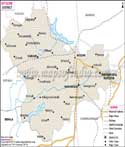
About
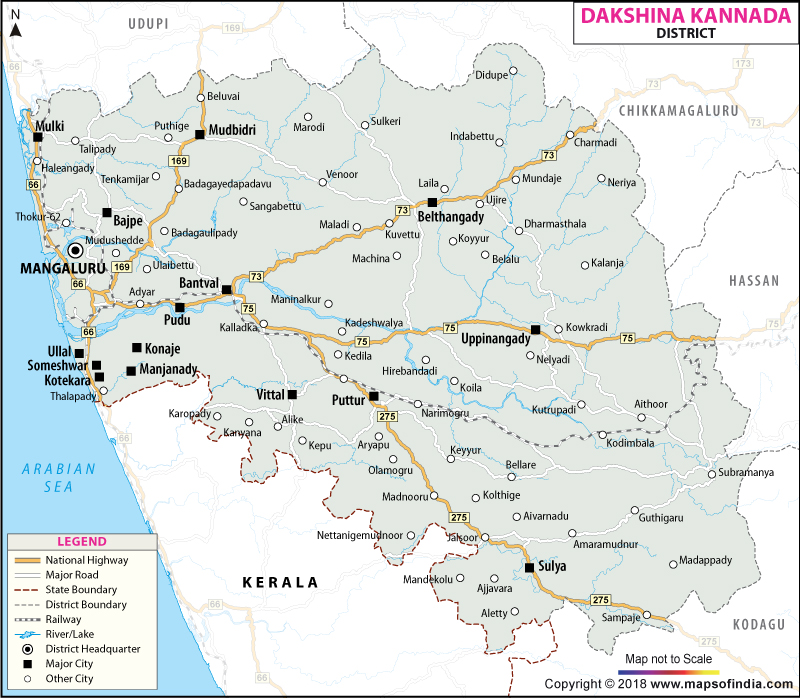
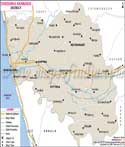
Dakshina Kannada is a coastal district of the South Western region of Karnataka. It is bordered by the Western Ghats on the East, the Arabian Sea on the West, the Udupi district on the north, and the Kasaragod district of Kerala on the South. The seaport located here helps in maritime trade. The district is internationally famous as the hotspot of the education and healthcare system, which has a large number of medical, engineering, and management institutes that attract students from all over the world. Additionally, it is a cultural and economic incubator, as the birthplace of modern banking in India and the home of rich indigenous folk traditions.
History & Culture
The story of the historical development of the district is a deep and complex history, full of maritime trade, classical empires and colonial interactions. Treat it as a mythical entity, sacred to Parashurama Srishti—land that is traditionally believed to have been reclaimed from the sea by the sage Parashurama—the area became an important commercial hub in antiquity.
It was then under the rule of the native Alupa Dynasty from the early centuries of the Common Era to the late 14th century. The Alupas operated from the historic centres such as Mangaluru and Udyavara, and were brilliant administrators who continued to rule the coast either as autonomous rulers or strategic feudatories of the Chalukyas, the Rashtrakutas and the Hoysalas.
By the 14th century, the coastal ports of the area were developed under the influence of the large Vijayanagara empire. A great deal of geopolitical change occurred in the 16th century when the Portuguese came and started to monopolise the lucrative spice commerce by setting up fortified commercial factories on the coast. The control of this strategic sea gateway was decisive in the late 18th century when the rulers of Mysore, Tipu Sultan and Hyder Ali began to wage bitter wars over the area. Following Tipu Sultan's death in 1799, the district of Canara was set up by the British East India Company, which was split to form the present-day districts of Dakshina Kannada and Canara in 1859.
This complicated history created a very unique and multi-ethnic culture, which has been called Tulu Nadu among the Tulu people. Ancient spiritual systems, along with folk traditions, are deeply entrenched in the life of people, which form the cultural identity of the region. At its heart, this legacy is that of Bhuta Kola (Daivaradhane), the practice of intense ritualistic spirit worship, by which community oracles, referred to as Pojoaque, are dressed in elaborate make-up and communicate with local guardian spirits to make binding decisions on community conflicts.
The celebration of Kambala, an exciting rural sport in which pairs of energetic buffaloes race through the muddy paddy fields, is a remarkable part of the district's agrarian tradition, with thousands of people flocking to this event in the winter.
This colourful tradition has been passed on right into Mangalorean food, a famed gastronomy tradition named after the sea coast. The local cuisine is dominated by fresh seafood, coconut and fiery regional spices and the highlights of its cuisine include Kori Rotti (crisp rice wafers topped with a rich chicken curry), Neer Dosa and Mangalore Buns, reflecting the rich and layered culinary identity of this historic coastal area.
Economy
The economy of the district is a unique blend, having a strong agrarian base with large industries, international shipping, and high-value service industries. It has one of the highest incomes per capita in the state of Karnataka. The government sector acts as an enabler of infrastructure and employment. The state's only large deep-water port at Mangalore is operated by agencies such as the New Mangalore Port Authority (NMPA) that handles millions of tonnes of exports from iron ore and granite to coffee and cashews. The district also has important infrastructure, like the Mangalore International Airport and basic infrastructure networks like the Konkan Railway.
One of the district's most prominent industrial estates are located in this district, including the huge public sector and joint-venture industries, such as Mangalore Refinery and Petrochemicals Limited, which processes crude oil.
The services sector is indeed the flagship sector of the district economy. The district is also known as the "Cradle of Indian Banking. The region of undivided South Canara has a unique financial legacy as four of the major nationalized and scheduled banks were established in the state.
Education and Information Technology
The city of Mangaluru is a large educational hub and this industry contributes to real estate, hospitality, and retail sectors. Moreover the presence of a growing IT industry has positioned the district as a secondary te
ch hub outside Bengaluru.
Traditional Industries: The economy of the place is also dependent on the traditional industries like fish processing, cashew nut processing, and tile manufacturing.
Tourism
Dakshina Kannada offers a package of all three, sea, nature and religion, making it an all-weather tourist spot. The Dharmshtala Manjunatha Temple is an incredible example of religious harmony in which a Shaivite deity (Sri Lord Shiva) is worshipped by Vaishnavite priests and administration of the temple is also done by a hereditary Jain chieftain (Heggede). It runs some of the biggest free-kitchen and charity networks in the country.
Kudroli Gokarnanatheshwara Temple is situated right in Mangaluru. It was built by the social reformer Narayana Guru. The temple is known throughout the world for its grand illuminated Dasara festivities in Mangalore.
Panambur is very popular due to its safety, water sports and sunset views. The Surathkal Beach has a dramatic rocky shore with a historic guiding lighthouse atop. Built in 1880, this historic church is known as the "Sistine Chapel of India" because it has amazing and stunning frescoes on its interior walls. These were created by the Italian Jesuit priest, Antony Moscheni.
One of its major attractions is the Dr. Shivarama Karantha Pilikula Nisargadhama, an integrated and vast 370-acre Eco-educational theme park just outside Mangaluru. It's a huge place for family fun and environmental education, boasting a bang-up-to-date regional science center, a botanical arboretum, a lake with quiet boating facilities and a tropical biological park that's a pure, uncomplicated tropical paradise.
Demographics
Dakshina Kannada is one of the most advanced districts in human value and education development among the districts of India, with the human value development index being on par with the more developed metropolitan districts all the time. The district has a total population of 2,089,649 people with an excellent demographic balance and a high level of progressive spread. In contrast to many areas of the country, the region's sex ratio is excellent, with 1,054,935 females compared to 1,034,714 males, or an approximate ratio of 1,020 females per 1,000 males.
The unique literacy profile of the district is the foundation of the district's social development. It has a phenomenal average literacy rate of 88.57%, one of the highest among all districts across the country. When compared by gender male literacy has increased to a high rate of 93.13%, and female literacy is also very high at 84.13%.
This is a very literate community that is also a fundamentally multilingual community. Tulu is the language of the people and is the regional language (lingua franca) of the masses, while Kannada is the official state language and is used for all government business, media, and school education. The district is also a rich linguistic melting pot with the presence of centuries of maritime trade and the peaceful coexistence of Konkani, Beary, and Malayalam speakers.
Administration
The administrative system is organised in a systematic manner to handle the dense urban clusters as well as the vast agricultural areas. The district has been divided into 9 administrative tehsils (taluks), namely Mangaluru, Bantwal, Puttur, Belthangady, Sullia, Moodabidri, Kadaba, Ullal and Mulki for local governance and smooth delivery of public services.
Local bodies have a strong hierarchy with a dense network of bodies on the grassroots level that are responsible for rural development and local public administration. The district consists of 422 revenue villages and 223 Gram Panchayats (village councils) are strategically set up. The decentralized units make it possible to provide direct access to the agrarian population that inhabits along the foothills of the Western Ghats and the coastal lowlands through various important governmental schemes, land records, infrastructure development and welfare provision.
The district has an elaborate sector-specific governance mechanism for education, health, and agriculture, among others. For instance education department oversees all schools and colleges, and ensures that literacy levels in the district are consistently on the rise.
| Facts of Dakshina Kannada District | |
|---|---|
| Official Name | Dakshina Kannada |
| Location | Karnataka |
| Area (km2) | 4866 |
| Population | 20,89,649 |
| Language | Kannada |
FAQs
Q1: How many villages are there in the district?
There are 422 villages in the district.
Q2: What’s the population of Dakshina Kannada?
The population of the district is 20,89,649.
Q3: What is it famous for?
Dakshina Kannada was known as the Cradle of Indian Banking since four major national banks were established here. Folk traditions like Yakshagana and Kambala are also famous.
Q4: In which city is the administrative headquarter located?
The administrative headquarters of the district is located in Mangaluru (Mangalore).
Q5: What is the literacy rate here?
The literacy rate of the district is 88.57%.
Q6: What are the main languages spoken in this district?
Tulu, Kannada, Konkani, Beary and Malayalam.
Last Updated on : August 04, 2026
