






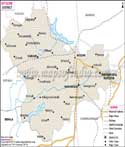
About
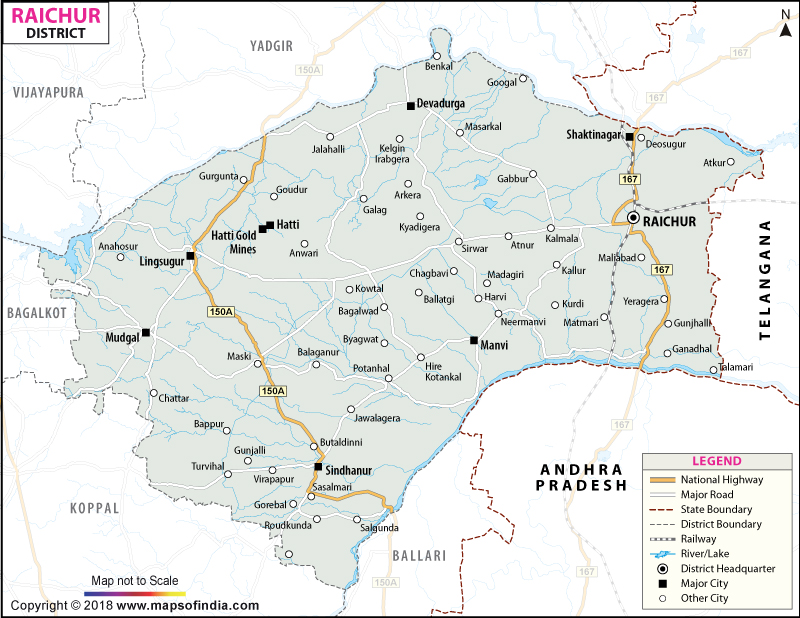
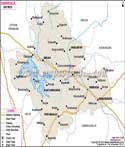
With its roots between two holy rivers of South India, Krishna and Tungabhadra, Raichur district has a unique geographical and cultural character. This part of Raichur that lies in the northeastern corner of Karnataka still speaks to the history of the Doab region - meaning a land between two waters in Persian. Raichur is that piece of fertile land in the shape of a wedge that has been so valuable that the empires had fought over it for more than two thousand years. Calling a place "Raichur" is really a big thing. Getting the name from the combination of the Kannada words "Raja (king)" and "Ooru (town/city), the term literally means "City of Kings ".Of course, this naming is not just for fun; it actually highlights Really Raichur is a place of royalty, strong castles and territories that were conquered by the great kings of history. To its north side lies the district of Yadgir, while its west and south sides are flanked by districts of Koppal and Bellary respectively. A part of Telangana touches its eastern boundary as well. The hot dry summer of its tropical semi-arid climate gets balanced by the flowing rivers that are its neighbors. Raichur has emerged as an economically vibrant and agriculturally rich center of the Kalyana Karnataka region without losing its ancient glories; it has also become the state's industrial and energy hub with great speed.
History & Culture
Raichur's History Through Various Periods Raichur's history was largely determined by its location. Being the fertile area lying between the Krishna and the Tungabhadra rivers, the Raichur Doab became one of the most contested regions of South Indian history. Whoever controlled Raichur had the agricultural production, the revenue generating powers, and the military strength practically in his/her hand. The region has a recorded history from the Maurya Empire period as an important area. It was a great achievement of the archaeology community that Ashoka's name was identified clearly at Maski where the inscription did not use his usual Devanampriya. This identification gave the district of Maski an iconic status. Battle of Vijayanagar versus Bahmani: This was one of the most well-known events in Raichur's history when the two kings went against each other from the 14th to the 16th century. For quite a long time, different parts of the conflict took place around the area of Raichur Fort, between the Vijayanagar Empire, a powerful South Indian kingdom, and the Bahmani Sultanate (which later on became and is known as the Bijapur Sultanate). In a significant turn, Emperor Krishnadevaraya of Vijayanagar defeated Sultan Ismail Adil Shah of Bijapur at the battle of Raichur in 1520 and because of this he got the control of the fortress as well as a display of Vijayanagar's military strength. Post-colonial Times: Raichur after the downfall of the Vijayanagar Empire and other Deccan kingdoms, came under the Nizam of Hyderabad. The district was part of the Hyderabad princely state during British colonial period till 1948 when it was annexed by India using Operation Polo. During the linguistic reorganization of states on December 1956, Raichur was officially handed over to Mysore State (now Karnataka).
Cultural Heritage, Traditions & Festivals
Raichur's culture is a harmonious mixture of Kannada and minor Deccani, Telugu, and Islamic elements resulting from its position and history of changing rulers. Fall Art & Literature: Vachana and Haridasa movements have made a considerable impact on Kannada literature. There have been a number of famous devotional poets and singers in this region. Festivals: Hindu festivals like Ugadi (Kannada New Year Festival), Ganesh Chaturthi, Deepavali, etc. as well as Kanakadasa Jayanti, the birthday anniversary festival of the saint-poet Kanakadasa are joyfully celebrated with great public enthusiasm. Muslim festivals like Eid-ul-Fitr and Moharram are marked with respect and dignity through cultural expressions, with the whole community engaging as a family and because of this it becomes another indication of the mixed heritage of the region. Jatras/Fairs: The fairs of Deosugur, Mantralayam Car Festival etc. are held every year in temples of the district and they bring in thousands of tourists from Karnataka as well as neighboring states. It is worth noting that Mantralayam is very much linked socio-culturally and religiously to Raichur since it is located in Telangana across the border on the banks of the Tungenabhadra which is a source River to Raichur town and is quite close.
Economy
This is an industrial center as well as an agricultural center. The industries and agriculture form the backbone of the economy which is a mix of various sectors and activities.
Government Sector
The state government department is the biggest employer in the administrative district. The government also runs big construction projects such as keeping the Tungabhadra and Upper Krishna Projects canal irrigation network in good shape. Various departments under the administration, civil servant cadre, schools & colleges, health centers, and collection of revenue through taxes are some of the government-aid activities that support the economy by giving employment in this area.
Public Sector
Raichur is an energy capital of southern India and in the state of Karnataka due to its important public sector facilities: Raichur Thermal Power Station (RTPS): Operating through Karnataka Power Corporation Limited (KPCL) at Shaktinagar, RTPS was the first of the state's coal thermal plants and has since become its main electricity generator for decades. Yermarus Thermal Power Station (YPHS): This highly productive supercritical thermal power plant is close by, further augmenting the district's power-generation potential. Hatti Gold Mines Company Limited (HGML): Situated at Lingsugur taluk, HGML is a mainstay public sector business under the Government of Karnataka. This was also historically the only gold mine in India to remain in operation continuously and it has been mining tons of gold ore each year, besides creating highly specialized mining jobs.
Services Sector
The services economy of Raichur largely depends on its agrarian market structures and urban development. Agricultural Produce Market Committees (APMC): Raichur has one of the biggest APMC yards in South India which is mainly a wholesale trade center for cotton, paddy, pulses, and oils. Banking &Retail: The increasing network of public and private banks, microfinance institutions, educational institutions, healthcare centers, and logistics operators is a back-up for both urban and rural areas.
Tourism
Raichur offers a mix of historic fortresses, spiritual centers, and natural sites that can only be made by two rivers running through it. Main Attractions: There are different double-walled defenses and huge granite blocks of the fortress that are so perfect that even the use of mortar is unnecessary. You will find the famous gate inside the fortress called Sailani Darwaza, Katik Darwaza, the very ancient Bahmani Mosque, and also the stone engravings that depict the Persian, Arabic, and Kannada histories.
Mudgal Fort: Precisely positioned at Lingsugur sub-division, Mudgal Fort was also a key defense point in the medieval wars. The walls are protected by deep moats, and the fort has royal lounges, temples and an old Roman Catholic Church established by the local Jesuits in the 16th century when the Bijapur Sultans were still ruling the country. Maski Archeological Site: There are few places in Maski Taluk that can rival this place for being the site of a great discovery. As early as 1915 the unearthing of the Minor Rock Edict of Emperor Ashoka here provided conclusive evidence that Devanampriya Priyadarsi was none other than the Mauryan Emperor Ashoka. During this grand Jatra or car procession festival, thousands of devotees from adjoining states participate. Bichali & Mantralayam: As the seat of Appanacharya, the main disciple of the saint Bichali was one of the significant places where his followers, known as followers of Raghavendra Swamy, would come to meditate. Only a mere border away Mantralayam is a spiritual haven where pilgrims visiting the region usually make it as their last stop.
Demographics
Based on the official Census information, the Raichur district has a multi-faceted demographic scenario mainly based on farming villages complemented gradually by expanding cities.
Population: As per Census figures, Raichur District had a net population of 1 928 812 in all. The gender ratio is nearly equal, i.e., about 1 thousand males are matched with nearly 1 thousand females. Education Level: The district overall has an education level of 59.56%. Male literacy ratio is 70.47% whereas female literacy ratio is 48.73%. The government's education programs, infrastructural development and rural literary movements are continually trying to close this gap between urban and rural areas. Primary Languages: Kanadiga is the official and the most commonly spoken language of all taluks. It is due to historic links with Nizam's Hyderabad state and the proximity to Telangana that the Urdu and Telugu languages are also quite popular and commonly used, mainly in the big cities like Raichur town and the border trade villages. Hindi is understood too in the commercial market centres.
Administration
Divided into various sub-divisions like revenue sub-divisions, administrative tehsils, and local village councils, it serves several important functions, such as governance, revenue management, and law enforcement of Raichur district. Administrative Setup Headquarters: Raichur City. Auxiliary Administrator: Deputy Superintendent of Police & District Police Chief (IPS). Civil Assistant & District Magistracy (C.A.&D.A.): Deputy Collector & Magistrate (Deputy Collector) (Revenue). Revenue Sub-Divisions (2): Raichur Sub-Division: Administered Raichur Manavi, Devadurga, Sirwar, and Arakera talukas. Sub-Division Lingsugur: Covers Lingsugar, Sinhan, and Maski taluks.
| Facts of Raichur District | |
|---|---|
| Official Name | Raichur |
| Location | Karnataka |
| Area (km2) | 8358.43 |
| Population | 19,28,812 (2011) |
| Language | Kannada,Telugu, Urdu |
FAQs
Q1: How many villages are there in the district?
The Raichur district has 884 villages.
Q2: How many people are in Raichur district?
There are 1,928,812 people living in the district.
Q3: Why is Raichur famous?
Raichur has come to fame mainly as the “Power Capital of Karnataka” : Shaktinagar and Yermarus have thermal power plants.
Q4: Which is the nearest airport to Raichur?
The nearest airport is Kalaburagi Airport.
Q5: What is the importance of the Raichur doab?
The soil here is very rich alluvial. The agriculture of Raichur is so well-developed, and the area gets the credit for being a food basket of this region mainly because of the fertile soil and proper water.
Q6: What are the major rivers in Raichur district?
Two vital river bodies surround the district are The Krishna River and The Tungabhadra River.
Q7: What is the traditional food of Raichur?
Jawar Rotti with chutney and spicy vegetable curry is one of the famous food of The Raichur.
Last Updated on : August 03, 2026
