






About
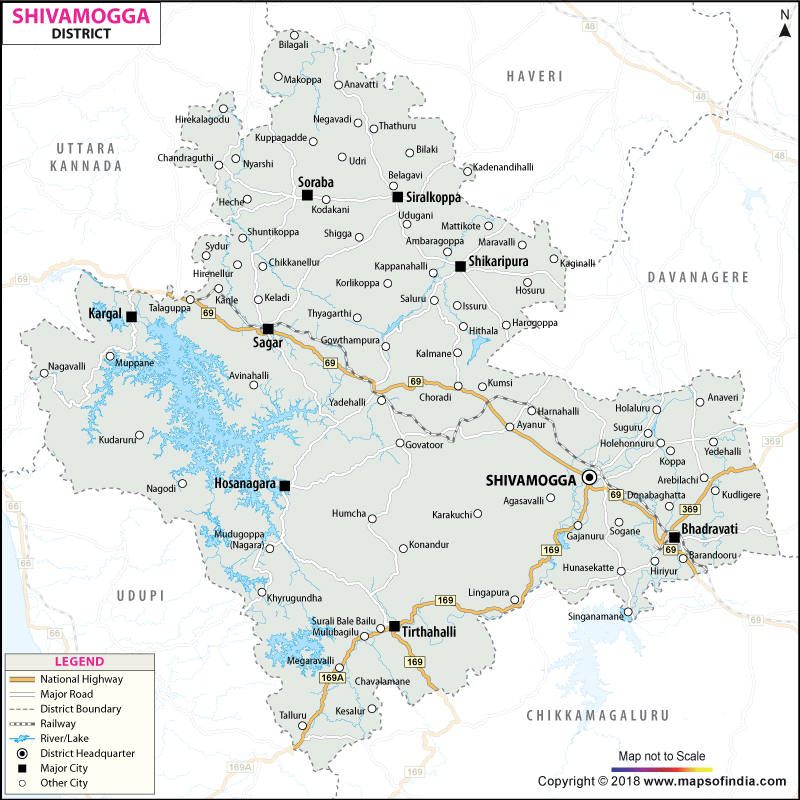
The town of Shimoga lies between the geographical extremes of the state of Karnataka, almost in the middle of the western part. A blend of coastal plains and the Deccan Plateau is clearly noticeable in the amazing landscape of this area which consists of a combination of beautiful hills and flat land of the district formerly known as Shimoga, now Shivamogga. This area really deserves the name Gateway to Malnad considering its hill landscape and other physical characters. It is a land of beauty covered with foggy forests, loud waterfalls, relics, and fertile valleys. This nice travel spot of Karnataka will surprise you with its differences whether your interest is culture, nature, or if you are literature-minded. When you come to Shivamogga, be prepared as the place may well get your heart because of its versatility. Another interesting story relates it to "Shiva-moggu", either the Nose-bud of Shiva or the Sweet pot of Shiva. Legend goes that one day at this holy place saint and seer Durvasa was making a big batch of fragrant medicinal sweets, and Shiva was so thrilled with the smell that he blessed the area. In colonial days, it was a tongue twister and So was Britishized to "Shimoga, " but recently, the government decided to change the official name back to an ancient one, one that is rich in history and heritage: Shivamogga (2014). Malnad is a remarkable part of the Western Ghats, blessed with frequent rainfall, dense forests of tropical wet evergreens and an immense variety of wildlife. Apart from being a natural cradle of several rivers, it is the origin of quite a few lifelines. Of these two rivers - Tungabhadra and Bhadra - are the most prominent. They originate at the picturesque village of Koodli as the Tungabhadra River.
History & Culture
The rule over Banavasi was initially under the hands of the local chieftain dynasty of Kadambas from the first quarter of the fourth century CE (344 CE). Later, other great dynasties took their shares, viz. Chalukya, Rashtrakuta and Hoysala. The most luminous phase of Shivamogga is owed to the powerful Vijayanagara Kingdom which was dominant from the 14th century to the 16th century. Limited monarchy (nayakas of Keladi/Ilkera/Bednore) emerged as the ruling power after the decline of the mighty Vijayanagara Kingdom. Under the leadership of, among others, Shivappa Nayaka and Queen Keladi Chennamma, the region got the status of a strong and self-reliant kingdom. The history of Shivamogga is as fascinating and colourful as the landscape there. The area has been a very important political and cultural centre for many of the greatest dynasties of South India. They prevented the Portuguese from expanding their territory and stopped the invasions from Mughal armies. The district was once a part of the kingdom of Haider Ali and Tipu Sultan of Mysore and later on came under the Princely State of Mysore which was under British suzerainty. Cultural Heritage and Literary Legacy Shivamogga is often regarded as the "Cultural Capital of Karnataka, "It has contributed greatly to the growth of the finest minds and artists in India. Kuvempu, the first poet to win a Jnanpith award from Karnataka, being from Kuppali is a pride of the whole state. His hometown is still standing as a cultural museum of sorts, a place that he had once belonged to. Apart from that, there are quite a few other great literary luminaries who hailed from this part of the country, the most notable being Jnanpith Award winner U.R. Ananthamurthy, the great playwright and critic K.V. Subbanna, and among the modern generation of writers, a few names come to mind, such as P. Lankesh and Na D'Souza. Shimoga is a stronghold of Yakshagana, one form among a few that the temple dance dramas of southern India have taken over the centuries. This is a dramatic and dramatic form of art mixing songs and dances, improvised dialogue, and beautifully dressed characters who represent episodes from the great Hindu stories that are normally told in the form of long epic poems. Ninasam was founded by K.V Subbanna in a remote village of Heggodu and has a world wide reputation for excellence as a drama school. Today, in the hands of its successors, the institute keeps on doing the same work: reaching dramatic and cinematograph presentations to the villagers. Deepavali and Ganesha Chaturthi are the two major festivals of the city that are celebrated with fanfare. Deepavai or the lights are a symbol of the triumph of light over darkness.
Economy
The economy of Shimoga is a nice balance of traditional and modern sectors. The region produces a lot of food due to its good amount of water and good soil. Shimoga is usually called the "Rice Bowl of Karnataka, " and so a great percentage of agricultural output in rural areas is in paddy. In addition, areca nut (betel nut) plantations also make it a region of high value to this fruit tree. The markets of areca nuts there are among the biggest in the country. Other crops besides rice grown in this region are tea coffee spices (e.g. black pepper and cardamom), and ginger.
Government and Public Sector
The role of government has been very pivotal in determining the economic future of Shimoga: Visvesvaraya Iron and Steel Plant (VISL) and the Mysore Paper Mills (MPM) which were established in the industrial town of Bhadravathi are both examples of the public sector enterprises which were launched with Sir M. Visvesvaraya's supervision. Hydroelectric Power: Apart from the Mahatma Gandhi Hydroelectric Project which is located at Jog Falls and the Sharavathi Generating Station in the district, these two projects are major contributions since they provide electricity to one of the largest states in India, i.e. Karnataka. Shivamogga Smart City: This is a project under the initiative of the Government of India's Smart Cities Mission where, major infrastructural developments in transportation, waste management, and digital infrastructure are playing the main role of a driver for contemporary economic development.
Services and IT Sector
Shimoga Airport (Sogane) was developed recently and a functional IT park to support the growth of the services sector that is now happening rapidly in the district. Banking healthcare higher education (Mainly Kuvempu University), and eco-tourism hospitality are the main sectors that provide employment to the local youth.
Tourism
Shimoga's scenic beauty that ranges from waterfall to forts which have been swallowed by the woods has been a tourist magnet. Jog Falls of this town is the 2nd most elevated waterfall in the whole country. The Aghoreshwara Temple of the city. The natural spectacle is definitely not something you can easily capture in words. The view of the cascade is so breathtaking that you just lose speech. The waterfall is split apart during the rainy season into 4 major streams: Raja Rani Roarer and Rocket. Kavaledurga Fort: Built as a hill fort in the 9th century was strengthened later by the Keladi kings. Thick green cover and steep climb of the fort offer a dreamy medieval fantasy as well as an adventurous atmosphere of a hill fort. Trekking up this hilltop fortress feels like a trip to an abandoned ancient world. Ancient Hill Fort of Ikkeri (Aghoreshwara Temple). Being the Keladi Nayaka's distinctive architectural style it has been a remarkable blend of the architectural features of the Hoysala, Vijayanagara, and the Dravidian temples. An Indian village called Agumbe, located in Shivamogga district, is known for very heavy rains and so it is often called "Cherrapunji of the South". It is home to the rare King Cobra and it is a nice place for visitors to watch a sunset or to explore the local flora and fauna at the rainforest research station also known as the 'Tiger Camp'. Kuppalli, the town of the birth of the famous poet Kuvempu, is a place worth visiting. You can explore the rock structure of Kavishaila which is a poetic representation and is similar to the famous Stonehenge; and, also the Kavimane - a heritage house museum where people can know the life the poet lived. Koodli is the sacred place where the Tunga and Bhadra rivers join to form a holy river. One can see ancient temples and a historic Matha here.
Demographics
The demographic composition of Shiamoga showcases a well-educated, multi-ethnic and essentially agrarian society that upholds its heritage. Data from the 2011 Census, which we used, gives us this snapshot of the district population: The population figure of the 2011 Census data is 17,52,753 including 8,77,415 males and 8,75,338 females. The sex ratio in the district is 998 females for every 1,000 males that indicates gender balance and this is really encouraging. Besides, these very high sex ratios mean that the district's demographic health situation is far off and in many parts across India. The literacy figure of 80.45%, a very high one, shows that education was developing quite rapidly through this phase. Literate men are found to be much more at 86.07% when women constitute around 74.84% of the literate population. Though the literacy gap between the genders still remains rather high, Truth is women's literacy level has risen to this extent implies that the education system is really improving and women are gaining more equal opportunities.
Administration
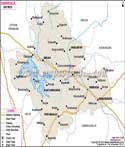
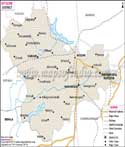
Shimoga district is under the Bengaluru Division of the State of Karnataka's administrative divisions.The administrative headquarters for the district is in Shivamogga City. It is further broken down into 7 Talukas (sub-districts): Shimoga (District HQ and urban) (Very busy). Bhadravathi (Factory area). Sagara (The gateway for culture and tourism). Shikaripura (an agriculture-dependent and historical place). Soraba (Famous for the hand carving of sandalwood). Thirthahalli (Deep in the Western Ghats where one might say that a majority of people are very well educated and literate). Hosanagara (A peaceful, green landscape with a minimum population). As per the statistics from the Census of India, there are altogether about 1,444 different inhabited villages that the district has in its seven talukas. These villages are governed by 271 Gram Panchayats to support local decision making and to allow the communities to have some level of control over their lives.
| Official Name | Shimoga |
| Location | Shimoga |
| Area | 8478 sq. km |
| Population | 17,52,753 (2011) |
| Language | Kannada,Telugu, Urdu |
FAQs
Q1: What is the number of Villages in Shimoga District?
There are a total of 1444 villages in Shimoga.
Q2: What is the population of the district?
17,52,753 (2011) people live in the district.
Q3: What is the district famous for?
It is greatly appreciated as a 'Gateway to Malnad' for the beautiful, less-polluted Western Ghats rainforests that it has around Agumbe and more.
Q4: Which tourist spot of Shimoga is a real crowd-puller?
The highlight of the city is clearly Jog Falls in Sagar taluk, which is the second-highest vertical waterfall (in a vertical fall) in the country.
Q5: How many subdivisions are there in the district?
Shimoga District is subdivided into 7 tehsils.
Last Updated on : July 31, 2026
