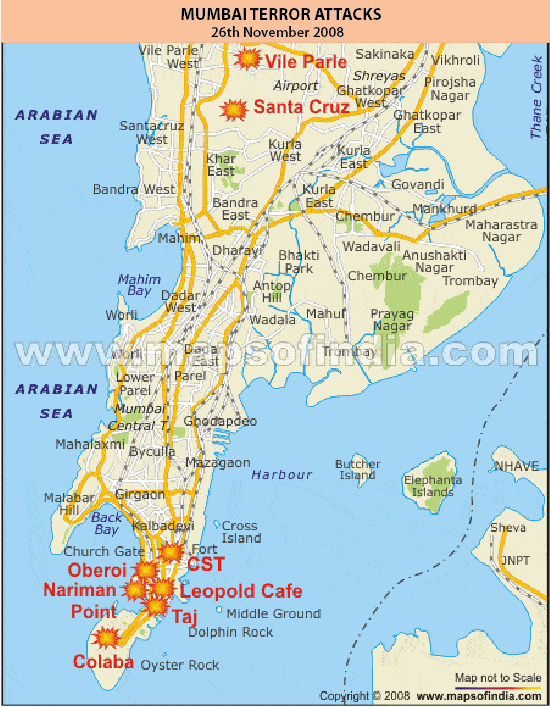
*The Map showing the Terror Attacks locations in Mumbai.
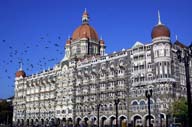
One of the worst and deadliest attacks ever that shook the city of Mumbai, occurred on 26 November 2008. About 166 people lost their lives while about 300 struggled for theirs in the various hospitals of the city. Militants zeroed in on some of the high-profile areas such as The Taj, the luxury Trident, Chhatrapati Shivaji Terminus, Colaba, Santa Cruz Airport, Vile Parle, G.T. Hospital, Cama Hospital, Nariman House, Leopold Cafe among others, as a number of leading international names were present there. The foreign nationals, especially the British and US citizens were made the target to capture the international attention. Maharashtra along with other sensitive areas of India was put under high alert.
Disclaimer: All efforts have been made to make this image accurate. However Mapping Digiworld Pvt Ltd and its directors do not own any responsibility for the correctness or authenticity of the same. Highlights:
Lives lost The film city Mumbai was devastated on 26 November 2008 by ten LeT terrorists, during which 166 innocent lives were lost and 300 people got injured. The Taj Mahal Palace Hotel, the Leopold Cafe, and the Nariman House were the targets of attack. The brave heroes who lost their lives in the Mumbai massacre were: The Assistant Police Sub-Inspector Tukaram Omble, Hawaldar Gajendra Singh, Chief of the Mumbai Anti-Terrorism Squad Hemant Karkare, Additional Commissioner of Police Ashok Kamte, Senior Inspector Shashank Shinde, NSG Commando Major Sandeep Unnikrishnan, and Encounter Specialist Vijay Salaskar. Rescue Operation: Timeline 12.00 pm GMT, 27 November 2008
5:00 am GMT, 10:30 am IST, 28 November 2008
After more than 33 hours, Mumbai was still struggling with terror. Battle was still on at Trident Hotel and Nariman House, though the NSG commandos had succeeded in rescuing the hostages at Taj. Till then, 127 people had lost their lives. 247 people walked free while there was no account how many more people were trapped. The battle at Nariman House was moving on to its final stage, more than 100 commandos airdropped atop the House to flush out the holed up terrorists. As there were no more hostages inside, it became easier for the commandos to go for the final take. Earlier in the day, three explosions had occurred at the site within three hours. At Taj, one injured terrorist was believed to be trapped inside while at Trident, according to officials, there were two or three militants and there was no exact account of hostages. 5:10 am GMT, 10:40 am IST, 28 November 2008
6:30 am GMT, 12:00 IST, 28 November 2008
9:00 am GMT, 2:30 pm IST, 28 November 2008
11:30 am GMT, 4:57 pm IST 28 November 2008
12:15 pm GMT, 5:45 pm IST, 28 November 2008
7:30 am GMT, 1:00 IST, 29 November 2008
After 60 hours of siege
After almost 60 hours, Mumbai siege seemed to have headed towards its end. With three terrorists killed and one captured alive at Taj, NSG commandos checked the 568-room building for any more signs of terror, before declaring the operation to be formally over. On the other hand, Nariman House where fierce battle which was still on between the militants and the commandos since Wednesday night, had been handed over to the Indian army and Mumbai police. Two terrorists and five hostages were killed in this Jewish center. The official death count of the attack was 156 after 60 hours. Till then, around 400 people were injured and more than 250 were rescued. Trials Years have passed, and yet the innocent lives haven't got justice. India possesses sufficient evidence against Hafiz Saeed, who is believed to be the mastermind behind the Mumbai 26/11 massacre. But there hasn't been much progress made in the case, as Pakistan has failed to respond to the 15 dossiers presented by India as evidence. Pakistan has also been reluctant in sending a team to India for further investigation. The judicial commission presented the evidence in the Rawalpindi court. The High Commissioner of Pakistan, Salman Bashir, said, "Yes there is the fixation here on the pace of the trial, the specifics of the trial. In fact it was helpful for the judicial commission to visit Mumbai and they were there for two or three days." He added that the documents sent by the Mumbai court had just been received and will be looked into. Lawyer Riaz Akram Cheema, formerly associated with the case, told a newspaper that as per the Pakistani law, the said dossier submitted by India was unacceptable. "Out of the record of 280 calls they provided as evidence against the co-accused, none was made to or from Kasab," he said. The only surviving gunman, Ajmal Kasab, was caught by the Mumbai police and hanged on 21 November 2012 at the Yerwada Jail, Pune. While he was provided a chance to defend himself, the outcome was sealed from the very start. During the fifth anniversary of this incidence, a memorial service to pay homage to the martyrs was organized by the Mumbai police at the Gymkhana. Prithviraj Chavan, the then Chief Minister of Maharashtra, and several high-ranked officers of the Mumbai police attended the event. It has been recommended by the Director General of Police of the state to honour the bomb disposal squad with gallantry awards as they had put their lives on the line during the attack. Also, there have been demands that the policemen who died courageously while performing their duty be awarded Ashok Chakras. Hoping for a better tomorrow Many years have passed but it seems that the "Spirit of Mumbai" is determined not to let the evil pounce ever again. There have been efforts by the government as well as by the police to heal the bruises of the attack by ensuring full security to the Mumbaikars. In addition, what is essential is constant vigilance by the citizens. A well-trained and equipped "Force One" unit has been posted at different sites across the city; modern arms and armoured vehicles have been provided to the unit. EBAKB261114 Last Updated on : June 17, 2026

|
 |
Mumbai Terror Attacks |
 |
Serial Blasts in Mumbai