






About
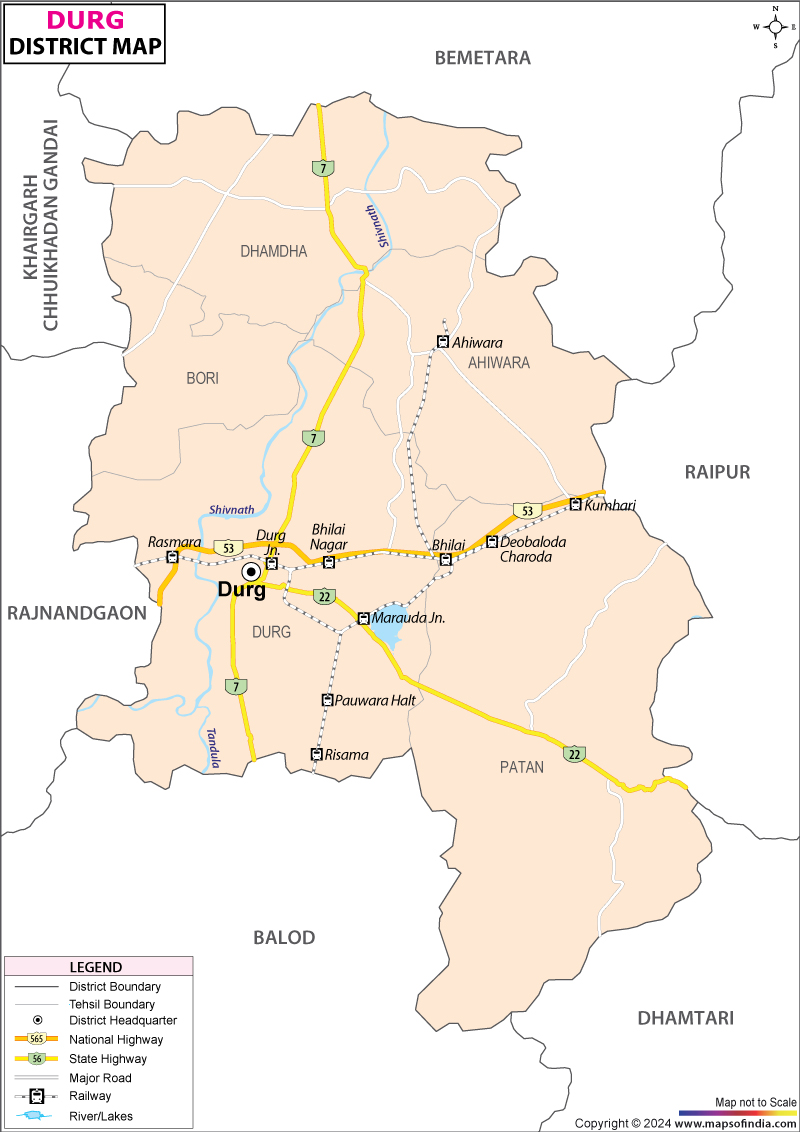
Durg is an important district in Chhattisgarh and is known for its strong industry base, educational institutions and also the growing urban centers. The district headquarters is in Durg city which also sees the growth of Bhilai which has become a very recognized industrial city in India because of its steel industry. The connection between Durg and Bhilai is very close which in turn has created a large urban area that is still very much a force in the economy of Chhattisgarh.
The district is in the fertile plains of Chhattisgarh and sits on the eastern bank of the Shivnath River. Durg also has Bemetara, Balod, Rajnandgaon, Raipur and Dhamtari as neighbors. Its location has made Durg a key transport and business center. We see major rail routes and national highways which facilitate easy travel and trade in the district.
In the case of Durg we see that it is known for the Bhilai Steel Plant. For many years the district has been a main player in the industrial growth of central India. Out of steel production, manufacturing, trade, education and health care Durg has grown to become one of the most economic powerhouses in Chhattisgarh.
The district is a home to many educational and industrial centers. In Durg which has a large number of universities, colleges, hospitals and training institutes students and workers from all over Chhattisgarh and neighboring states come in. Also Durg’s growth is a result of its industries, educational resources and transport network.
History & Culture
Durg’s past is that of the greater Chhattisgarh area. The district grew under the influence of various dynasties which ruled central India. Out of which agriculture, trade routes and the nearby rivers’ water played a key role in the growth of ancient settlements.
During the medieval era different rulers came into power which saw changes in control of that area. Local kingdoms had responsibility for trade, agriculture and administrative issues. The rich plains were home to farming communities which in turn used markets to trade with nearby regions.
During the arrival of British rule we saw large scale administrative changes. Railways and roads networks grew which in turn improved communication and trade. In the 20th century industrial activities received more attention.
In the mid 1950s a major turning point in the history of Durg came with the setting up of the Bhilai Steel Plant. That project transformed the economic and social structure of the district. From all over India workers, engineers and professionals flocked to Bhilai and the surrounding areas.
Due to which this movement of people Durg developed into a cultural mosaic of many communities. From all over the state and country people with their cultures of Hindi, Chhattisgarhi, Marathi, Bengali, Telugu, Punjabi and also many other languages came to the area. Also today it is the case that many residents refer to Bhilai and Durg as “Mini India” because people from different states live and work here.
Music and dance are very much a part of local culture. At fairs and community events we see folk performances. Also it is at festivals, weddings and cultural programs that we hear traditional songs.
Food in Durg presents a mix of traditional Chhattisgarhi food and that which has developed from the migration of people from all over India. Rice is the primary food in many homes. While rural areas still have their local specialities, in the urban areas you’ll find great diversity in food.
The district has put together a blend of traditional Chhattisgarhi culture with modern industrial growth which in turn gives Durg a distinct place in the state.
Economy
In Durg economy industry, manufacturing, education, health care, trade and agriculture play key roles. Also unlike many other districts which primarily base their economy on agriculture Durg has seen growth in large scale industries, small business and service sectors.
The Bhilai Steel Plant is a major player in economic activity. Steel production we see as a base that in turn supports many other industries, transport services, suppliers and local businesses. Also we note that in the district which the plant is located in, we have large scale industrial areas which have put out job opportunities for thousands of people.
Agriculture is the base for many villages. Farmers grow paddy, wheat, pulses and other crops. Agricultural markets which in turn connect farmers to buyers from all over Chhattisgarh.
Trade and transport also play a role in economic growth. Railways and highways which form the backbone of the road network support industry in its supply of raw materials and distribution of finished products.
Education and health care have grown to become large economic sectors. We see in universities, colleges, schools and hospitals a creation of jobs which also draws people from nearby districts.
Government Sector
The Durg government is the largest employer. In that district government offices, schools, colleges, hospitals, police and administrative bodies are present.
District level departments run services which include education, health care, agriculture, land records, social welfare and rural development. They serve both urban and rural communities.
Government hospitals and in addition academic institutions have medical professionals, instructors, engineers, administrators and support personnel. The area also has seen investment in roads, bridges, water supply systems and other public infrastructure.
Public Sector
In Durg public sector is very strong as in many other districts of Chhattisgarh. Also large scale industrial companies are present.
The Bilai Steel Plant is the preeminent public sector entity in the district. For decades it has been an engine of growth and also a source of employment which is both direct and indirect. Also the steel production by this plant has brought in related growth in engineering, transportation and manufacturing sectors.
Public sector banks serve industries, businesses, students and farmers. In the case of Railways Durg is a part of the important Howrah-Mumbai route which supports industrial growth.
Public services like electricity, water supply, and transport serve industry and the residential area. In the area of health and education the public sector is also a large employer.
Services Sector
The services sector has grown very large due to industrial growth and urbanization. In the district economy education, health care, banking, retail trade, hospitality and transport are key sectors.
Educational institutions in Durg have seen great growth which has turned it into an academic hub. We see a variety of universities, engineering and medical colleges and basic schools which attract students from all over. At present the district is home to many universities and colleges which are very much a part of the growth of the education sector.
Retail sectors are growing as a result of increasing urban populations. Shopping centers, restaurants, hotels and small businesses which in turn support local employment.
Transport services play a large role in the economy. Buses, rail, logistics companies and freight services support industries and commercial activity in the district.
Tourism
Tourism in Durg district is a major component which is due to the easy access between Durg, Bhilai and surrounding areas. Also known for its temples, parks, cultural spots and river side locations. What we see is that tourism supports growth in hotels, restaurants, transport and the local market.
One of the preeminent places in the district is Maitri Bagh. It is a family favourite which also has a zoo, a lake and open green spaces. The park sees visitors from all over Chhattisgarh.
The Deobaloda Temple is a primary place of worship. The temple sees large numbers of devotees throughout the year which at the time of major festivals swells even more.
Durg which is near to Bhilai the largest industrial city in central India also has great fortune in terms of location. Also many that visit Bhilai for business, academic or industrial purposes include Durg in their travel plans. Also the district’s transport via roads and rail makes it easy for tourists.
Demographics
In the 2011 Census of India report Durg district had a population of 1,721,948. Out of which 875,813 were males and 846,135 were females.
In Durg which has a high degree of urbanization nearly 64% of the population lives in urban areas and only 36% in rural areas. This also makes Durg the most urban district in Chhattisgarh.
In 2011 district reported a literacy rate of 1,247,890 which is the number of literate residents. Also over the years educational institutions in Durg and Bhilai have been at the forefront in improving educational access.
Hindi is the primary language in the district. Also very much in use is Chhattisgarhi in day to day talk. From all over India people have moved into Durg due to industrial growth which in turn has created a diverse social mix.
Bhilai Nagar is the biggest urban center in the district which is followed by Durg. Also included are Bhilai Charoda, Jamul, Kumhari, Patan and Ahiwara. These towns play a role in the district’s industrial and commercial growth.
Administration
Durg district is run by the District Collector and District Magistrate which also looks after public services, development projects, revenue collection, law and order and welfare programs.
In reports from the district administration Durg has 3 sub divisions, 3 blocks and 3 tehsils. Also the district has 297 Gram Panchayats which are into village level administration and local development.
The district has a total of 9 urban local bodies which include 3 municipal corporations, 3 municipalities and 3 Nagar Panchayats. These bodies run roads, sanitation, drainage, waste collection, water supply and other civic services.
Durg district reports 388 villages which in turn present that although we see rapid industrial growth, agriculture is still very much a primary sector. Rural administration is into farming, irrigation, education and welfare programs.
According to the district reports which also state that Durg has put in place 28 police stations which in turn are responsible for upholding law and order in both urban and rural areas. Also the administration is to look into issues of industrial growth, transport, environment management, public health and employment.
| Facts of Durg District | |
|---|---|
| Official Name | Durg |
| Religion | Hinduism, Islam, Christianity, Jainism, and other faiths |
| Area (km2) | 8,535 |
| Population | 3,343,872 |
| Language | Hindi, Chhattisgarhi |
FAQs
Q1. What is Durg district famous for?
Durg district is a hub for industrial growth, academic institutions and also has very strong connections with Bhilai. Also it is the most developed district in Chhattisgarh.
Q2. What role does Bhilai play in Durg district?
Bhilai is a major industrial center in India which also plays a large role in the district’s economy. We see growth in steel production, manufacturing and education.
Q3. In what language do people mostly speak in Durg?
Hindi is the major language in the district. Also present is Chhattisgarhi which is used by local communities.
Q4. Which rivers flow through Durg district?
The Shivnath River is a main river in the district which has for many years influenced settlement and agriculture.
Q5. Is Durg an industrial district?
Yes. Industry is a large component of the district’s economy. Also we see that which goes into the manufacturing and steel sectors is very large in terms of employment.
Last Updated on : May 11, 2026
