






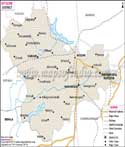
About
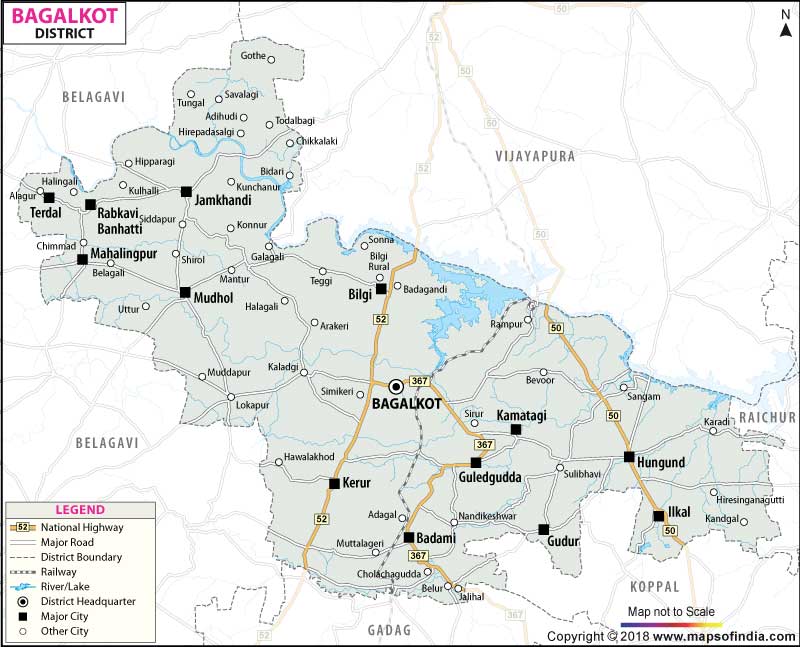
Bagalkot district is situated in the northern part of Karnataka. This region of India is a very wealthy area which is rich in its history through ages, the architecture and the farming culture of the inhabitants. Much has also been attributed to the history and mythology of the name "Bagalkot". The local legend and historical inscriptions tell us that the old name of the region was "Bagadige". Bagalkot is a place where history and stories are closely connected to the name. It was popular folklore that the region was given to Ravana's court musicians by Ravana, King of Lanka, in the epic Ramayana. The other common etymological explanation of the name is from the Persian Baug-e-Kote, meaning Garden Fort and referring to fortifications surrounded by greenery along the banks of the Ghataprabha River. It is one of the major cultural hubs of Karnataka and the landmark among the various events held here is world-famous Chalukyan heritage circuit. It is an important agricultural and industrial center with sugarcane cultivation, cement making, handloom weaving and vast irrigation benefits from the Almatti dam in the Upper Krishna project.
History & Culture
We find records of the history of Bagalkot from prehistoric times. The Malaprabha and Kaladgi river basins have been the site of over 190 Middle Palaeolithic sites, which include quartzitic hand axes, rock shelters including Sidlaphadi and cleavers, all indicating early human occupation. The region was known worldwide by the second century CE and is mentioned in the writings of the Greco-Roman geographer Ptolemy who refers to well-known trade settlements in the area. The golden age of Bagalkot began in the 6th century CE when King Pulakeshin I made Vatapi (Badami) the capital of Early Chalukya Dynasty. It was under Chalukyan patronage that the region was made the experimental ground for Indian temple architecture, where the Nagara (northern) and Dravida (southern) styles were blended. Badami was visited by the famous Chinese scholar Hiuen Tsang in the seventh century when Pulakeshin II ruled the city, who told of the people being brave, proud and chivalrous. With the collapse of the Badami Chalukyas in 753 CE, local powers became the major players in this part of the country. Western Chalukyas from Kalyani, the Hoysalas and the Yadavas of Devagiri are the four dynasties which ruled this place and have an immense role in the socio-political development of the region.
The district became part of the Delhi Sultanate in due course of time and then became part of the Vijayanagara Empire, further going under the hands of Adil Shahi Sultanate of Bijapur, before finally being occupied by the British in 1818. As part of their expansion policy they made this territory part of the Bombay Presidency. After Independence, the area became part of the Bijapur district belonging to Mysore. Eventually it was separated from Bijapur to establish an independent district on March 10, 1997. Bagalkot has a cultural scene that blends different elements like peaceful coexistence of religions, the work of hand-craftsmen and also performances of folk art. The district is also famous for the traditional handloom industry where the sarees are woven using the unique style of weave combining silk and cotton and is known as "Tope Teni" pallu. The district is also known for production of the local breed of hound, the Mudhol Hound, a lean and speedy breed of hunting dog which was once in the prime of its use by the local royalty and is now used by Indian defense forces.
Apart from the community life through cultural celebrations, Bagalkot has various other places of interest too. The pilgrimage fair is the highlight of the monthly Banashankari Devi Jatre in Badami which usually lasts for weeks. With hundreds of bullock cart processions, the cultural fair is a very popular tourist event. At Chalukya Utsava and Pattadakal Dance Festival, not only are classical dance forms performed, but also the grandeur of ancient architecture of the region is highlighted. Kaman Habba (Holi) is yet another occasion when Bagalkot townspeople come out in full colour with local processions and folk art forms to celebrate one of the liveliest Indian festivals.
Economy
The economy of Bagalkot district is multi-faceted with a balance between traditional agriculture, resource-based manufacturing, government administration and a developing services sector.
Government Sector
The government sector is an important pillar of the economy of Bagalkot and is a significant employer and promoter of infrastructure development. Since the formation of the district in 1997, the construction of ‘Navanagar' (New Bagalkot Town) was one of the biggest government-planned urban relocation projects in Karnataka aimed at rehabilitating people affected by the backwaters of the Almatti dam. District administrative offices, judicial institutions, revenue offices, public works, and educational institutions are the bases for public employment. Additionally, Governmental departments are involved in the operation of irrigation canals, water distribution systems and agricultural extension services, in the management of major developmental projects of two corporations, namely Krishna Bhagya Jala Nigam Limited (KBJNL) and Upper Krishna Project.
Public Sector & Industry
The industries and public manufacturing are related to the natural minerals and agrarian production of Bagalkot. The area is blessed with limestone, quartzite, sandstone and granite, which have created a strong cement and building materials industry. Employment and industrial revenue are generated by large-scale industrial plants like JK Cement, Bagalkot Cement, etc. which are engaged in large cement manufacturing.
Bagalkot is one of the prominent sugar production centres of Karnataka, due to the presence of extensive sugar cane plantations supported by the Krishna, Ghataprabha and Malaprabha river basins. There are several sugar mills both government and cooperative which are co-located with cogeneration power plants and ethanol distilleries in Mudhol, Jamkhandi and Sameerwadi. In the cottage and small-scale public sector textiles have a vital position. The Rabkavi Banhatti, Ilkal, Guledgudda and Mahalingpur areas have clusters of handloom and powerloom industries where hundreds of thousands of weavers are engaged in processing of raw silk and cotton into textiles which are traded all over India.
Services Sector
The services sector is the biggest contributor to Gross District Domestic Product. Heritage tourism is a phenomenon that creates an economic engine that pumps the tourism industry in Badami, Pattadakal, and Aihole by pumping the tourism-related segments of the hospitality, transportation and guiding, and local handicrafts industries. Agricultural commodities are crucial to the retail and commercial trade, with significant market yards for the trading of cotton, jowar, oilseeds and granite in Bagalkot and Ilkal.
Demographics
Bagalkot is a very diverse region and it has characteristics that define the northern Karnataka. 1,889,752 is the population of the district and out of this 950,111 are male and 939,641 are female. The sex ratio is 989 females for every 1,000 males and the data has shown improvement from the last 2001 census which is a good social indicator. The population density of the area is approximately 288 persons per square kilometer of the total geographical area of 6,593 square kilometers. 31.64% of the population resides in urban areas and the remaining in the rural agricultural areas.
The literacy rate is 68.82% among which one can see a differential gender literacy rate with male literacy rate of 79.23% and a female literacy rate of 58.40%. In terms of demographics the majority of people practice Hinduism (~86.5%), followed by Islam (11.6%) and then other small communities of Jains, Christians and Buddhists. Language is an integral part of the local identity and Kannada is the main official language spoken by majority and most widespread language in each of the taluks and it is also the basis for education, governance and daily life. Besides, the minority linguistic groups of commercial towns such as Jamkhandi, Rabkavi Banhatti and Bagalkot city use Urdu, Marathi and Hindi.
Administration
Bagalkot has six administrative divisions through talukas, namely Bagalkot, Badami, Jamkhandi, Mudhol, Hunagunda, and Bilagi. The Bagalkot taluka is situated in the headquarters area of this district and is divided into one parliamentary constituency and seven legislative constituencies.
The district has a Zilla Panchayat that oversees all the other subordinate levels of government, including Gram Panchayats, which were formerly known as Village Boards. There are also several village-level administrative bodies in each taluka, called hoblis and gram panchayats, which are under the taluka's supervision. In the administrative system of villages, Bagalkot district has more than 600 revenue villages which are considered inhabited villages (approx. 624 villages), apart from census towns and municipal villages like Bagalkot, Jamakhandi, Ilkal, Badami, Guledgudda and Rabkavi Banhatti. This multi-talaq, hobli, gram panchayat system ensures that whatever services exist are available even in the remotest part of a village in the district, which in turn helps bring welfare and development programmes to the doorsteps of the people.
| Facts of Bagalkote District | |
|---|---|
| Official Name | Bagalkote |
| Location | Karnataka |
| Area (km2) | 6552 |
| Population | 1889752 |
| Language | Kannada |
FAQs
Q1: How many villages are here?
There are 638 villages in the district.
Q2: How many people live in Bagalkot district?
The population of Bagalkot district is 18,89,752.
Q3: What is Bagalkot district famous for?
Bagalkot is known for its Chalukya-era heritage sites like Badami, Aihole and Pattadakal, the last being a UNESCO World Heritage Site, besides its Lingayat pilgrimage centre Kudalasangama and hand-woven Ilkal sari.
Q4: Bagalkot district is located on the banks of which river?
River Krishna, Malaprabha and Ghataprabha.
Q5: What is the literacy rate here?
68.82% is the overall literacy rate according to the official census.
Q6: Which is the main language spoken here?
Kannada is the main language spoken here.
Q7: How many Talukas are there in Bagalkot district?
There are 10 taluks namely: Bagalkot, Badami, Jamakhandi, Mudhol, Hunagunda, Bilagi, Terdal, Ilkal, Guledgudda and Rabkavi Banhatti.
Q8: When is the best time to go to Bagalkot?
October to March is the best time to go if one wants to witness the mild, pleasant weather.
Last Updated on : August 03, 2026
