






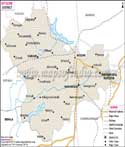
About
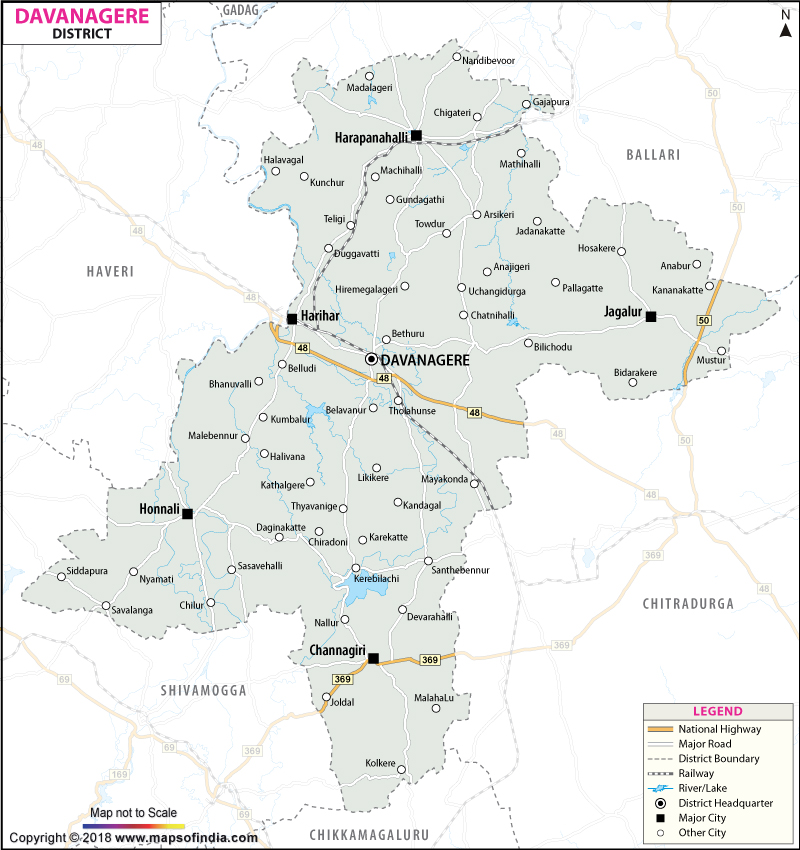
Geographically, Davanagere holds the center of the state and can be seen as a district that blends both the physical and cultural aspects of north and south of India in a very graceful manner. The name Devanagiri means "a town that pleases the Devtas." Later on, the name Davanagere was derived. Besides being beautiful, the name is also full of the charm that history throws in. The most popular local story behind its name goes something like this: Davanagere means "dry pond" in the Kannada language and it is supposed to be the reason the place was once given that name. The name probably was given in a period when Chalukya kings were ruling alongside Hoysala kings and the lake areas of the town were used by those armies and traders as a major rest point; they could get water and rest there for a while.This particular district has a history of being carved out of land taken from the districts of Chitradurga, Shivamogga and Ballari to form the new administrative district which came into existence on August 15, 1997. With the passing years this place has changed completely, no longer the agricultural area it was once known as, but now the centre for education, the agri-products processing and the textile industry.
History & Culture
There are several layers of history intermeshed in Davanagere, each brought to the fore by the rise and fall of India's southern empires. A major change that led to the political and economic development of the area was a major change that happened in the late 18th century. Hyder Ali, the King of Mysore, handed over the place as a jagir (a feudal land grant) to Apoji Ram who was a powerful Maratha army chief. Apoji Ram saw that the land might be a strategic and economic place. During his time, and later on by Tipu Sultan's direction, he called upon traders, weavers, and artisans to come and settle here which helped establish a busy trade area. When a European company came to this area in the 19th century and set up a factory, they found out that the region is a place of high-quality cotton that they can capitalize upon. The mechanization of the textile industry was done through such a famous unit as Davanager Cotton Mills.The original inhabitants' culture is mainly based on folklore, classical music, and spiritual traditions. Davanagere's location is special because it gives way to the district being one of the rare places in Karnataka where languages dialects, and customs from North and South India blend seamlessly, and also where artistic expressions vary and are equally accepted as parts of one culture. In addition, different historic temples host their grand Rathotsavas (car festivals) and such state festivals as Nada Habba (Dasara), Deepavali, and Ganesha Chaturthi all these festivals emphasize the deep spiritual character of the people there. It is Davangere Benne Dosa that tops the list of a city's food offerings and Because of this represents the cuisine of Davangere in the best way.
Economy
Davanagere's economy is greatly diverse and its industrial composition changes as new industries arise.
Government Sector
The government sector is a major source of employment for the public through different departments of the state and union governments, with the headquarters of an administrative district of Davanagere. Some of the important government agencies are the Zilla Panchayat, the newly upgraded Davanagere City Corporation (2007) with expanded functions, and the implementation of the Smart Cities Mission. Davanagere was among India's pioneering 20 cities being developed under this national rural development program which has brought considerable public investment for the development of smart infrastructure, better roads, and public utilities.
Public Sector
In the public sector, the main sectors that have a major presence are regional infrastructure, energy distribution, and agricultural support. At the core of this sector is the Bangalore Electricity Supply Company (BESCOM), which has been the main source of employment for people in the city area. Alongside it is the network of state-run transport companies such as NWKRTC and KSRTC.
Services Sector
These days the service industry in Davanagere is mainly composed of Education and Healthcare. The district has become the main educational hub in Central Karnataka, hosting several prestigious medical colleges (like JJM Medical College), top engineering institutes (BDT/BIEt) as well as the broad-based Davangere University. This huge academic presence creates a large support service economy involving hostels, hotels and restaurants shops, and digital services. And, financial services, banking business, and an emerging IT start-up environment are making the gradual transition of the City from "Cotton City" to a Tech Destination.
Tourism
Apart from being an example of classical architecture, it is one of the most important attractions in Davanagere. About 14 kilometers away, this unique architectural site was built in about 530 years ago in the golden period of the Hoysala Kingdom on the Tungabhadra River bank. Devotees of Harihara, god of Vishnu (Hari) and god of Shiva (Hara), are the primary worshipers there, and this place is very dear to their hearts. The shrine contains a number of carved stone pillars, the whole surface of the column having a fine finish which reveals some exquisite details of the artist. One can see that a lathe has actually made some columns which are very smooth. Besides, there is a big Hall (Mantapa) supported by many wooden columns, all of which have beautiful carvings and there are many stories in the friezes from the time immemorial ancient texts of India, i.e. the Ramayana, the Mahabharata. Shanti Sagara(Shantamma, a young queen of the 12th century, directed the execution. Now, the dam of the Shanti Sagara still carries the waters over the 500-meter wide and 5-6 km long, a major irrigation source for the agricultural land. Historians consider the Santhebennur Pushkarini a beautiful step-pool with a temple on the water's surface. The structure was first built as a water harvesting structure in the mid-1500s. The Pallava local rulers, Palegars who ruled the area with great influence from their forts on various hills, were probably the ones behind the initial water catchment structure of the pond. Then came the Adil Shahi rulers of Bijapur after the establishment of Bijapur Sultanate by the Adils who made the Santhebennur Pushkarini what it is today. They introduced the beautiful pavilions around the pond which you can still enjoy visiting.
Demographics
The demographic profile of Davanagere shows it to be a growing and a more and more educated community with a robust workforce. The Government of Karnataka's administrative database and census reports tell us that the district has 19,45,497 people in total. About 35.4% of the population lives in the urban areas, which implies that the area remains mainly rural. Literacy rate is 76.3% at the district level whereas the literacy level of the city Davanagere is 84.90% with males at 89.02% and females at 80.71%. The ratio of female to male is 975 per 1000 males, which is close to an equally distributed gender ratio. Speaking Kannada is the first language followed by 77.3% of the people while around 13.9% speak Urdu, the second language that has a large number of people being users of it. Telugu and Lambadi are among the secondary languages that are also spoken by the district population respectively at about 3.03% and 3.01%. About 65% of those living in the district live on or close to their farmhouses as the village community or small settlement regarding population distribution. Scheduled Castes and Scheduled Tribes account for 19.37% and 11.12% of the population respectively, which is a clear indication that this is quite a varied demographic profile. There is great diversity of religion in the area, and many festivals take place in each year in a different way. Different religious communities live peacefully and have been living for quite a long time. There are very good facilities for learning in the district and there is also a relatively large population of teachers and students. This has helped the community be able to keep pace with modern times. As the district is one of the main contributors to the state's agriculture, livestock production, and dairy industry, it is the backbone economically.
Administration
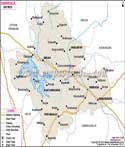
To ensure efficient civic governance and tracking for developmental work, there is basically a two-level revenue division structure which has made the entire Davanagere district one major administrative region. This is the administrative map of two revenue divisions with their sub-divisions which are - Administrative Sub-districts: Taluks. The district has six registered taluk areas and each is headed by a Tahsildar who performs duties of land revenue record keeping, local judicial administration and welfare programme implementation: Davanagere (The city is the main administrative point) Harihar (It is the industrial and pilgrimage centers). Channagiri (Area with arecanut farming) Honnali (A fertile land near the Tungabhadra). Jagalur (A dry area in the north) Nyamati (The young district to make local administration effective). Villages and Local Bodies Revenue Village: A total of 932 villages are recognized as local revenue units of the district.
| Official Name | Devnagere |
| Location | Karnataka |
| Area | 5924 sq. km |
| Population | 19,45,497(2011) |
| Language | Kannada,Telugu, Urdu |
FAQs
Q1: How many villages are there in Davanagere district?
The district has a total of 932 villages and this figure comes after dividing the villages into the six taluks.
Q2: What does the population of Davanagere district account for?
Based on the government records the population of the district counts 19,45,497 people.
Q3: What is it about Davanagere district that it is recognized for?
Davanagere has gained a nationwide reputation not only for its scrumptious, buttery Davanagere Benne Dosa but historically it was the "Manchester of Karnataka".
Q4: In what year was Davanagere made an autonomous district?
Davanagere became a district independently on August 15, 1997 as declared by the government.
Q5: What river is notable for its presence in Davanagere district?
The Tungabhadra River, which is the main lifeline of the district.
Q6: What interpretation is there to the ancient name of Davanagere as "Davana Kere"?
Literally in the local Kannada it means "a pond to quench your desire to drink water" which has a reference to an old lake where merchant caravans and royal army camps once stopped by to drink water after their long journeys through the different parts of the state.
Q7: Why was Shanti Sagar included to the places where tourists should visit?
Shanti Sagar (Sulekke also) is very unique in this area, as it is one of the two biggest man-made reservoirs on mainland Asia and this 13th-century construction has served irrigation for thousands of hectares of farmland as well as a means of water leisure.
Q8: What are Davanagere's main agro-industries involved in?
Paddy, mainly for popping rice/mandakki, maize, sugarcane, chickpeas, and even Sunflower seeds are the main crops being processed by the large number of milling units for agricultural products in the district, which also makes it one of the key trading centers of agriculture in Central Karnataka.
Last Updated on : July 31, 2026
