






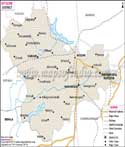
About
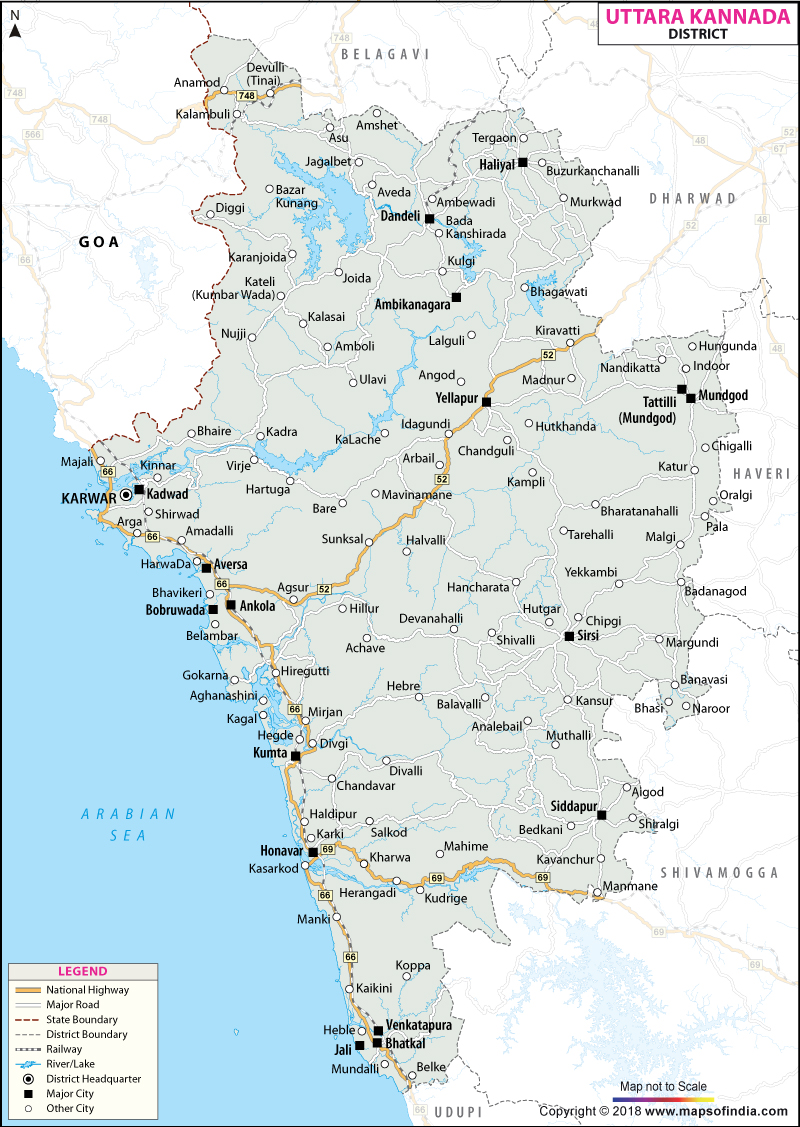
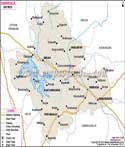
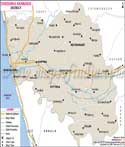
Uttara Kannada region was known as North Kamalagiri or North Canara before, and it is currently the fifth biggest district in the southern part of the country, Karnataka which is surrounded by sea on one side and hills on the other side. Covering just over a total area of 10,277 square kilometers, its very name signifies it is "Northern Coastal Land, " because it lies on the Konkan Coast. What makes Uttara Kannada so unique is its incredible natural wealth.Roughly 79-80 percent of the district's total geographic area is forested land, of which dense tropical forests cover the major part. Just 10-12 percent of the land is for human habitation, farming, and development activities.The topography of the district is naturally divided into two distinctive geographical regions: The Coastal Belt (Down-ghat): This region with its sun-drenched sands and estuarine deltas, is home to Karwar, Kumta, Honnavar, and Bhatkal, the ancient mariner cities. The Malnad Highland Belt (Up-ghat): Consisting of mountain chains separated by very deep gorges, with heavy coverage of evergreen trees, vast spreading spice plantations from the Malnad range across Sirsi, Siddapur, Yellapur, Dandeli, and Joida. The district has several major rivers like the Kali, Gangavali (Bedti), Aghanashini, Sharavati and Varara flowing perennially. These rivers have formed picturesque valleys in the hills and valleys which are the powerhouses of hydroelectricity and also are the habitats of rich and diverse wildlife which are among the best in the world.
History & Culture
Uttara Kannadia has many century-old heritages and has also been a maritime trade center since antiquity. Historical records and research have revealed that sea routes were the only way to get spices, pepper, and fine muslins from places like the Greco-Roman Arab, Persian, and African ports of Baitkhol (Karwar), Honnavar, and Bhatkal. Colonial Period: In this period, there was a heavy rivalry among the European countries in power for control over the region. First, the Portuguese, having occupied the area around Sadashivgad (Karwar), and on the other hand, the British who started their trading in the 16th century at Kadwad. The British took the country from King, Tipu Sultan's of Mysore, after his losing in the Fourth Anglo-Mysorean War in the year 1799 and made it part of their Madras Presidency. Suggi Kunitha: Halakki Vokkaliga people perform this form of dance only during the spring harvest festival. They wear headbands made of tall wooden carvings having peacock feathers and flowers attached with them to their hair. As the name suggests, this dance symbolizes a fight with a tiger. This dance is performed along the coastal religious processions as well as the spring festivities. The Dhamami dances of the Siddi community are another form of percussion-drum dance which is unique and the dancers' moves are set with the melody of the drums. This form is performed by a minority group in the country that preserves both African legacy and Indian folk culture. Siddis: A community that comprises people of sub-Saharan African origin, they were carried out by the Portuguese to India and employed as sailors and laborers centuries ago. They were initially stationed within the forest areas of Yellapur, Haliyal, and Mundgon, and despite the local culture absorbing them to the point of complete disappearance, they are able to safeguard their own style of music and rhythms. Halakki Vokkaligas: They are said to be one of the old communities who used to live in forests and along coastal lines. Today, they have their homes in coastal hilly areas. The women can easily be identified through their traditional wear; a sari is worn draping without using any pin and there are multiple layers of heavy glass colored necklaces. Kunabis, Gonds, and Goulis: tribes living traditionally inside the forests with their culture and way of life revolving around nature, keeping cattle by pasturing them, and having songs and music sung and performed verbally.
Economy
The economy of Uttara Kannada is a combination of various industries like agriculture fishing forests, major electricity plants run at a large scale by the public sector, and the service industry is also coming up.
Government & Public Sector
Owing to its coastal strategic position and deep river gorges, the state has several important public sector installations and facilities located here: Kaiga Atomic Power Station: The Kali River in Karwar taluk is where the Kaiga atomic power station is situated. One of India's commercial nuclear power generating station operated by India's nuclear power corporation (NPCIL). Project Seabird (INS Kadamba Naval Base): The Naval Base located at Karwar is one of the premier, deep-water Indian Navy bases. It not only gives jobs related to the country's defense sector, but also contributes in developing infrastructure in the coastal belts through expansion of the urban areas. Hydroelectric Power Hubs: The district has significant electrical infrastructure for the state of Karnataka. Big installations like Nagjhari Power House, Supa Dam Power House, and the Hydroelectric Stations - Kodasalli/Kadra are along the Kali River, and a few units utilize the Sharavati River also. Ports Infrastructure: Karwar has a natural and a well-sheltered all-weather port (Baitkhol Port) facilitating commercial shipping, bulk cargo, petroleum products, and iron ore transfers.
Service Economy
A large proportion of district residents work in service sector industries like ecotourism and hospitality businesses, retail stores, transport systems, and educational institutions that deliver both basic and higher education.
Tourism
Uttara Kannada is a perfect destination offering an array of landscapes that are ideal for different types of travelers, be it religious centers and historical forts or even tropical beaches and places that showcase nature's beauty like the ones with wildlife reserves and waterfalls. Gokarna (Mahabaleshwar Temple): An old-style temple town on the seashore famous for traditional architectural design and the sacred embodiment in the form of an Atmalinga of Lord Shiva. The pilgrim site is visited by both Indian and foreign travelers for their religious tourism. Murdeshwar: It is home to the world's second-tallest Shiva statue towering at 123 ft over the ocean, and it also houses a Raja Gopura consisting of twenty stories that have a lift. The hill (Kanduka Hill) where the temple is located has the ocean surrounding it on three sides. Banavasi: Once the headquarters of the Kadamba king, this place is a witness to an extraordinary Madhukeshwar Temple. Besides being one of the most significant temples, it also has stone thrones and sculptural reliefs that depict scenes of ancient life.Idagunji Ganesha Temple: This religious center dedicated to Lord Vinayaka is situated at Honnavar town and enjoys popularity among followers of Vinayaka. Mirjan Fort: Queen Chennabhairadevi, also called the "Pepper Queen") in history, ordered an elaborate stone structure, Mirjan Fort, a 16th-century double walls that lies along the Aghanashini River near Kumta.
Coastal Attractions & Beaches: Om Beach
Kudle Beach & Paradise Beach (Gokarna): Om Beach is recognized worldwide for its natural shoreline which coincidentally forms the symbolic " Om" sound ($\mathbb{O}\mathbb{M}$). Karwar Shoreline & Devbagh Island: Besides Rabindranath Tagore Beach, a location that inspired a young Tagore to pen his drama "Prakritir Pratishodh"-this island is also home to one of India's best naval ship museums, the INS Chapel Warship Museum of naval history. Devbagh, a small island, is blessed with mangrove trails, wildlife spots and water sports possibilities like windsurfing and jet ski rental. Blue Flag beach which also has a very strong eco-friendly theme as in, the surroundings, the facilities, the energy source i.e. solar power, and the shoreline are all maintained at a very high standard of cleanliness.
Demographics
From official Census data, we see that in Uttara Kannada, higher education is quite prevalent, gender distribution is even, and the people are living in a mix of rural farming areas and coastal villages. As the 2011 Census, the total population of the district is 1437169 or approximately 1.4 million. These include a male population estimated at 726 256 (50.53%) and a female population estimated at 710,913 (49.47%) creating a female-to-male population sex ratio of 979 females per 1000 males indicating an almost equal distribution of the two sexes in the total population. The district boasts an exceptional literacy level overall at 84.06% well ahead of both state and national averages. Male literacy is at 89.63% while female literacy is much lower at 78.39%, which suggests a need to put more effort into enhancing education among girls. The district is considered to have low population density with only about 140 people per square kilometre. The major reason for this sparse settlement is that almost 80% of the district's geographical area is under forest. Most people live in the rural areas of the district where the population figure is 70.85%. A total of 29.15% of the district's residents live inside urban areas which indicates that it remains a district that heavily relies on the farming business and other similar industries in the raw sector.
Administration
Uttara Kannada has been divided into 4 Revenue Sub-Divisions and 12 Administrative Tehsils (Taluks) for efficient management of administration, revenue collection, and development. Also, the total area has been divided into 1,243 villages (1,289 revenue village units in total). The headquarters of the district is Karwar.
Village & Local Governance Structure
Total Administrative Villages: 1,243 total census inhabited/uninhabited villages that are actually being run as per 1,289 village revenue unit data listings. Grama Panchayats: There are a total of 231 Grama Panchayats running village-level development and basic infrastructural works.
| Facts of Raichur District | |
|---|---|
| Official Name | Raichur |
| Location | Karnataka |
| Area (km2) | 10277 |
| Population | 1437169 (2011) |
| Language | Kannada,Telugu, Urdu |
FAQs
Q1: How many villages are there in the district?
There are 1,234 villages in total.
Q2: What is the population of the district?
As per 2011 census, there are 1437169 in the district.
Q3: What is the district famous for?
This district in the coastal region has a long coastline from where the best beaches and beaches of India can be seen like Om Beach on the shore of Gokarna. Religious tourists have a very important place with their visits here because the Murdeshwar Temple which is situated in front of the sea is among the famous temples dedicated to Lord Shiva. In the same way, the Gokarna Mahabaleshwar Temple is a very popular place among pilgrimage tourists.
Q4: Which major rivers flow through the district?
Kali, Afghanashini, and Sharavasti are the major rivers that flow through the district.
Q5: What are the GI-Tagged products from the district?
The Sirsi Supari (arecanut) and Appemidi Mango hold official GI status.
Q6: Why is Uttara Kannada divided into "Up-ghat" and "Down-ghat" regions?
The geographical division between the north and the south of the Western Ghats has been the reason why the area covering Uttara Kannada has been divided into an "Up-ghat" (Highland zone) and a " Down-ghat" (Coastal zone).Down-ghat: The region is mostly low-lying with sandy beaches of the coast bordering the Arabian Sea along the coast and towns like Karwar Ankola Kumta, Honnavar and Bhatkal.
Q7: What is the significance of the Tibetans settled in Mundgod?
Mundgod taluk in the eastern part of Uttara Kannada brings home to about ten thousand Tibetan refugees living in different settlements one of which is called "Doeguling Tibetan Settlement" established in the year 1966 with the land allocated by the Government of India through then Prime Minister Jawaharlal Nehru.
Last Updated on : August 03, 2026
