






About
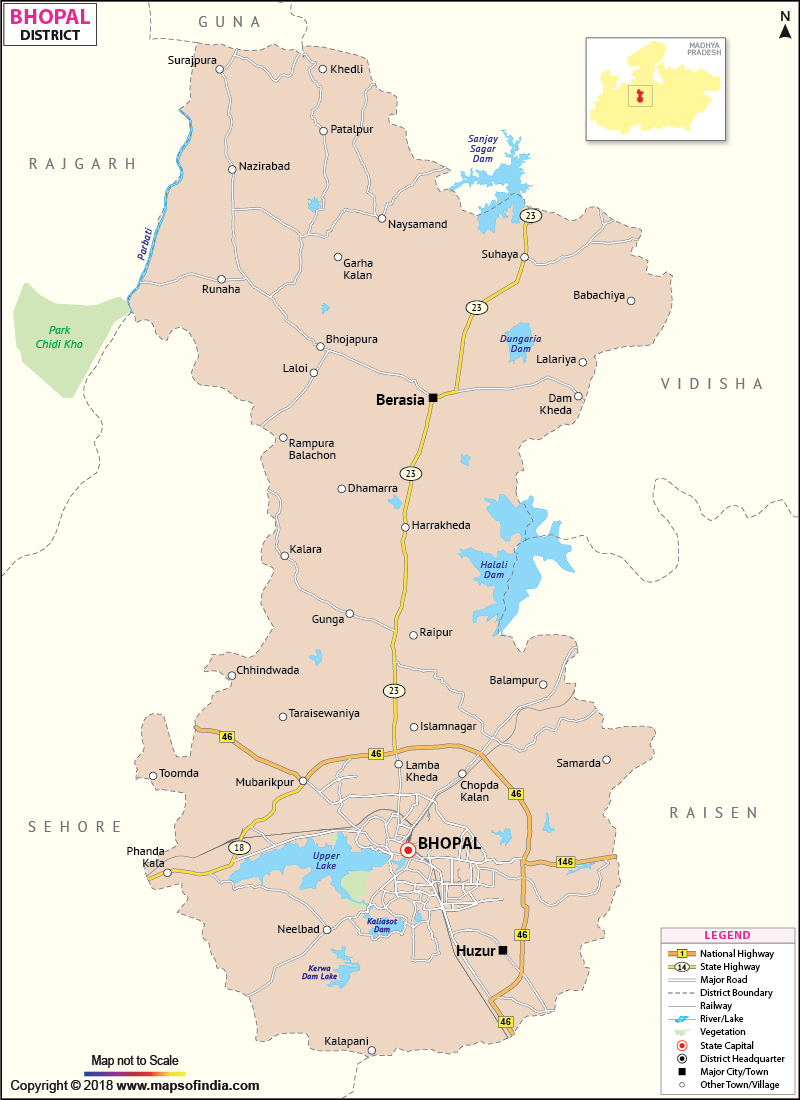
Bhopal district holds key administrative and political roles in central India. Situated within Madhya Pradesh, it centers on the city of Bhopal - also the state's capital.
Back then, the area carried echoes of the Paramara era before shifting through Afghan hands and into Mughal control. Under the Nawabs of Bhopal, especially between the 1700s and 1800s, things settled into a rhythm of steady governance. Old buildings stand beside modern city growth, showing layers built over time.
Out here, city scenes blend into open countryside, dotted with lakes between them. Upper Lake sits alongside Lower Lake - both shape how water moves through the region while supporting plants and animals. Workwise, people find roles in offices, schools, service jobs, along with smaller factories and workshops.
Most people live in cities here, shaped by many cultures plus strong reading and writing skills across communities. What makes the area distinct is how power, art, life, and money flow through central India - anchored firmly by Bhopal’s presence shaping who it is becoming.
History and Culture
The tale begins long ago, tied to old royal lines that shaped the land through centuries. King Bhoja stands out, ruler of the Paramara clan, linked directly to how Bhopal got its title. Power shifted often, passing between regional chiefs during the middle ages. Outside forces arrived later, pulling the territory into wider empires like Delhi's sultanate. Then came Mughal reach, folding the place into their vast network of rule.
One part of its story kicked off around the start of the 1700s, after Dost Mohammad Khan - a fighter from Afghanistan serving in the Mughal forces - took control and formed a small kingdom right there. Slowly but surely, that kingdom grew until it stood out among the major princely territories across central India. Its past stands apart mainly because women held power - rulers like Qudsia Begum, followed by Sikandar Begum, then Shah Jahan Begum - all known for sharp governance, shaping cities, designing buildings, pushing changes in society.
After India gained freedom in 1947, the royal territory joined the country in 1949. Over time, it grew into a key hub for decisions and leadership.
Out here, Hindu and Islamic ways mix in a way you do not see everywhere. Architecture shows it first - mosques near temples, old walls telling layered stories. Festivals unfold with rhythms borrowed from both sides, never quite one or the other. Words slip between Urdu and Hindi like neighbors chatting across fences. Literature carries the weight of Urdu, shaping how people write, think, remember. Daily routines hold traces others might miss - gestures, phrases, silences filled with meaning.
Out here, painting, songs, and food tell deep stories of heritage. Not just flavors but history sits on every plate - Mughlai roots show clearly in spiced meats and fragrant rice meals. When holidays come around - Eid, Diwali, or smaller local ones - the whole area lights up together, showing how people move as one. Moments like these don’t shout - but they speak loud about peace between neighbors.
Economy
Bhopal, housing the seat of state governance, powers its local economy through bureaucracy, factories, and support industries. People often find work managing public systems(like BHEL), teaching, or handling civic duties. Employment flows steadily from institutions that keep daily operations running.
Machines humming in factories shape much of what happens here economically. Near places like Mandideep, workshops making medicines, tools, cloth, or packaged foods have settled because space allows it. Jobs appear where these buildings rise, feeding livelihoods across towns nearby. Instead of big corporations alone, smaller shops and plants add their weight too - crafting everyday items while helping larger operations run smoothly.
A wave of change swept through the service industry lately, bringing fresh momentum to schools, clinics, stores, and guest-focused businesses. Scattered across the area are colleges, labs, and places where people sharpen skills - each one pulling talent while giving locals work. Medical care now reaches further than before, thanks to clinics run by government teams alongside those managed independently, serving folks from all walks of life.
With roads and rails stretching out, trade moves easily between towns far and wide. Because links exist to big city hubs, business stays active here. Where people gather to buy and sell, daily life finds a steady rhythm. Through these meeting points, money flows more freely into nearby hands.
Farming still matters out past the city limits, even if it doesn’t shine like office towers do. Out there, fields of wheat wave under the sun alongside plots of soybeans and beans that feed families. These plants grow where people depend on them, season after season, hand in dirt. Lives stay tied to planting times, harvest moons, soil tired or rich.
Tourism
Lakes define much of what draws people here - old stories mix with green hills and temples that hum quietly through afternoons. This place holds stillness even when full of movement, somehow never spilling its quiet.
Over there, old stories live inside stone and arches. Towering high, the Taj ul Masajid stretches across the skyline - a giant prayer hall shaped by Mughal dreams. Not far away, museums rise quietly, like Bharat Bhavan and the State Museum, holding colors, carvings, and names. Past rulers left marks too, carved into walls, courtyards, forgotten corners. Buildings whisper their titles still, Nawabs and Begums fading through time.
Just down the road, the Bhimbetka Rock Shelters catch eyes as a UNESCO World Heritage Site. Home to old cave art, these shelters reveal glimpses of how people lived long ago. Because of that, they pull in many who study history or simply love the past.
Wildlife travel plays a role in drawing people here. Along the water's edge, Van Vihar works like an open zoo - animals move freely while guests watch up close in half-wild settings. Quiet grows easily among trees and land stretching beyond town. Green areas around give space to slow down and just be.
Festivals, along with food and handmade crafts, bring cultural travel to life. Rooted in both Hindu and Muslim customs, gatherings like fairs build lively shared moments. Starting small, these occasions grow into rich experiences through rhythm and flavor.
Demographics
Nowhere else in central India does a city blend governance and daily life quite like this one. With over 2.3 million residents counted back in 2011, numbers have only climbed since then. Migration flows into the area, pulled by fresh work paths opening up year after year. This place, wearing the title of state capital, lives out that role block by block.
What stands out most is how varied the people are. Side by side live Hindus, Muslims, Jains, Christians - each shaping everyday life in different ways. Known widely for many Muslim residents, the area carries traditions rooted deep in history. Language, customs, routines - all carry traces of that presence.
Most people speak Hindi when talking or handling government matters, yet Urdu holds strong too - particularly within Muslim neighborhoods. In schools, offices, and meetings, English shows up a lot instead. History shaped the way words flow here; culture lives inside each accent heard on street corners. Different tongues mix because old roots run deep beneath daily talk.
Most people here can read and write - more than in several nearby areas, thanks to schools and public programs pushing education forward. Over the years, men learned at higher rates, yet women have been catching up slowly since then. Still, fewer females are literate when set beside males, even if progress has narrowed the space between them.
Nowhere near skewed, the balance between males and females hints at slow but steady shifts in society. Cities shape much of daily life, most people living within urban zones, though scattered communities linger beyond, tied to farming and related work along the edges.
People come here looking for work, schools, or a steadier life - this movement quietly reshapes who lives where. Over time, faces change, neighborhoods shift, all because someone decided to start elsewhere.
Administration
Beneath the surface, organization here runs deep, shaped by its status as Madhya Pradesh's seat of power. Leading things on the ground is the District Collector - authority rests with them when it comes to public safety, policy execution, and managing land-related income. From this city, major decisions ripple outward, fed by agencies and departments rooted in Bhopal’s core.
Now picture smaller districts inside the district - like Huzur or Berasia. One of those areas gets run by someone called a Sub-Divisional Magistrate. Think of them taking care of daily work: tracking land ownership, gathering taxes, linking different growth efforts together. Because things are split up this way, decisions happen closer to people. Services actually reach where they need to go.
Underneath city skies, daily life runs thanks to the municipal corporation - it handles water flow, waste cleanup, street fixes, alongside shaping how neighborhoods grow. In Bhopal, that structure keeps pace with more people moving into town, quietly adjusting systems as numbers climb. Out beyond highways, villages follow older patterns: local councils called Gram Panchayats take charge, making choices about farming paths, small schools, plus shared resources without top-down orders.
Security in the area comes from local police, guided by the head officer known as SP. Because the region holds weight in governance and politics, staying alert about safety becomes a quiet priority.
The district also has representation in both the Madhya Pradesh Legislative Assembly and the Lok Sabha, contributing to state and national governance.
| Facts of Bhopal District | |
|---|---|
| State | Madhya Pradesh |
| District | Bhopal |
| District HQ | Bhopal |
| Population (2011) | 2371061 |
| Growth | 28.62% |
| Sex Ratio | 918 |
| Literacy | 80.37 |
| Area (km2) | 2772 |
| Density (/km2) | 854 |
| Tehsils | Berasia, Huzur |
| Lok Sabha Constituencies | Bhopal |
| Assembly Constituencies | Berasia (SC), Bhopal Uttar, Narela, Bhopal Dakshin-Paschim, Bhopal Madhya, Govindpura, Huzur |
| Languages | Hindi |
| Rivers | Halali, Kaliasot |
| Lat-Long | 23.493477,77.419853 |
| Travel Destinations | Bhojeshwar temple, Manua Bhan Ki Tekri, Upper Lake, Lake View, Kalika Mandir, Kalighat, Lower Lake, Boat Club, Van vihar National Park, Taj-ul-Masajid, Bharat Bhavan, Chatori Gali, Manav Sanghralay, Kerwa Dam, Lal Parade Ground etc. |
| Government Colleges/Universities | Swami Vivekanand Govt College (Berasiya), Govt Maharani Laxmi Bai Girls PG (Autonomous) College, Govt Hamidiya Arts and Commerce College, Govt Gitanjali Girls PG (Autonomous) College, Govt Arts & Commerce (Naveen) College (Malviya Hostel), Govt Ramanand Sanskrit College, Govt Motilal Vigyan Mahavidyalaya, Sarojini Naidu Govt Girls PG (Autonomous) College, Govt PG College (Bhel), Govt Science & Commerce College (Benazir), State Law College, Institute of Excellence in Higher Educaiton etc. |
FAQs
Q1: How many villages are there in the district?
519 villages.
Q2: What is the population of the district?
23 lakhs.
Q3: What is this district famous for?
It is famous for being the state capital, its lakes (City of Lakes), heritage sites like Taj-ul-Masajid, and nearby Bhimbetka Rock Shelters.
Last Updated on : May 12, 2026
