






About
Lying in central India's Madhya Pradesh, Katni district carries the name "marble city of India" for reasons beyond appearance. Its identity ties closely to large-scale production in the nation’s stone sector, shaping regional economic patterns. Covering about 4,949 square kilometers, the area forms part of the Jabalpur administrative zone. Rail networks converge here, making it a key transit node between India’s north and south regions. At its core stands Murwara - also known as Katni city - a hub where factory work meets local traditions. Industrial rhythm pulses alongside festivals, markets, and everyday community life.
Across rolling fields and soil packed with minerals lies a landscape shaped by farming traditions. Flowing waters, including the Katni River along with smaller streams, carve paths that feed crops and guide where people live. Far from being just one thing, the area combines trade activity, deep-rooted heritage, together with diverse customs shared across communities. More than 1.29 million residents call this place home - a mix drawn from city energy matched with countryside endurance - recorded during the national count of 2011.
Home to vast marble deposits, the district matters beyond stone alone. Rail lines converge here, making it a key hub across Madhya Pradesh for movement and commerce. Though visitors may pass through toward deeper destinations, locals see something lasting - culture woven into daily life. Connection defines the place: between regions, economies, people. Pride grows quietly amid markets, tracks, and hills.
History and Culture
Older than recorded memory, Katni's roots trace back to settlements near the Narmada River. Found at Tigawa and Karitalai, ancient ruins include temples from the Gupta period - proof of worship and artistic life by the 400s CE. Standing apart, the Vishnu Varaha shrine at Karitalai shows the god in boar form raising the world - a quiet echo of deep belief once alive here.
For generations, the district saw empires grow then fade away. Rulers called the Kalachuris supported creative works, building shrines along with carved records on stone. Following them, leaders from the Gond community wove forest customs into wider cultural life. Power shifted again when Maratha authorities reshaped local governance structures. During colonial times, a key rail crossing shaped economic patterns by connecting resource zones to factory towns.
Underneath its quiet surface, it pulses with cultural variety. Diwali, Holi, Eid, Navratri, along with tribal gatherings, light up the calendar without favor. As seasons shift, so do village rhythms - karma and gendi dances unfold in open fields, led by indigenous groups. Near temples, markets bloom alongside prayer, drawing sellers of handcrafted goods and growers trading grains.
Deep within Katni, life unfolds through rhythms passed down by Gonds and Baigas - groups whose presence pulses in every handwoven basket and whispered folktale. From their voices rise stories of ancient woods, flowing streams, trees that remember names. These moments echo beyond sound; they shape how people see the world around them. Found near Bilhari, an old shrine called Tapasi Matha holds quiet space among modern shifts. Nearby, atop weathered stone, Vijayraghavgarh Fort watches time fade into dust. Each structure bears marks not carved for show but built from belief, battle, necessity. Together, threads like these weave something lasting - a culture stitched slowly across generations.
Economy
Farming shapes Katni's livelihoods, while manufacturing adds momentum to its growth. Services contribute steadily, balancing the region’s economic rhythm. Stability often comes from jobs in schools, clinics, and community administration. Rural incomes gain a boost when MNREGA initiatives step in. Meanwhile, farming improves as outreach services introduce updated methods to growers.
Jobs in the district come largely from stone work, where cutting and shaping marble plus limestone supports many families. Though small in size, the town sends its famous white rock to builders nationwide. Workshops near the rail lines keep people busy, maintaining trains and managing shipments. This hub connects cargo routes, creating steady roles for locals.
Across the city, retail trade moves steadily alongside transport networks and local businesses. Growth appears in banking access, schools reach more residents, while clinics open at a steady pace - each step tied closely to rising urban demand. Though quiet in tone, change runs deep beneath daily routines.
Farming still holds deep importance, especially through staples such as wheat, rice, pulses, alongside oilseeds that anchor rural economies. Though dependent on seasonal rains, many growers now benefit from expanded water systems that reduce weather risks. In village trade, weekly haats serve as hubs - here food changes hands while handmade goods find buyers among locals.
Marble shapes Katni’s identity more than most realize. Transport trucks loaded with pale stone slabs roll through town daily - a quiet sign of local power. Still, mining does not tell the whole story. Farm cycles guide much of what happens here. Economic life breathes in multiple forms, rooted in soil and tradition alike.
Tourism
Katni offers a blend of historical, cultural, and natural attractions: Among India's oldest religious structures, the Tigawa Temples date back to the Gupta period. These shrines reveal foundational styles of Hindu design through detailed stone artwork. Mythic stories unfold across sculpted panels carved centuries ago. Though modest in size, their influence on later temple forms remains notable. Each figure etched into sandstone reflects both spiritual themes and artistic precision of its time.
A towering form of Vishnu as Varaha stands at Karitalai, carved with quiet precision. This temple draws both researchers and travelers, each following separate paths but arriving together. Thoughtful craftsmanship marks every surface, not calling attention yet impossible to ignore. Few sites present this version so clearly - its presence speaks without effort. Pilgrimage meets inquiry here, neither outweighing the other.
Built long ago, Vijayraghavgarh Fort still stands with traces of its former strength across rolling hills. From its heights, the land stretches wide beneath open skies. Once a seat of power, now quiet stone hints at stories held within weathered walls. Across uneven paths, glimpses emerge - carved pillars, broken archways - all shaped by time differently. The air carries echoes, not voices. Each step forward meets fragments of what once was firmly joined. Beyond the ridge line, fields fold into one another without pause.
Deep inside Madhya Pradesh, old rock beds reveal how stone journeys from cliff to craft. Not just a mine but an open-air lesson in patience and precision. Where hammers echo through limestone veins shaped by time. One glimpse into the cutters’ world shows slabs split inch by inch. Tour paths wind beside active work zones without staging or shortcuts. Each stop tells of weight, grain, and color pulled from earth. Machines hum under sunlit dust while hands guide ancient material. What begins as rubble becomes geometry by afternoon light.
Demographics
Among India’s central regions, few places mirror variety quite like Katni district does through its people. Back when census figures were last counted in 2011, nearly 1.3 million lived there - most outside cities, with just over a quarter found across the town and nearby settlements. Life moves differently depending on where someone settles; farming marks daily patterns in countryside spots whereas market work, learning hubs, and factory jobs define city pace.
A little more than seven out of ten adults can read and write, showing movement forward despite uneven outcomes seen among genders or locations. Schools run by authorities alongside privately managed ones now play quiet roles in reshaping what comes next, especially since youth today look beyond local boundaries for college paths and skilled employment.
Spoken words shape who people are here. While most rely on Hindi to connect, regional speech adds depth to daily talk - sometimes shifting mid-sentence into Gond or Baiga tones out in rural pockets. Centuries of living side by side show up clearly in how language flows between speakers. Because many tongues mix freely, stories, rhymes, and ancestral knowledge stay alive through voice alone. On paper, the count stands at 948 girls for every thousand boys - a figure close to what's seen across Madhya Pradesh - but behind numbers lies movement: more women now step forward in village councils, learning centers, and small community networks than before.
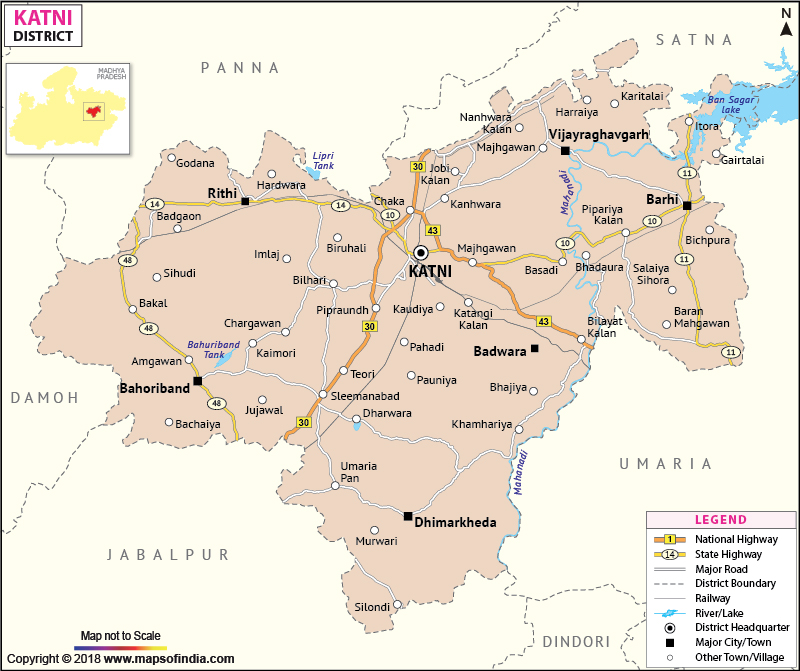
Administration
In Katni district, city areas mix with the wide countryside under one system. Seven parts - Badwara, Bahoriband, Barhi, Dhimarkheda, Murwara, Rithi, and Vijayraghavgarh - carry out daily government tasks. Governance flows down through smaller units: blocks and villages, where most people live. A total of 905 villages make up the base layer of authority. Running each village is a locally chosen group called a Gram Panchayat. These groups handle everyday issues, apply state plans, and settle conflicts among residents. Because of Panchayati Raj setups, locals take part directly in choices affecting their lives. Power moves closer to home when decisions include those they impact.
Most days, decisions start at the top, guided by the District Magistrate - an IAS officer - responsible for public safety, progress initiatives, and alignment across government arms. Security tasks fall under supervision by the Superintendent of Police, an IPS official tasked with upholding legal authority and protecting communities. Separate divisions, each led by specialists in fields like farming, learning systems, medical care, or land records, handle focused duties without overlap. Located centrally within the town, the district collectorate operates as a core hub: direction turns into practice there, citizen concerns receive replies.
Close to everyday life, the workings of government go beyond paperwork. When rains arrive, teams organize aid for flooded regions alongside help for farmers, whereas dry periods see efforts shift toward saving water. Running on local hubs like block centers and village groups, programs in health, reading skills, and road building touch distant corners too. Shaped by oversight at ground level, the sector handling marble in the district guides quarry operations, yet keeps an eye on nature amid business progress.
Though rooted in custom, Katni's system also embraces current administrative methods. Where local councils reflect community-driven decision-making, officials at the district level uphold broader government structures. Instead of operating separately, these layers work in tandem through issues like farming progress, factory oversight, and public support programs. As a result, the area maintains leadership that listens, includes diverse voices, and adapts ahead of demands.
| Facts of Katni District | |
|---|---|
| State | Madhya Pradesh |
| District | Katni |
| District HQ | Katni |
| Population (2011) | 1292042 |
| Growth | 30.70% |
| Sex Ratio | 990 |
| Literacy | 43.3 |
| Area (km2) | 4950 |
| Density (/km2) | 261 |
| Tehsils | Katni, Rithi, Vijayraghavgarh, Bahoriband, Dheemarkheda |
| Lok Sabha Constituencies | Khajuraho |
| Assembly Constituencies | Barwara (ST), Vijayraghavgarh, Murwara, Bahoriband |
| Languages | Hindi |
| Rivers | Katni, Mahanadi |
| Lat-Long | 23.755182,80.363388 |
| Travel Destinations | Statue Of Jain Teerthankar Shantinath, Cemetery Of Oliya Peeran Peer, Roopnath Temple, Sita Kund, Laxman Kund, Vijayraghavgarh, Tigavan Temple, Varah Temple, Sungarha Vaishnav Devi Mandir etc. |
| Government Colleges/Universities | Govt Degree College (Barhi), Govt Girls College, Govt College (Vijay Raghavgar), Govt Tilak PG College, Govt Degree College (Sleemnabad), Sanjay Gandhi College (Katni), Sh Niwas Sarawgi College (Katni) etc. |
FAQs
Q1: How many villages are there in the district?
There are 905 villages in the district.
Q2: What is the population of the district?
The population of the district is 1,292,042 (2011 Census).
Q3: What is this district famous for?
It is famous for its marble industry, earning it the title “marble city of India.”
Last Updated on : May 12, 2026
