

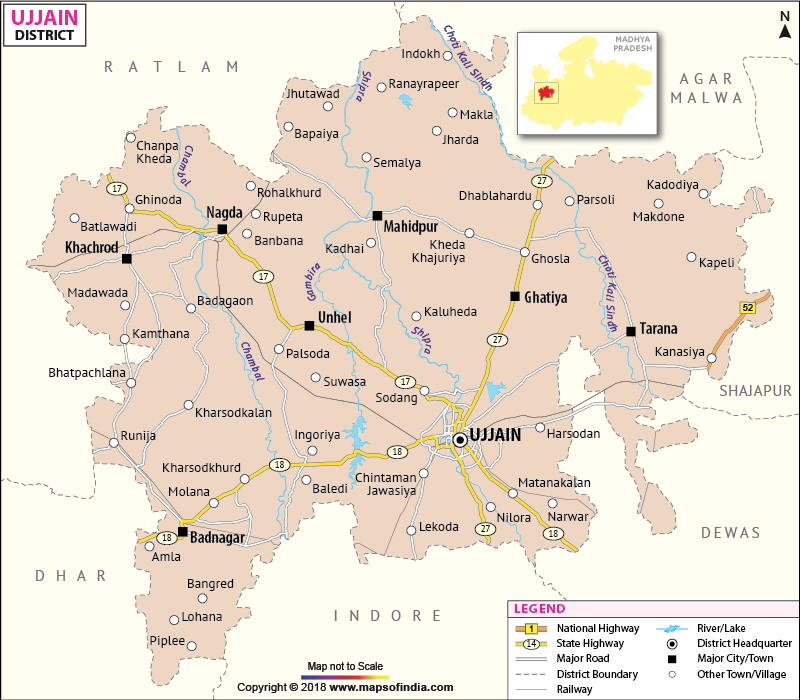





About
From where the Shipra River curves into earth, Ujjain district spreads through west-central Madhya Pradesh - a place shaped by time, marked by quiet reverence. Through long stretches of years, people arrived here: thinkers, pilgrims, those searching for something unnamed - drawn by lanes and sanctuaries that offer more than stone. Central to it stands Ujjain town, known widely as a city built around worship, not merely because towers rise above rooftops, but due to its standing among seven places Hindus regard as spiritually essential. Distinguishing it from similar sites is the Mahakaleshvara Jyotirlinga - one among just twelve such installations nationwide honoring Shiva in his fiercest manifestation. Daily rites within, particularly the ash-covered dawn offering, echo outward, reaching minds well past local boundaries.
What lifts Ujjain’s sacred presence beyond the usual is its role among just four locations selected for the Kumbh Mela, a vast gathering rooted in cyclical tradition. Held once each dozen years, the region shifts - no longer quiet - as people move toward it from far corners, drawn like tides. Along the Shipra’s edge, worship unfolds in layers: voices rise while feet mark time on stone, bodies meet riverlight at first glow. Though routine returns when crowds fade, traces remain woven into soil and air - the hush holds memory of motion, murmurs built across ages.
History and Culture
Well before empires carved lasting records, Ujjain stood among India's first significant urban hubs. Once called Avantika, its former name lingers with undertones of dignity and insight. Tied closely to King Vikramaditya, his era lives on - not just in tales, yet embedded within the ongoing rhythm of the Vikram Samvat system. During Mauryan and Gupta rule, life in the city thrived, shaped by governance that favored growth. Traders arrived from faraway regions, filling marketplaces with movement and sound; at the same time, courtyards echoed with discussions on thought, celestial patterns, or numerical systems.
Varahamihira stood among them, alongside Brahmagupta - each uncovering principles tied to planets and figures that would influence minds across centuries. Stories stretch deeper into time, connecting it to Lord Krishna, believed to have learned wisdom near sage Sandipani within this land. Power changed hands frequently, frontiers moved repeatedly, yet dedication to study endured without break, forming an unbroken line through shifting eras.
It is the quiet blend of verse and belief that marks Ujjain apart within India's old cities. From this place, so it is said, Kalidasa once shaped his works - lines still felt today in Meghaduta and Abhijnanashakuntalam. Rather than merely surviving time, those poems grew deeper roots through temple courtyards, riverbanks, hillsides. When celebration arrives, layers of tradition surface - not just seen but heard, touched, breathed. One such moment comes during Maha Shivaratri at Mahakaleshwar, where light climbs high above stone walls. Chants move across crowds long after dusk fades, carrying something steady - an enduring presence. Faith shows not in spectacle but in quiet acts - how hands fold before eating, how silence pauses conversation near shrines. Where songs move through time, where meetings hold daily existence together, because routine gestures carry quiet respect - the district gains substance well past ritual display. This way of living pulses, shaping the area's character quietly yet firmly across years.
Economy
Ujjain's economic strength lies in its blend of farming, trade, and manufacturing, where faith-based travel fuels much of the expansion. What holds rural life together here is crop cultivation, mainly wheat, soybeans, pulses, and oil-bearing plants taking center stage. Along the rich lands of Malwa - fed by streams and man-made waterways - harvest yields stay consistently strong. Growing produce like greens and tree fruits gives many farmers extra income, feeding town stalls and nearby regions alike.
Employment emerges from government roles within administration, education, and medical facilities; meanwhile, state-backed initiatives back cooperatives alongside manufacturing in fabrics and edibles. Power shifts toward service activities - driven nonstop by streams of travelers arriving for faith-based reasons or heritage sightseeing. Lodging spaces, eateries, movement networks, and shops gain strength directly because people keep coming. Craft workshops using local skills - sculpting rock, shaping artifacts, making age-old products - broaden how money flows across the region. In one place called Nagda, factories dealing in chemicals and woven materials stand out, lifting financial returns well beyond average levels.
One reason Ujjain stands apart economically ties directly to religion. Millions visit each year because of the Mahakaleshwar Temple, supporting livelihoods across lodging, travel, and selling goods. When the city hosts the Kumbh Mela, activity surges - markets pop up overnight, roads get upgraded, services stretch further than usual. Behind every transaction lies a deeper link: belief feeds farming, business thrives on ritual, lives depend on both. Numbers tell part of the story, yet what matters more is how trust in tradition keeps daily life moving.
Tourism
Among India's holy towns, Ujjain stands out through faith more than fame. Scattered across the area are places of worship, river steps, and remnants of older times - each pulling visitors drawn by belief or curiosity. Dominating the skyline, the Mahakaleshwar shrine ranks among twelve revered Jyotirlingas. Each dawn, sacred ash becomes part of a rare ritual - the Bhasma Aarti - calling followers from distant lands. Soaring towers meet age-old customs here, revealing how deeply spirituality shapes life in this place.
Every dozen years, the Kumbh Mela draws vast crowds. Along the Shipra River, people bathe in faith - each immersion said to wash away wrongdoing and open paths to freedom. At the heart of these rites stands Ram Ghat, where water meets devotion in full view. Places such as Kal Bhairav, Harsiddhi, and ISKCON deepen the region's sacred presence. Though unusual elsewhere, alcohol poured at Kal Bhairav Temple reveals how varied Hindu customs can be.
It holds more than just temples - it carries traces of history and science too. Standing quietly among its lanes, the Jantar Mantar was raised by Maharaja Jai Singh II as a tool for watching skies. Once used to track celestial paths, this old observatory reveals how deeply India once studied stars. Scholars still visit the Vedh Shala, drawn by its quiet legacy in sky mapping. Tied to stories older than stone, Sandipani Ashram links directly to Lord Krishna's years of learning. Myth wraps around it, making the place echo with older voices.
Demographics
About 1.98 million people live in Ujjain district according to the 2011 Census; today's numbers are likely larger because of steady population increase. Spread unevenly, residents occupy urban hubs including Ujjain city along with smaller settlements - Nagda, Mahidpur, Barnagar - and more than a thousand scattered villages. Literacy hovers near 73%, yet men show much stronger reading and writing skills compared to women. Because of this gap, ongoing efforts in education remain essential, especially where farming communities live far from major roads.
Most people speak Hindi, which handles government work and schools. Still, in rural areas and small urban centers, voices carry the Malwi dialect - adding local color to daily talk. What stands out in the district is how crowded neighborhoods coexist with deep cultural roots. Although many can read and write, access to education still shapes daily realities. Because languages shift from street to street, communication becomes a quiet act of adaptation. Behind every statistic lies someone tending fields at dawn. Where temples draw pilgrims, faith guides routines more than calendars do. Life here moves not through sudden change but layered habits passed down quietly. Progress appears slowly, woven into old patterns rather than replacing them.
Administration
There are several tehsils in the Ujjain district: Ujjain, Ghatiya, Tarana, Mahidpur, Barnagar, Khachrod, and Nagda - each runs as a separate center for local affairs. Because these areas take care of daily tasks, things like tax gathering and organizing growth plans happen close to where people live. Inside each office, workers keep property details up to date, watch over community programs, while also linking with small-town decision groups - an unseen frame holding routine work together.
From above, direction flows through the Collector’s seat in Ujjain town, where higher-ranking officers shape wider actions taken across regions. When layers connect like this, authority moves step by step beyond urban points, arriving quietly in far-reaching countryside spots. Spanning great distances, the area includes well over one thousand rural settlements scattered throughout its terrain. Though small in size, each settlement functions through a Panchayat model - local decision-making guided by communal participation. Far beyond mere bureaucratic units, these assemblies blend inherited wisdom with present-day administration.
Rooted in custom yet shaped by current needs, Ujjain’s system balances old village practices with city-style oversight. While temples draw pilgrims, offices handle permits, taxes, and planning like any growing center. One part honors lineage, the other adapts to change - both operate at once. Governance here does not choose between past and present; it moves with each. Life in the lanes near shrines feels different from new neighborhoods on the edge, but rules apply across. Even so, decisions often carry echoes of older ways. Where faith gathers crowds, logistics must keep pace. This mix defines how things get done - not split, just layered. Officials navigate rituals and regulations as part of daily work. So order emerges quietly, without fanfare, built around coexisting rhythms.
| Facts of Ujjain District | |
|---|---|
| State | Madhya Pradesh |
| District | Ujjain |
| Location | Central India |
| District HQ | Ujjain |
| Population (2011) | 1986864 |
| Growth | 24.96% |
| Sex Ratio | 950 |
| Literacy | 65.89 |
| Area (km2) | 6091 |
| Density (/km2) | 356 |
| Tehsils | Badnagar, Ghatiya, Khacharod, Mahidpur Nagda, Tarana, Ujjain |
| Lok Sabha Constituencies | Ujjain |
| Assembly Constituencies | Nagda-Khachrod, Mahidpur, Tarana (SC), Ghatiya (SC), Ujjain Uttar, Ujjain Dakshin, Badnagar |
| Languages | Hindi, Malvi |
| Rivers | Chambal, Kshipra, Gambira, Choti Kali Sindh |
| Lat-Long | 23.284242,75.536098 |
| Travel Destinations | Bade Ganeshji Ka Mandir, Chintaman Ganesh Temple, Pir Matsyendranath, Harsiddhi Temple, Siddhavat, Kal Bhairava Temple, Sandipani Ashram, Gadkalika Temple, Mangalnath Temple, Gopal Mandir, Navagraha Mandir, Mahakaleshwar Mandir, Chaubis Khamba, Nagarkot Ki Rani, Rama-Janardana Mandir, Rumi ka Makbara etc. |
| Government Colleges/Universities | Vikram University, Govt College (Badnagar), Govt Vikram College (Khachrod), Govt College (Nagda), Govt College (Tarana), Govt Kalidas Girls College, Govt Madhav Arts and Commerce & Law College, Govt Madhav Music PG College, Govt College (Ghattia), Govt College (Mahindpur), Govt Girls College, Govt Girls PG College, Shree Manmal Meemraj Ruiya Govt Sanskrit College, Govt Madhav Science College etc. |
FAQs
Q1: How many villages are there in Ujjain district?
There are more than 1,000 villages spread across the district’s seven tehsils, forming the rural backbone of Ujjain.
Q2: What is the population of the district?
The district has a population of approx 1.9 million people, with a mix of urban and rural communities.
Q3: What is Ujjain district famous for?
Ujjain is famous for the Mahakaleshwar Jyotirlinga and the Simhastha Kumbh Mela, along with its rich cultural heritage, temples, and astronomical legacy.
Last Updated on : May 12, 2026
