







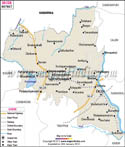
About
Once called Madras, Chennai sits on the edge of the Bay of Bengal, part of Tamil Nadu in southern India. Along the Coromandel Shore, it forms a special kind of district - no farmland, just city stretching block after block. While most Indian districts blend towns and countryside, this one lives only within concrete and streets. Its borders match exactly those of the massive urban sprawl growing outward over time. Starting long ago, the word Chennai ties into old gods and leaders alike. Some say it comes from an ancient temple named Chennakesava Perumal. Others believe it honors Chennappa Naicker, who ruled during the 1600s under the Nayakas. Meanwhile, the British called it Madras instead - probably after Madraspatnam, a tiny fishing town by the sea. That place once held the first trade post built by the East India Company. Two names lived together like that until 1996. Then, government officers renamed both the city and area as Chennai, to leave behind echoes of foreign rule and respect local speech roots. These days, waves at Marina Beach curl along one edge of the city, shaping how people see its past. Picture captured by NiAk Stock, available via Getty Images. Chennai district opens the door to southern India, shaping life here through culture, business, and learning. Where ancient Dravidian ways blend with today's urban systems, something steady takes form. Along miles of shoreline, inside hospitals known far beyond state lines, within top universities - energy flows differently. This place? It beats in time with all of Tamil Nadu.
History & Culture
Older than the European arrival by far, Chennai’s roots twist back through ages unseen. Along its edges, settlements such as Mylapore and Triplicane pulsed with life - seaside centers alive under Pallava rule from the 600s to the 800s. These areas earned poetic admiration - vivid hymns celebrated harbor life alongside grand shrines. Power shifted when the Cholas took hold, imprinting the land with enduring systems, along with stone-built sanctuaries that still shape memory. Out of nowhere in 1639, Francis Day teamed up with Andrew Cogan - both working for the British East India Company - to secure a thin stretch of coast from regional rulers under the Vijayanagara banner. Out near the coast, laborers stacked bricks one after another, shaping Fort St. George - an unassuming start to what now stands as Chennai. As years passed, neighborhoods like Egmore, Triplicane, and Purasawalkam drew closer, absorbed by the widening frame around them. Bit by bit, this patch turned into the core of the vast Madras Presidency. Every dawn in Chennai, old ways wake up alongside people. Not locked away somewhere quiet - they walk into markets, hum at bus stops, settle on temple stone where bare feet pause. The world sees it as home to strict dance forms, sure, yet its real pulse lives in shared breath between singer and listener. A title from UNESCO? That came because music here isn’t performed just to impress. Then December rolls in - cold by local standards - and suddenly every hall, courtyard, even rooftops seem tuned to ragas. Time bends then. Nights grow long with song, hands carving patterns in the air, drums answering prayers without words. From village halls to temple courtyards, voices rise with rhythm while dancers shape ancient gestures. Each moment separate, yet swelling together - more than a gathering, less than a plan - a hundred acts lighting up at once. Breakfast here often means thick coffee poured high, foam rising with each round. A shared platter appears - soft idlis, crisp dosas, golden vadas - all laid out on broad banana leaves. Eating together holds things steady through changing times. Nearby, film sets hum in Kodambakkam, where stories shot today shape how people dress, speak, and listen tomorrow. That energy pulses beyond screens into everyday life.
Economy
On the eastern coast, Chennai thrives with an economy that spans many industries. Known in hushed tones as the "Detroit of Asia," it powers more than a third of India’s car production through bustling factory belts around the city. Hospitals here draw crowds from overseas, earning it another nickname - the nation's go-to spot for healthcare travelers. Nearly two out of every five international patients choose this region, pulled by clinics known for skill across specialties.
Government Sector
On the eastern coast, Chennai serves as the administrative heart of Tamil Nadu. Power lines and water pipes stretch outward from agencies based here - TANGEDCO keeps lights on, MTC moves crowds, CMWSSB guards taps - all under state control. Jobs bloom around these bodies, quietly steering growth across the region. Projects worth millions emerge regularly under these departments, fueling job growth along with physical assets across the city. With each initiative, public systems gain strength - quietly reshaping how services move and where power flows.
Public Sector
Chennai hosts a cluster of key government-run companies and banking outfits. Worldwide fame follows the Integral Coach Factory at Perambur, crafting train carriages for India’s rails - Vande Bharat expresses among them. Alongside it stand vital state-backed operations: the Chennai Port Trust manages harbor logistics, while regional hubs of Indian Oil Corporation handle fuel distribution networks. Banking power sits firmly here too, anchored by the head offices of Indian Bank and Indian Overseas Bank, shaping public finance from the city.
Services Sector
Chennai's economy today? It leans hard into service work. Stretching across the area are huge IT zones, one key stretch - Old Mahabalipuram Road - pumping out digital jobs like a hub in its own right. Big foreign software names sit next to fintech spots and call-center operations, each hiring waves of fresh graduates. Instead of factories, think desks lined up under bright lights, where banks, insurers, and finance outfits do paperwork for clients overseas - so much so, people now label the city a hidden nerve center for world banking tasks.
Tourism
Chennai's tourism scene pulls you into old British-era tales, towering temple spires, and everyday seaside life. Wander here, then discover shrines sitting close to weathered monuments from long ago. A long stretch of sand runs close to thirteen kilometers - this place holds the title of India’s biggest city beach, also ranking second worldwide by length. Evenings bring crowds who come not just for walks but for salty air, sizzling seafood on grills, horseback rides near waterline foam. Life here breathes outside walls, unfolding under sky shifts, lit by sunset tones most days. People linger past dusk, drawn more by rhythm than views alone. A temple rises where old streets meet, built long ago for Shiva in Mylapore's core. Its entrance soars high, shaped by stone hands from the seventh century. Carvings climb every level of the gopuram, each curve telling a craft without words. This is Dravidian form at its most patient - layered, watchful, rooted deep in southern soil.
Demographics
Chennai's people pack tightly into city spaces, shaped by crowded neighborhoods and steady learning paths. Official counts plus updated forecasts sketch its core numbers - drawn straight from government records, laid out without guesswork.
Population Census 2011
Demographic Indicator Statistical Metric Total Population 4,646,732 As per Census 2011, estimated over 5.2 Million 2026 Population Density ~26,553 individuals per square kilometer Average Literacy Rate 90.18 Male 93.70 Female 86.64 Sex Ratio 989 Females per 1,000 Males Primary Language Tamil Official Secondary Languages English Widely used in business education Telugu Urdu.
Administration
Overseen by a senior civil servant, the Chennai district runs tightly paired with the GCC to handle everyday civic tasks like property records and safety patrols. Leading it all sits the District Collector - part of India’s top administrative cadre - who manages tax collection, voting processes, and delivery of government aid programs. A grand old structure stands tall - that's the Ripon Building, home to the city’s main administrative office. Photo by ImageCraft Co, captured through a Getty Images lens. Splitting up the area helps Chennai run its public offices more smoothly. Three big chunks - North, Central, South - make up the main setup. Each of these sections breaks down again into smaller zones called Tehsils. Altogether, there are seventeen of them across the city.
Tehsils of Chennai
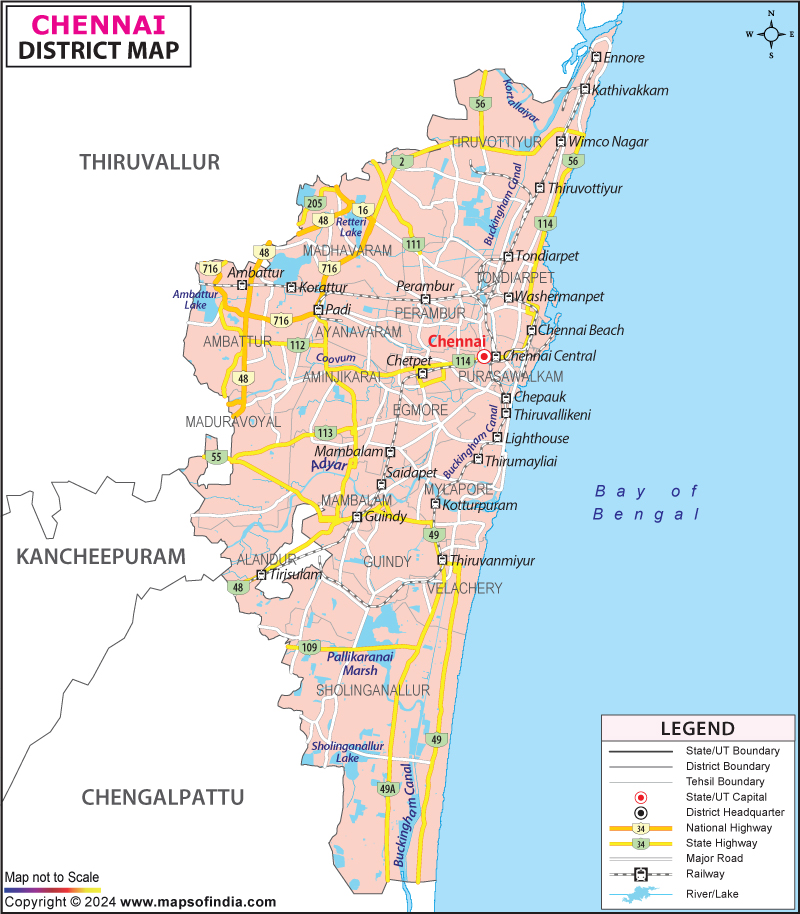
North of Chennai covers these areas: Thiruvottriyur sits near the shore, while Tondiarpet follows inland. Madhavaram comes next, linked by rail lines. After that, Perambur appears, known for transport hubs. Then Purasawalkam fills the stretch toward the central zones. Ambattur sits inside Chennai Central Division, while Ayanavaram follows close behind. Aminjikarai joins them within the same stretch of territory. Maduravoyal appears next, linked by shared boundaries. Mambalam shows up after that, forming part of the core zones. Egmore stands as another key point along the line. Kolathur arrived late, crafted into existence back in August 2024. South of Chennai holds these areas: Guindy sits near Mylapore. Velachery follows Alandur. One reaches Sholinganallur when heading far east.
Revenue Villages
Every bit of this area has turned into a city, so there are no farming hamlets here at all. Out of that setup come 144 Revenue Villages instead. Each one began long ago as a way to record land ownership and boundaries clearly. When handling public services, now those patches of land line up exactly with the 200 zones managed by the Greater Chennai Corporation. That match keeps things like water, roads, and neighborhood planning running without confusion.
| Facts of Chennai District | |
|---|---|
| Official Name | Chennai |
| Location | Tamil Nadu |
| Area | 175 sq. km |
| Population | 4,646,732 (2011 census) |
FAQs
Q1: How many villages exist within the Chennai district?
Most of Chennai has no farms or countryside settlements - just city through and through. Still, when it comes to property ownership or old-style tax systems, officials split the area into 144 small units called Revenue Villages.
Q2: How many people live in the Chennai district altogether?
Chennai district had 4,646,732 people as per the 2011 government count. Since then, numbers have climbed - today's estimates show more than 5.2 million now live there.
Q3: Chennai District, known for temples, colonial buildings, and a coastal location?
Famous around the globe, Chennai shines through its deep-rooted Dravidian heritage, vibrant Carnatic music celebrations that draw crowds every year, along with flavorsome Tamil dishes passed down through generations. When it comes to business, factories humming with car production earned it a nickname tied to America's motor city, yet shifted east - Asia's Detroit they call it.
Last Updated on : July 16, 2026
