| Siddipet District Fact Sheet |
|---|
| District | Siddipet |
| Headquarters | Siddipet town |
| Population as per 2011 Census | 101206 |
| Area (Sq. Kms.) | 3632 |
| nsity of Population (per Sq. Km.) | 279 |
| Literacy | 61.61 |
| Forest Area under the control of Forest Department (Area in Hectares) | 252.18 (Sq. Kms.) |
| Languages Official | Telugu, Urdu |
| Temple | Koti Lingeshwara Temple, The Lord Shiva temple (Kotilingala Gudi ), Sri Bhogeshwara Swamy and Sarabheswara Swamy temples |
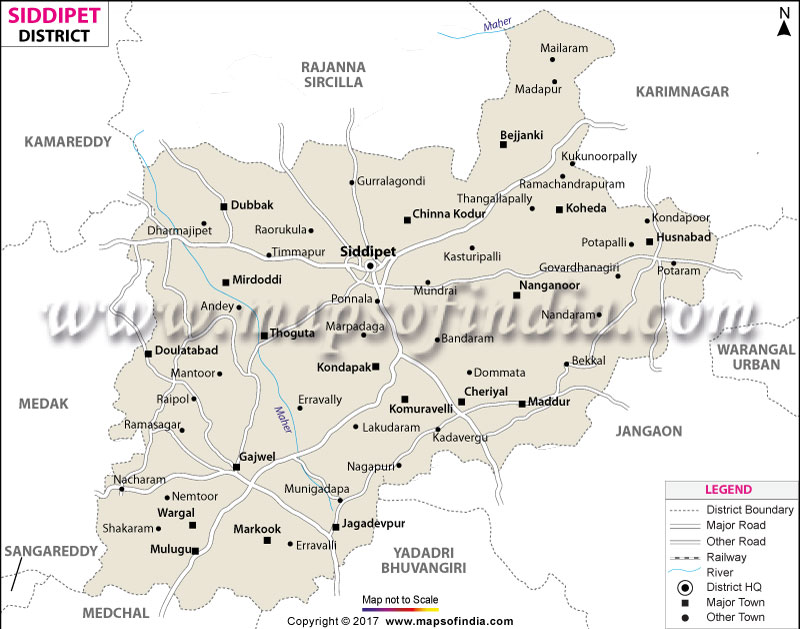
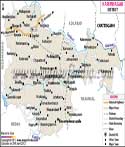
| Mandals | Siddipet (Urban), Siddipet (Rural), Nangnoor, Chinnakodur, Thoguta, Doultabad, Mirdoddi, Dubbak, Cherial, Komuravelli, Gajwel, Jagdevpur, Kondapak, Mulug, Markook, Wargal, Raipole, Husnabad, Akkannapet, Koheda, Bejjanki, Maddur |
Source :- http://siddipet.telangana.gov.in/
www.trac.telangana.gov.in
About
This district is located in the north-central part of Telangana, about 100 km away from Hyderabad, and has emerged as one of the hottest districts in the state for its linkage with massive irrigation schemes and fast pace of rural development. The district was established on October 11, 2016 by splitting the former Medak district into the new district adding some mandals to the district from the neighbouring districts of Karimnagar and Warangal. It was named after the headquarters town Siddipet, which has become an important commercial town in recent years. The district is at the junction of the northern and central parts of the state of Telangana, surrounded by Karimnagar, Sircilla, Medak, Medchal-Malkajgiri, Hanamkonda, Yadadri Bhuvanagiri, Kamareddy districts and Jangaon district.
History & Culture
The Siddipet area has a long history and it was part of the erstwhile Medak district that was a part of the Kakatiya rule and later the Nizams of Hyderabad. Many of the old buildings of the district, especially the temples of hill and cave style are the product of the Kakatiya and Chalukya period of architecture, which dates back many centuries before Siddipet was established as a district on its own. The modern district was established in 2016 when Telangana was reorganized to create numerous smaller and compact districts from older, large districts.
Now, despite the fast pace of modernisation of the headquarters town of Siddipet, it maintains strong rural and devotional cultural traits. The festival calendar of the district is followed by the people and Telugu is almost universally spoken with some of the district's main festival celebrations being Bathukamma, Bonalu and Sankranti, which are celebrated around the district, mainly in the temple towns. During the Sankranti to Ugadi season, the Sri Mallikarjuna Swamy temple is the focal point for a major festival, the Komuravelli Mallanna Jatara, which attracts lakhs of devotees from all over Telangana and parts of neighbouring Maharashtra. Here, Oggu Katha, a traditional storytelling art form is still alive, being performed at the temples, such as Komuravelli, by Oggu Pujaris, who pass on the myths and legends of the local deities from generation to generation.
Economy
Agriculture is its main economic activity, but major public irrigation projects and expansion of the service sector centred around its headquarters town have also had a significant impact on the economy of Siddipet.
Government Sector: Siddipet town is the headquarters of the district and has all the government departments of the Government of India at the district level (26 mandals). Despite the development of several infrastructure projects in the last few years, government work (especially in the agriculture, irrigation and rural development departments) is still a big and stable source of livelihood here.
Public Sector: Siddipet has also grown to be synonymous with some of the biggest public irrigation schemes in Telangana, such as reservoirs and lift schemes constructed as part of the state's overall irrigation management initiative. The projects have resulted in large-scale public works construction, contractor employment and related economic opportunity for the district, and in long-term improvements in agricultural productivity within the district's command areas.
Services Sector: Siddipet town is a major trading and services center for the nearby rural mandals and has developed a strong educational base, private hospitals and retail outlets. The district capital has also been consistently investing in civic facilities, which have been compared to the civic facilities of the more urbanised district headquarters in state media. Agricultural trade – primarily paddy, maize, cotton, and turmeric – continues to support a significant informal services economy underpinned by transport, storage, and produce marketing and, increasingly, new opportunities in the district's more recent linkages to Hyderabad in the logistics and retail sectors.
Tourism
The tourism identity of Siddipet is mainly established with its temples and the scenic reservoirs, some of which have earned popularity among the weekend visitors from Hyderabad and elsewhere.
Located on a hillock in the village of Komuravelli in the district, the Komuravelli Mallikarjuna Swamy temple is a cave temple dedicated to Lord Mallanna, one of the incarnations of Lord Shiva, which is considered to be one of the most visited temples in the district, especially during the festival season of the Mallanna Jatara.
Markook is the famous place where Sri Kondapochamma Temple, a famous temple for Kondapochamma devotees from all parts of the district, is located.
Kondapochamma Sagar Reservoir is a reservoir constructed as part of the Kaleshwaram irrigation project, providing a chance for boating and picnics in beautiful surroundings.
Sri Saraswathi Kshetramu, Wargal — A hillside Saraswati temple which is second in significance to Basara, especially for children's Aksharabhyasam (initiation into learning) ceremonies.
In Siddipet town itself, there is a landscaped lake promenade, Komati Cheruvu, which is loosely based on the Tank Bund in Hyderabad where residents and visitors both enjoy a pleasant evening stroll.
Ranganayaka Sagar Reservoir, Chinnakodur Reservoir, Shanigaram Reservoir are two other reservoirs with peaceful waters and a lush green environment, where one can come for a short day trip.
In addition to these, there are several smaller temples in Siddipet town itself, such as the Koti Lingeswara Swamy Temple, the Sri Renuka Ellamma Temple and the Swayambu Shambu Lingeswara Swamy Temple, which make the town as a whole a fairly rich collection of devotional sites in a compact location which is worth a stroll for those interested in temple architecture.
The district's reservoirs and lift-irrigation system have themselves become part of an alternative tourist attraction for those who venture beyond the city limits, and while some have views and landscape that reveal the magnitude of the state's recent water-management initiatives, they also provide a chance to experience the state's massive water resource development projects unusually. The town of Siddipet has a tourism scene that is quite different from the more traditional heritage-tourism town due to the old and the new, the shrines on the hillside and the impressive engineering projects.
Demographics
According to the district's own published figures, there are about 10,12,065 people in Siddipet and about 62% of them are literate. The district's population is geographically scattered in the rural and semi-urban mandals and Siddipet town is the biggest urban centre and commercial hub of the district. The agricultural population accounts for a significant proportion of the district population and agriculture continues to be an important source of livelihood, particularly in the production of paddy, maize, cotton and turmeric which is now supported by additional irrigation capacity from reservoir projects in the area.
The dominant language of the district is Telugu and there are small pockets of Urdu and Lambadi speakers in specific mandals especially in mandals having a historical presence of Banjara and tribal population. The religious composition of the district is predominantly Hindu with the temple towns such as Komuravelli, Wargal and Markook having a disproportionately large influence on the cultural and devotional life of the district when compared to the size of their population.
In combination, these statistics indicate that the district continues to be strong in its rural and agricultural tradition, even though the town of headquarters has modernized and irrigation facilities are growing in size. The relatively low literacy rates highlight the potential for continued investment in education, and the district's agricultural economy, combined with its expanding network of reservoirs and field irrigation channels, indicates that the people's economic fortunes are increasingly linked to the success of these massive water projects, along with its gradual and steady urbanisation of its own town of Siddipet.
Administration
The district of Siddipet is divided into three revenue divisions and each division has 26 revenue mandals. These villages are distributed in the 508 villages of the district, which has 5 Municipalities, the Siddipet Municipality being the key urban civic body in the district. The need for administrative control over law and order is reflected in the number of police stations, which is 27 across the district, in line with the scale of urban and rural areas.
The district collector's office located in Siddipet town, is responsible for revenue administration, coordination of irrigation and development schemes along with the overall governance of the mandals and is supported by elected representatives at the panchayat, mandal and municipal level to coordinate local development priorities.
| Facts of Siddipet District |
|---|
| Official Name | Siddipet |
| Location | Telangana |
| Area | 364694 hectors |
| Population | 10,12,065 |
| Language | Telugu |
FAQs
Q1: How many villages are there in Siddipet district?
There are 508 villages here.
Q2: What is the population of Siddipet district?
The population of the district is 10,12,065.
Q3: What is the district famous for?
Siddipet is most renowned for the Komuravelli Mallanna Temple and the annual jatara celebration, and the Kondapochamma Sagar reservoir created as part of the Kaleshwaram irrigation project.
Q4: What is the literacy rate of Siddipet district?
The literacy rate is 62%.
Q5: How many languages are spoken in Siddipet district?
Telugu, Urdu and Lambadi languages.
Q6: What is the total number of mandals in Siddipet district?
The District is divided into 3 revenue Divisions, each having 26 revenue mandals.
Q7: What is the importance of Komuravelli Mallanna Temple?
This cave temple is visited by huge numbers of people and it is one of the most popular religious places in Telangana and is dedicated to Lord Mallanna. The maximum crowd is during the annual jatara which falls between Sankranti and Ugadi.
Q8: Which are the key activities in Siddipet district in economic terms?
In the trade and services sector, agriculture continues to be the major economic activity in the district with the government administration and large-scale irrigation projects as the other pillars of the economy.
Q9: What is the local administrative system of the district Siddipet?
The district is administered by 26 mandals and 5 municipalities, with the headquarters of the district collector at Siddipet town and several Gram Panchayats in each mandal.
Q10: How are irrigation projects related to Siddipet District?
Siddipet has several big reservoirs such as Kondapochamma Sagar, which is part of the Kaleshwaram lift scheme of irrigation in Telangana, and many other reservoirs that have grown to be an important landmark of the district and also expanded the command area of agriculture.
Last Updated on : August 19, 2026