




Introduction
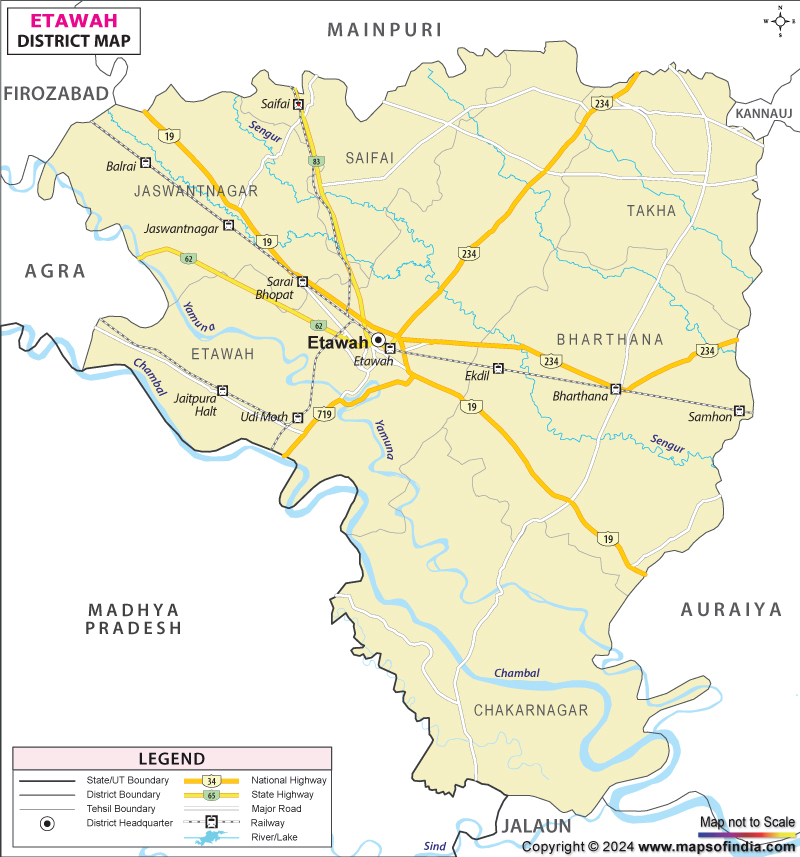
Etawah is a district in the west of Uttar Pradesh, India. There is a great blend of nature and history in this area. What makes Etawah special is the confluence of large rivers which also has a great political history. Also it is home to hard working farmers, ancient temples and great wildlife.
The district’s primary center is Etawah which sits by the Yamuna River. For hundreds of years this location has been important for trade and travel. If you are into old king stories or a lion in a safari park that is what we have in Etawah which for all of that has to offer.
History
The Etawah’s story is a grand one which goes back to the days of early Indian history. In the remote past this land was a key component of the Panchala Kingdom which is well known to us from the great epic the Mahabharata. It is told that the five Pandava brothers spent time in the dense forests here in their concealed life. Due to these far reaching connections the local people have a very strong tie into the spiritual and royal past of the area.
The name Etawah that we use today has an interesting history. It is said in local stories to come from the words ‘Int’ or ‘Ita’ which are words for brick. In the past this area was known for its vast number of brick kilns which would supply materials to nearby kingdoms. Today as you travel through the district you still see the large chimneys of brick factories which have been a part of Etawah’s history for generations.
During the medieval times Etawah became a key city that many rulers vied for. It is a strategic pass between the large cities of Delhi and Agra. The Delhi Sultans, the Mughals and also the Marathas fought to have control of this area. Each in turn left behind fortifications and structures which we see today as ruins and which prove how this land was of great importance for the defense of Northern India.
In 1857 Etawah had one of its most proud historical events. At the onset of the first war for Indian independence the people of Etawah were at the fore front. They put up a strong fight against the British officials present there. Local leaders and farmers joined together to take back their land which they did with a spirit of freedom that is today a topic of discussion in village get together and in schools.
After we won our independence in 1947 India saw a new era which Etawah grew out of. In the 80’s and 90’s it became the center of political change in Uttar Pradesh. From this came many powerful leader which brought in new roads, hospitals and the famous Lion Safari to the district. This political movement transformed a quiet farming area into a modern hub which at the same time preserves its ancient past with modern technology.
Today we see the past of Etawah in the present lives of the people which surround the Yamuna and Chambal. We tell the story of survival from the ancient kings to the freedom fighters and modern leaders. As the district grows it does not forget the brave soldiers and hard working people that built its foundation over thousands of years.
Culture
In Etawah there is a wonderful blend of bravery, simple living, and deep religious tradition. Here people are known for their great boldness and honesty in what they say which is a mark of the “Brij” and “Yadav” areas of UP. In the villages life is centered around the family and the local community, which still come together in the evenings to tell stories and assist each other with farm work.
In the center of the district religion is very much a part of the day to day life of the people. You will find many ancient temples which are hundreds of years old like the Nilkanth and the Tixi. These places are not just for prayer, they are the main culture centers of Etawah.
As Etawah is very near to the birthplace of Lord Krishna the local songs tell of his youth. You will also hear “Alha-Udal” songs which are actually stories in poetic form about old heroic figures that our present is connected to through these tunes. These songs are a live link in the cultural past of Etawah that brings the tales from the time of the founders of the land to us today.
In this region the food is very basic, fresh and health oriented. Also since many families own cows and buffalos we see milk and ghee included in almost all the meals. Very popular here is what we call “Mathura ke Pede” and “Bedai” which is a hot fried bread that goes well with a potato curry. In the local markets what you will see is people’s breakfast and dinner of choice being fresh Samosas and Jalebis.
Handmade products and small scale industries are the backbone of Etawah’s culture. We see that many are skilled at crafting things out of clay and wood which they put up for sale at our weekly “Haats” or village markets. These markets are the best to see local life play out as farmers bring in their grain and craftsmen bring out their hand made toys and tools to sell under the shade of large Neem trees.
In other words we see here a blend of past and present. In Etawah people are into their history which they are very much proud of as they also are about looking forward. It is a place which preserves its land, animals and traditions which for them are more important than anything else. What you see is the old world village feel which is at home with the new energy of a developing city which together creates a very special identity which you carry with you after you leave.
Language
In Etawah we see a mixed language which is a result of the district’s location between two great regions. Sure enough Hindi is the formal language which is used in the schools and at the offices, but at home the people speak a mix of Brajbhasha and Kannauji. This gives the local speech a very sweet yet strong flavor which also brings out the rural and earthy feel of the Uttar Pradesh heartland.
What sets the language of Etawah apart is its polite and musical quality. As the district is near Agra and Mathura we see many words from the “Brij” culture in day to day speech. In the grain markets when you tune in to what the farmers are saying you’ll hear very old traditional phrases which have been passed down through the generations which in turn makes each conversation very respectful.
In the cities you will also notice a great deal of Urdu influence. This is a result of the past which saw the rise of the Nawabs of Awadh. Also many use beautiful Urdu words in their poetry and songs. What you see is a mix of Hindi, Braj, and Urdu which develops into a “Hindustani” style of speech that is very easy for visitors to understand yet has its own local flavour.
Even though today’s youth are learning English in great numbers for better job prospects, they still hold on to their mother tongue. In local festivals and at village “Panchayats” the language of Etawah is what brings people together. It is a language of the land which is full of local proverbs and folk wisdom that preserves the district’s identity.
Geography
Etawah’s geography is unique as it is situated in an area where the great plains meet rugged river valleys. In the south west of Uttar Pradesh is where you will find this district which is in a triangular shape. For the most part the land is very flat and fertile which in turn has made way for what seems like forever fields of wheat and potatoes.
Also in terms of geography Etawah is known for the areas which lie by the rivers. In these parts flat land breaks into what are called “ravines” which we see. These ravines are a result of thousands of years of the Yamuna and Chambal rivers’ flow. They basically form what look like minimountains of mud and sand which in turn create a wild and very beautiful landscape which you do not see in many other parts of India.
In Etawah’s geography soil type varies by its proximity to water. By the rivers the soil is sandy which in turn causes erosion with which the gullies were formed. In the middle of the district the soil is “alluvial” which is a plant’s natural super food. This allows local farmers to grow a large array of crops which include mustard, pulses, and paddy throughout the year.
The climate in this area is very much defined by three distinct seasons. Summer is very hot and dry which at times sees temperatures go over 40°C. Then we have the monsoon which brings in heavy rain that fills up the dry ravines and causes our district to put on a bright green coat. Winters are cool and pleasant although early mornings do see heavy fog. This cold weather is also what does in best for the wheat and mustard which Etawah is known for.
In short the land in Etawah is a mix of river plains and sand dunes. It is a place which the earth has worked to produce food for us and a home for wildlife. From the large green farms to the wild rugged ravines you see the story of the power of water and nature in this district.
| Facts of Etawah District | |
|---|---|
| State | Uttar Pradesh |
| District | Etawah |
| District HQ | Etawah |
| Population (2011) | 1581810 |
| Growth | 18.15% |
| Sex Ratio | 870 |
| Literacy | 78.41 |
| Area (km2) | 2311 |
| Density (/km2) | 683 |
| Tehsils | Bharthana, Chakarnagar, Etawah, Jaswantnagar, Saifai |
| Lok Sabha Constituencies | Etawah |
| Assembly Constituencies | Bharthana, Etawah, Jaswantnagar |
| Languages | Hindi, Urdu |
| Currency | Indian Rupee (INR) |
| Religion | Mostly Hinduism and Islam |
| Rivers | Yamuna, Chambel |
| Lat-Long | 26.838776,79.117241 |
| Travel Destinations | --- |
| Government Colleges/Universities | Janta College, Karm Kshetra Degree (Pg) College, Dr. Ram Manohar Lohia Degree College, K.K.P.G College, Mahi College Of Science Technology etc. |
FAQs
Q1: Which political figure is the most well known from Etawah?
The late Mulayam Singh Yadav which saw the founding of the Samajwadi Party and which had as Chief Minister of Uttar Pradesh. From that area which is also his political heritage the District became a large scale player in Indian politics.
Q2: What does the Nilkanth Temple represent?
The Nilkanth Temple is a very ancient and very revered Shiva temple which stands by the banks of the Yamuna. It is a very pious site for thousands of devotees which includes special visitation in the month of Shravan and also during Maha Shivratri.
Q3: What is the main crop of Etawah?
The district is a leader in potato, wheat and oilseed production which includes mustard. Also it is home to very productive farm lands between the rivers of Uttar Pradesh.
Last Updated on : May 08, 2026
