






About
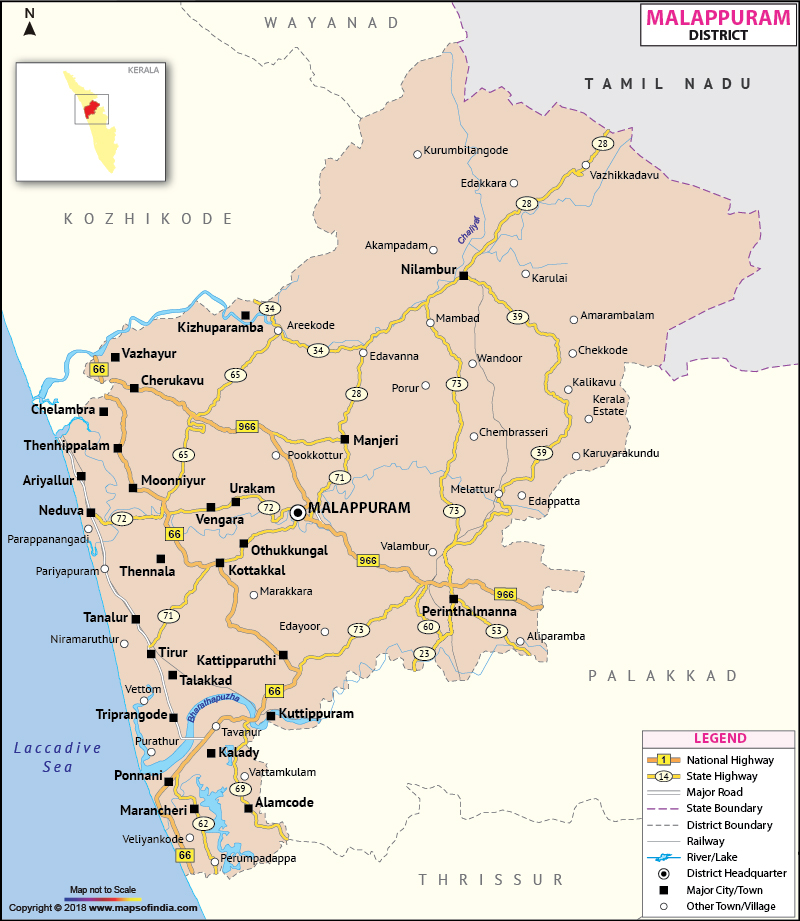
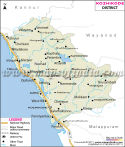
Malappuram (Terrace on the Hills) is a natural land strip between the Western Ghats to the East and the Lakshadweep Sea to the West. It is tagged as the biggest district of Kerala and was carved out on June 16, 1969, and accounts for approximately 13% of the population of the state.
The district is strategically located in central north Kerala with the geographical area of 3554 Sq. Km. Malappuram is the connecting point between Kerala and Malabar region in a peculiar geographical condition, which has a rugged topography formed by three rivers Bharathappuzha (Nila), Chaliyar and Kadalundi. From the thick jungle of Nilambur, to the 70 km west coast which is calm. Malappuram region is very rich in resources, historical heritage and homogeneous human population.
History & Culture
Malappuram has a rich history of spice trade, kingdoms and revolts. The ancient port of Ponnani was well known for its position along the sea where the Roman, Arab and Chinese merchants converged. The capital Malappuram of the kingdom of Calicut, the Zamorins, was also a military and cultural hub of them. Apart from being the heart of Malabar, it was the royal heart of the Zamorins as well. As the center of learning and religion in Malabar Ponnani was also the Makkah. There are several ancient mosques, built by the Muslim traders of the ancient kingdom in the region.
Malappuram is known throughout its history and its role in the wars and revolt for freedom. One of the hot spots of Anglo-Mysore wars was the rivalry between Hyder Ali and Tipu Sultan against the British. Malappuram was the epicentre of the Malabar Rebellion that included the1921 Moplah revolt. There was quite a bit of resistance to the British and the Feudal system in the area.
The great Ezhuthachan lived in Tirur in Malappuram. Later, the great Malayalam poet and writer became the father of modern Malayalam literature. In fact, it is this district where most of the traditional art forms of Kerala are found. From Kalaripayattu, Katha-prasangam to the traditional Mappila Pattu (a genre of Malabar Muslims) – all these art forms have deep connections with Malappuram.
One of the most unique features of this region is its religious harmony, which has resulted in fascinating festivals, being celebrated throughout the year. A traditional festival, such as the Kottakkal Pooram, is held at the Venkatteva temple that attracts thousands of people. Thirunavaya Mamankam was once a grand medieval festival which was conducted on the river banks of Bharathappuzha where the feudal lords from different parts organised themselves to prove their strength, valour etc. The love for football among the Indians has gained tremendous momentum in recent years, making it the “Soccer Capital of India”. The Sevens Football League, played to compete with the World Cup craze, is populated by those from every walk of life.
Economy
Malappuram's economy is diverse with a significant contribution of income from workers from the Middle East, with a well-developed tertiary sector, and a strong healthcare sector and agri-processing sector.
Government Sector
The government sector is very important for the region, both because of the jobs it offers and because it is also the administrative centre. The administrative organisation in Malappuram is based at Civil Station (Malappuram) and the sub Divisional centres at Manjeri, Tirur and Perinthalmanna. There are hundreds of job opportunities with the Government alone, outside of aid of the teaching profession or the police services. The state government also provides support to the local economy by making announcements of large-scale employment generating projects. This includes the work done on the Calicut International Airport (CII) at Malappuram and the Kinfra Techno Industrial Park (KTIP) at Kakkananchery.
Public Sector
The public sector in Malappuram has been well established, and is known for using locally available raw materials and has played an important role in the development of the handicrafts industry. The district hosts some of the most important public sector institutions:
Kerala State Wood Industries Ltd. (KSWI) & Nilambur Teak Plantations – KSWI is one of the top brands which produce quality Nilambur teak and furniture in India.
Malabar Spinning & Weaving Mills – a government undertaking set up to give employment to the local handicrafts weavers.
Kerala State Financial Enterprises (KSFE) & Kerala Bank – KSFE have business outlets in the district to supply micro-credits and other financial services to the district entrepreneurs.
Services Sector
The services are the economic main force of the district. The boom in the economy is majorly fueled by the huge worker remittances from the Middle East, better known as the “Gulf boom.” The private healthcare system is well-developed in Malappuram as it has been the preferred destination for medical tourists. Cities such as Perinthalmanna are lucky to have super-specialty hospitals. The district is extremely successful in trade, commerce, hotels, and restaurants due to the very large number of students going here for higher education. Malappuram is the education capital of the northern part of Kerala, home to various excellent educational institutions such as Calicut University in Thenhipalam, Thunchath Ezhuthachan Malayalam University in Tirur and Aligarh Muslim University (AMU), Off-Campus in Perinthalmanna.
Tourism
There're lots of options to explore with its misty hills, deep forest, remnants of ancient monuments and serene coastlines.
Mamburam Makham (Tirurangadi): An ancient shrine and tomb of the saintly Thangals, race of Sufis of Yemen origin who took part in the freedom fight against Britishs. It is of great historical importance and is an important pilgrimage spot for people from all communities.
Kottakkal Arya Vaidya sala is one of the world's famous and historic locations where genuine Ayurvedic medicine was practiced. It was established by Vaidyaratnam P.S. Varier is the repository par excellence of Ayurvedic manuscripts all over the world. This impressive spot is a favourite place for medical tourists from all over.
Natural Attractions & Tourist Places:
Conolly's Plot & The Teak Museum, Nilambur: This is a must visit place at Nilambur due to Conolly's Plot. The world's largest man-made teak plantation is present here. A great view of the Chaliyar River can also be enjoyed there in the hanging bridge. The first Teak Museum is located just by the plot, and has rare relics and artefacts about teak plantations.
One of the best to see wild elephants in Malappuram is the dense forest in Nedumkayam, a part of the Nilgiri biosphere. The rainforest provides for an enjoyable glass half-time of the old wooden rest houses constructed during the British Rule as well as the streams of jungles that run through it.
The Kadalundi Bird Sanctuary & Estuary is an area covering several interconnected islands created at the mouth of river Kadalundi with sea-surrounded area. It’s a birdman's heaven, where more than 100 species of migratory birds from Siberia and Europe are seen there in Winter months.
Padinjarekkara & Kottaikka beach: Padinjarekkara beach before coming in contact with Arabian Sea is a special place near Tirur where you can witness the convergence of two rivers - Bharathappuzha & Kadalundi. A delightful area to see the evening sunsets and see migrating birds.
Biyyam Backwaters: The backwaters in Ponnani called Biyyam are one of the major tourist attractions in Kerala. A variety of watersports activities are available on the backwaters. Alternatively there may be a possibility of being able to take a relaxing walk on a walking track here. The scenes are accentuated by the traditional boat races organised here on the Onam day.
Demographics
Malappuram has the largest population and one of the highest levels of human development when compared with other districts of Kerala. Malappuram district comes to the forefront for its demographic peculiarities. Assuming the population projection of Malappuram district as 46 - 47 lakhs from past data, it is estimated that Malappuram district has 46 – 47 lakh people as compared to 41,12,920 people in the last census. In terms of population it is the largest district in Kerala with approximately 13% of the population of the State. The same source data show that this district has one of the highest sex ratios in the country, of 1098 females per 1000 males (in Malappuram district).
Moreover, Kerala being one of the most educated districts of the country, the literacy rate in Malappuram district is also very high which is 93.57%. The literacy rate of males in this district is 95.65% and among females it's 91.62%. The languages spoken in the district are Malayalam, which is also the local language of the area. Due to the district's geographical situation that borders the state there are many who speak English, Hindi and Arabic as well.
Administration
Malappuram district is well structured, with the people having the opportunity of getting a high level administrative service in the district. The structure of the district administration is the revenue divisions, tehsils and blocks and local self-governance. The District Collector based in the capital of Malappuram district (Civil Station) carries out the administrative work of the district.
In the district, the Primary Administrative division is represented by 138 Revenue Villages (Revenue Circles) respectively. These are subdivided into Grama Panchayats (Village Panchayats) in the number of 94 and further divided into blocks of 15 Community Development. There are also 12 Municipalities in the district (Malappuram, Manjeri, Thirur, Ponnani, Perinthalmanna, Kottakkal, Nilambur, Kondotty, Tanur, Parappanangadi, Thirurangadi and Valanchery) governing the urban and semi-urban areas of the district.
| Official Name | Malappuram |
| Location | Kerala |
| Area | 3550 sq. km |
| Population | 4112920 |
| Language | Malayalam |
FAQs
Q1: What is the total number of villages in Malappuram district?
The total number of revenue villages in Malappuram district is 138 (divided between seven taluks and two revenue divisions) for the purpose of administration and maintenance of revenue records.
Q2: What is the population of Malappuram district ?
The total population of Malappuram district is 4112920 as per 2011 census.
Q3: What is the district famous for?
The district is known for its historic Nilambur teak woodlands, world renowned Kottakkal Arya Vaidya Sala Ayurveda centre and football hall of fame materialism among its citizens.
Last Updated on : July 21, 2026
