






About
Enclosed by emerald forests, sacred hills, misty valleys and river waters which are filled with whispers of centuries ago, this extraordinary area is somewhat removed from the state of Kerala in the south-east. It also shares a border with the Western Ghats Mountains and the state of Tamil Nadu and is said to be the spiritual heart of the state due to its relationship with the famous Sabarimala Temple.
Pathanamthitta district was established on 1st November 1982 as Kerala's thirteenth district, to achieve an efficient administration and development by amalgamating parts of adjoining districts. Today it is spread over an area of approximately 2652 kilometres and is known for its forests, pilgrimage sites, rubber plantations, quality education and quiet rural landscape.
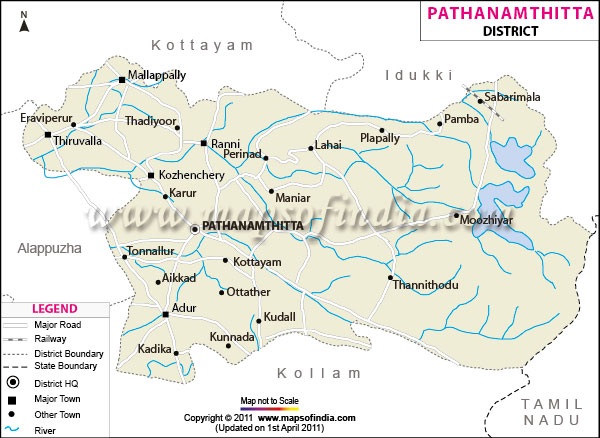
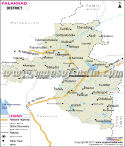
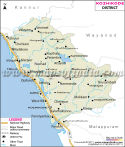
It is a stark difference between the highly forested highlands and fertile plains, which is evident to anyone who comes across the Pathanamthitta district map. In fact, the Pathanamthitta district map provides a description of topography that makes it seem like a movie script. On closer observation of the Pathanamthitta district map, it’s evident that the connection of the rivers through the villages in the district eventually leads to the Arabian Sea. Each road is seemingly another cliffhanger, another jaw-dropping twist and another unsuspecting chapter waiting to be opened.
History & Culture
History sneaks in under the radar and then bursts into dramatic and pivotal scenes in Pathanamthitta. The area was a part of the nearby murky ages of the king of Travancore and the king of Pandalam, before the setup of the district. Religious centres, cultural buildings, churches and temples were emerging as educational hubs, spiritual sanctuaries and commercial hubs linking the hills to coastal settlements. Today, the heritage of these kingdoms still impacts the buildings, festivals and the way people live in their communities.
Sabarimala is a name that cannot be left out of the discussion on the district. It is dedicated to Lord Ayyappa and has become one of the largest annual pilgrimages in the world with millions of pilgrims coming here each year. The air becomes vibrant with devotees from all parts of India and the world come to worship in the Mandala and Makaravilakku seasons when the roads, the towns and the villages welcome them with their gates.
However, the district has a cultural history that goes well beyond any one shrine. Lord Ayyappa is closely intertwined with Pandalam and the descriptions regarding Ayyappa are extremely significant in local traditions. You will see ancient churches like Parumala church, a solid Christian legacy, and other places of worship like mosques, temples and churches within a few kilometres of each other testifies the enduring tradition of communal harmony in Kerala.
Festivals take place in a sensational manner with colour and emotion. The temple festivals are showcased with elegant and colourful elephants, performances of rhythm instruments, dhowing and creating fireworks and turning small towns into lively festivals. Holy Days have dedicated worshippers who gather thousands to pray and celebrate in joy with their communities. Despite the fast pace of modernisation, folk arts, such as Kathakali, Ottamthullal and different temple performances, are still continuing to keep the traditional art of Kerala alive.
Old recipes are also a story of their own. Rice, tapioca, fish, locally-grown vegetables and coconut are staples of everyday meals which are extensively used on special occasions. There are still rural craftsmen and weavers involved in handmade work, such as handicrafts, bamboo production, wood carvings and traditional weaving, who continue to provide livelihoods for their generations through these arts.
It can be observed that cultural landmark sites are dispersed throughout the Pathanamthitta district map. A visual examination of the Pathanamthitta district map reveals the strong partnership among the historically inhabited settlements, forests, river and sacred sites, all of which indicate that the geography has influenced the formation of Pathanamthitta district identity.
Economy
The overall functioning of the economy of Pathanamthitta can be compared to a well balanced production where each sector forms a part of a bigger picture. Even though there is growing diversification, agriculture is still a dominant branch of activity. The district with its rubber industry is one of the most important collection areas of rubber in the state of Kerala. Other attractive items of great value to agriculture are coconut, pepper, banana, tapioca and spices (cardamom, ginger).
The Government Sector offers jobs in district administrations, health organisations, educational facilities, police services, public works, and many welfare departments, too. The administrative spine, both urban and rural, is built around government hospitals, schools, revenue offices and local self-government institutions.
There is an important involvement of the Public Sector as well. The district's economic foundation is supported by state-owned financial institutions and public transport, electricity distribution, water supply and co-operatives. The role of cooperative banks and agricultural societies has been to support the farmers regarding credit and other activities for a long time.
Over the years, the Services Sector has grown more important. There are abundant jobs in the banking industry, in tourism, in retail trade, in health care services, in education services, in services of hotels and other places of accommodation, in transport, and in ICT. Schools are drawing pupils from multiple areas and health services are providing care to residents across a larger catchment area.
Tourism associated with Sabarimala generates gigantic seasonal jobs. During pilgrimage times, the hotels, restaurants, transport operators, traders, guides and numerous small businesses report a substantial increase in income. Small-scale manufacturing, construction, food processing, and rubber processing further add to the livelihood diversity in the area.
A careful analysis of a Pathanamthitta district map shows the need for transport facilities for economic development. Additionally, the Pathanamthitta district map shows the interrelationship of the agricultural areas, pilgrimage centres, and market towns and how commerce can flow with ease and efficiency regardless of the elevation of the district.
Tourism
The best part of its visuals is the district's tourism sites. Each site is seemingly created to catch the travelling public unawares at the very moment they feel that they have just seen the best sights of all.
Tourism has undoubtedly taken centre stage in Sabarimala. The temple is nestled within the density of forests, which provides the natural beauty and visual appeal of the temple to the visitors and at the same time, it is tenanted by immense spirituality. The pilgrimage is not just a destination; it's an experience to remember.
The elephant training centre and eco-tourism of Konni is a very popular attraction in Kerala but nevertheless the beautiful natural ambience can also be admired. For anyone who is interested in the marvels of nature on Western Ghats, this is the first step.
Sculpted rock formations shaped by the plunge of rushing water into the granite that leads to pools below, Perunthenaruvi Waterfalls is a marvel. Especially during monsoon, the waterfalls here are truly magnificent vistas of nature at its very best.
The Aranmula Parthasarathy Temple is very famous for its religious significance and the famous Vallamkali, organised by the people in Aranmula which is a traditional snake boat race held in the Pamba river that is organised and recognised throughout the world. Another thing the village is renowned for is the Aranmula type metal mirrors which are handcrafted by using an ancient alloy secret passed down from generations.
The royal heritage of Lord Ayyappa is preserved in Pandalam Palace and the popular Maram convention happening in Maramon at the banks of Pamba is one of the largest Christian conventions in Asia. The Parumala Church is visited by pilgrims all year round, as it is the burial place of Saint Gregorios.
Using a Pathanamthitta district map, a tourist will realise the amazing variety of these attractions. Yet another feature of the Pathanamthitta district map is that it can help showcase the existence of forests and waterfalls, rivers, temples, churches and heritage villages in a very limited geographical frame. Some travellers are often surprised to come across new locations on the map landscape of Pathanamthitta even after their second and third visits.
Demographics
Pathanamthitta is characterised by a high level of human development, but it has a relatively low population. The population of the district at the 2011 Census was 1,197,412. It has an excellent literacy rate of 96.55 per cent and is one of the most educated districts in India.
The main language for the district is Malayalam and English is widely understood, with educational and administrative importance, business and tourism importance. Due to the district's borders with Tamil Nadu, Tamil is also spoken in some border areas. Religious diversity is also a key feature: there are also lots of Hindus, Christians and Muslims who make a rich and harmonious social fabric.
This is reflected in a Pathanamthitta district map in modern times, where the modern towns are thriving, the villages are peaceful and there are forests in abundance. It is also evident from the Pathanamthitta district map that natural geography still has an impact on curbing population distribution in the district.
Administration
Pathanamthitta district has its headquarters at the town of Pathanamthitta. The district is administratively divided into five tehsils – Adoor, Kozhencherry, Mallappally, Ranni and Thiruvalla. These tehsils oversee the process of revenue administration and interact with the municipalities as well as grama panchayats and other government departments for proper village administration.
There are 70 revenue villages in the district, each playing its own role in the administration, agriculture and development of the local community. Numerous villages retain the traditional Rural character of the District and Urban centres like Pathanamthitta, Adoor, Pandalam and Thiruvalla act as important commercial and administrative centres.
The Pathanamthitta district map elucidates the minute geographical distribution of the administrative system set up in hills, forests, rivers and settlements. Every spot in this district is covered with several strata of faith, resilience, history and beautiful natural surroundings amidst its peacefulness.
FAQs
Q1: What is the total number of villages in Pathanamthitta district?
Pathanamthitta district has 70 revenue villages.
Q2: What is the population of Pathanamthitta district?
According to the 2011 Census, the population of Pathanamthitta district is 1,197,412.
Q3: What is Pathanamthitta district famous for?
Pathanamthitta district is famous for the Sabarimala Temple, its rich forests, eco-tourism destinations, and strong cultural and religious heritage.
Last Updated on : July 22, 2026
