






About
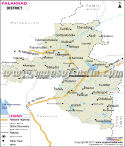
Historically known as Palakkattussery, Palakkad is a sprawling district that is the quintessential gateway to the eastern part of Kerala. The name comes from the words Pala (Blackboard tree or Alstonia scholaris, which used to be plentiful here) and Kadu (forest), literally the "Forest of Pala Trees. Palakkad district was established on 1st January 1957 after the reorganization of states on the basis of language and is the largest district in Kerala in terms of land area, measuring 4482 km².
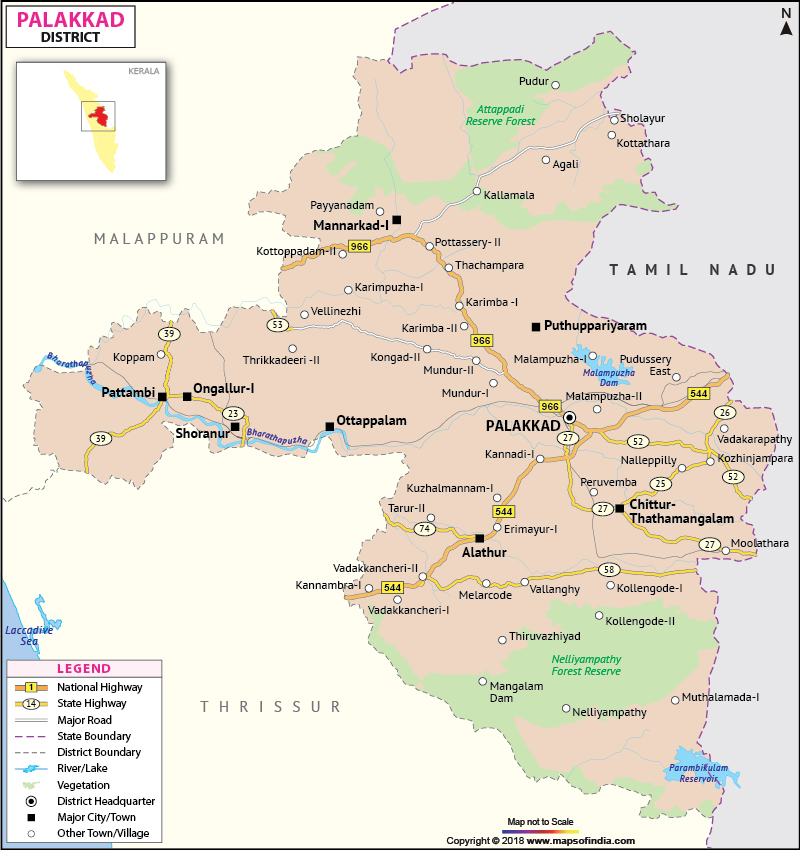
Palakkad is geographically unique on the map of South India as the continuous ridge of the Western Ghats is divided by a low mountain pass called Palakkad Gap. The natural mountain break is 30 km wide and is the main landlocked route between the coastal plains of Kerala and the plains of Tamil Nadu. The district has a vast expanse of plains, rolling midlands, and high mountain ranges such as Silent Valley, Nelliyampathy hills, etc. The intricate tributes of the river Bharathappuzha (River Nila), the second-longest river system in Kerala, drain it beautifully. Palakkad is blessed with a lot of fertile wetlands and is known as the "Granary of Kerala" and the "Rice Bowl of Kerala" throughout the state.
History & Culture
The story of Palakkad is a complex one of geography, shifting royal lines, and intercultural blending. The Palakkad Gap was a trade route in ancient times that linked the western Malabar coast with the Coromandel coast of Tamil Nadu. Shekharivarma, the ruling chieftains of the local area, were known as Palakkad Achans of the Shekharivarma dynasty loyal to the Chera empire.
In the 18th century, the rulers of Palakkad, in a political conflict with the Zamorins of Calicut, approached Hyder Ali of Mysore for military support. This was a strategic step as the region was brought under the control of the Kingdom of Mysore. Tipu Sultan, the son of Hyder Ali, fortified the area, and Palakkad became an impregnable military stronghold till the British East India Company took over in 1792 after the Third Anglo-Mysore War .
The district is the birthplace of carnatic music in Kerala and many great masters of the art come from this district. It is also famous for the Vellinezhi village where generations of masters of pataki and kalamangalam are born. The folk culture of the district is such that people from all over the world practice it and it also has a close connection with the agricultural seasons. The culture is linked with the art of Kanyar Kali which is fast peace ritual dance at temples, Pavakoothu (traditional shadow puppet art at temples dedicated to Goddess Bhadrakali), and Porattu Drama (satirical folk art).
The community spirit of the district is demonstrated in its spectacular annual events. The Kalpathi Ratholsavam (Chariot Festival) is celebrated at the Viswanatha Swamy Temple for a week with the pulling of huge decorated temple chariots in the streets of the Agraharams of the Tamil Brahmin community, which are the traditional settlements of the village. The Nenmara Vallangi Vela (Festival of Rural Folk Life after the Paddy Harvest), with its spectacular percussion ensembles (Panchavadyam), long lines of elephants caparisoned for the occasion, and competitive fireworks displays, is equally impressive.
Economy
The economic structure of Palakkad District is highly unique, balancing an intensive agricultural sector with one of Kerala's most productive industrial belts.
Government Sector
The government sector plays an important role in the regulation of agriculture in the district. It also looks after the agricultural welfare schemes, protection laws, and rules with respect to the investment in local infrastructure. The district administration is headquartered at the civil station, Palakkad. The subdivisional offices in Ottapalam and Mannarkkad have a large number of public servants working. The government of the state is responsible for major irrigation programs like the Malampuzha dam project, Kanjirapuzha project, and the Parambikulam-Aliyar project. All of this is important for sustaining the agricultural productivity of the district. Apart from this, the government promotes employment in the region through the Integrated Industrial Township under the Kochi-Bangalore Industrial Corridor project.
Public Sector
Palakkad is an important public sector industrial city in Kerala, with several important PSUs in the city. Key entities: Instrumentation Limited, Palakkad: One of the top central PSUs in the sector, manufacturing high-precision control valves and advanced industrial instrumentation systems.BEML Limited (Bharat Earth Movers Limited): It is a big central public sector organisation from Kanjikode, manufacturing heavy earthmoving equipment, metro train cars, and defence equipment.
Fluid Control Research Institute (FCRI) is a national top-class institute set up with the support of UNDP, which is a global testing and calibration centre for fluid flow components.
The district has seen rapid growth in the service economy over the past few years. This has largely contributed to the growth of urbanization and the important role it has played in the transportation domain. The national highway passes through the Palakkad Gap, which connects Kerala directly to industrial towns in Tamil Nadu and Karnataka. This has enabled the logistics, warehousing, and freight forwarding, all of which are growing in the region. Multiple active financial services, microbanking, and agricultural credit corporations also exist in the district.
Tourism
Tipu's Fort, Palakkad: A brilliant-preserved 18th century granite fort, constructed by Hyder Ali in the year 1766 in the centre of Palakkad town. The fort features durable square bastions, ancient fortifications, and a large moat that is filled with water. Now it has become a small temple, an open-air theatre and a network of historic stone pathways, all under the care of the Archaeological Survey of India (ASI) that attracts history enthusiasts to its doorsteps throughout the country.
Killikkurussimangalam (Lakkidi): The birthplace of the well-known satirical poet of the 18th century, Kunchan Nambiar, creator of the solo art form of dance-drama Ottan Thulal.llal. The area where he used to live has been designated a cultural monument and research centre.
The magnificent old traditional aristocratic mansion (Mana) of centuries old with classic Kerala architectural excellence (Nalukettu) is Varikkasseri Mana (Ottapala). This landmark is famous for its huge courtyards, intricate woodwork, and traditional ponds, and is a favorite spot for South Indian films.lms.
The Silent Valley National Park is famous for being one of the last undisturbed tropical evergreen forests in South India. It is located in the Nilgiri hills and is a UNESCO World Heritage site and is home to a great variety of wildlife, which includes the endangered lion-tailed macaque.
Malampuzha Dam is a huge machinery dam constructed at the foothills of the Western Ghats, and it is one of the most happening weekend destinations for people in Kerala. The garden surrounding this place offers the visitors a treat with its neatly laid out lawns, musical fountains, a ride, and a genetic concrete culture.
Kollengode Village is one of the most beautiful rural places in India. Kollengode has large continuous green paddy fields, traditional rural houses, and the backdrop of the huge rock face of Gayathripzhauzha. It gives a true insight into the old farming way of life in rural Palakkad.
Demographics
The demographic profile of Palakkad is very unique since it has a high proportion of rural population in contrast to high male population. The indicators of social progress also carry a high value. According to the 2011 census the population of the district is 2809934. The female population in the district is more than the male and the sex ratio is 1067:1000. The majority of the population living in the rural areas comprises approximately 25.91% of the population. The literacy rate is as high as 89.31% and the literacy rate for males and females is 93%, 85.79% respectively. Malayalam is the primary language of the people in the district. It is used in education, government and business realms. Being located near the Palakkad Gap and sharing borders with Tamil Nadu, Tamil is another language that finds usage among the people. The language is widely spoken in and around the Chittur, Muthalamada, and Palakkad towns.
Administration
Palakkad District is administratively divided into two revenue divisions, namely Palakkad and Ottappalam, and each revenue division has seven taluks, which are locally called tehsils. The district is divided into precisely 157 revenue villages, the basic unit of land data collection, crop monitoring and tax administration, headed by the District Collector. The countryside is divided into 13 development blocks comprising 88 grama panchayats,s and urban and town areas are managed by 7 different municipalities for local self-governance and rural community welfare.
Both the district’s industrial belt, which is concentrated at Kanjikode, and its ecologically sensitive areas, such as the Silent Valley and the Attappadi region, are catered to by the administrative machinery of the district. This administrative machinery operates through decentralisation and is under the charge of the district collector, who facilitates the flow of resources from the state to the villages, for instance, in terms of subsidies for agricultural production, provision of infrastructure, and welfare services. This administrative structure enables the district to balance between serving its industries and conserving its sensitive ecosystems.
| Official Name | Palakkad |
| Location | Kerala |
| Area | 4482 sq. km |
| Population | 2809934 |
| Language | Malayalam |
FAQs
Q1: What is the number of villages in the district?
There are 157 villages in the district.
Q2: What is the population of the district?
The population of Palakkad district is 2809934 according to the 2011 census.
Q3: What is Palakkad famous for?
The district is known for its 30 km long Palakkad Gap. It is a unique gap in the Western Ghats, and has enormous paddy fields, which make it the "Granary of Kerala". It is also known for the unspoiled Silent Valley National Park and the historic Palakkad Fort.
Last Updated on : July 22, 2026
