






About
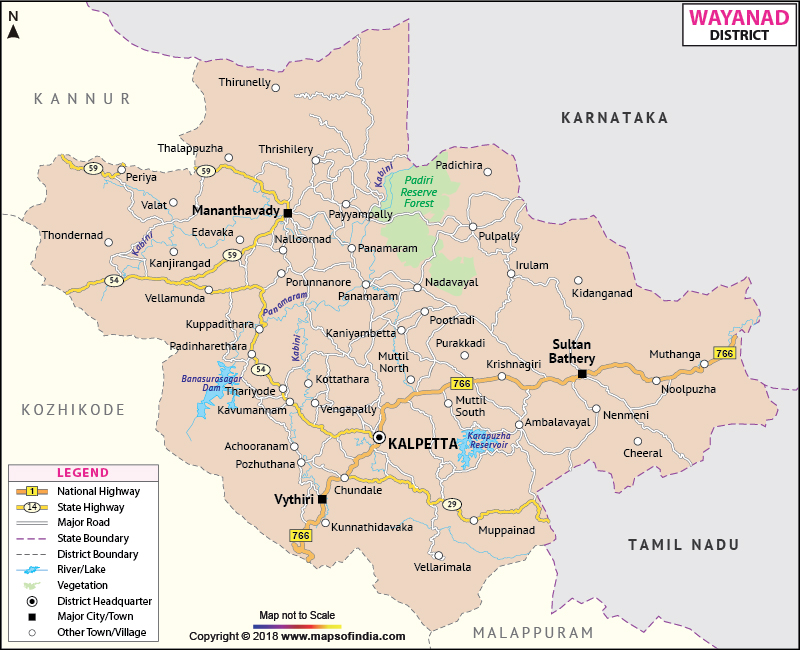
Wayanad District is a lovely district having many hills, which have lots of clouds. This region is known as “Land of Paddy Fields,” meaning that this piece of land is good for the cultivation of rice plants. The significance of this name is both historical and ecological. Historically, although it is a difficult and hilly region, the topography of Wayanad comprises undulating valleys located between hills. These valleys, locally called Vayals, collected rich soil brought by rains from hills, which made them ideal places for growing various types of indigenous rice. For several centuries, these paddy fields were the bread and butter of the local people, providing them with a permanent agrarian economy in a vast wilderness. Even today, it is eclipsed by the prominence of commercial crops such as coffee and pepper, but nevertheless the name symbolizes the connection of the area with nature and farming. As Wayanad district lies in the elevation range of 700 to 2100 metres it has some special land formation and pleasant weather conditions. Nilgiri district of Tamil Nadu touches Souther part of the region , while the northern side borders the state of Karnataka. Tri-state Sanctuary: Wayanad District is the only place that shares an open ecological border with other regions of Nilgiris and Bandipur. Bioregional Hub: part of the UNESCO World Heritage site, encompassing the vast regions of evergreen hills. Salubrious Climate: feel comfortable temperatures throughout the entire year since it is a hilly region.
History & Culture
This region has a unique and well-developed historical heritage since the Neolithic times because the area has always been a cradle of civilization. Many of the region’s tribes have been living in these parts for over 3,000 years. The region was under the administrative control of the Kadamba dynasty of Karnataka and the Hoysalas during the early medieval period. The modern-day Wayanad region was earlier ruled by the royal family of Kottayam of Malabar. Hyder Ali and Tipu of Mysore, the British East India Company, and the local administration were locked in a three-cornered contest in the eighteenth century. Heroic Pazhassi Raja: The great Kerala Varma Pazhassi Raja of Wayanad, also called the Lion of Wayanad, started his revolt from here against the British rulers. He received incredible support from his people and used the region’s advantageous topography to undermine the British’s efforts to impose their rule and taxation on local people. His unconventional war tactics ultimately led to his martyrdom in 1805. The region’s unique culture is mainly attributed to its indigenous people, who constitute over 18% of the area’s population, the largest proportion of it among all local district. The native tribes of Paniyas, Kurumas, Kurichiyas, and Kattunaikkans have their ancestral beliefs, treatment methods, and languages. The district is famous for its traditional performances like Vattakkali and Kamba Nati, ancient ritual dances accompanied by primitive drumming and performed in paddy fields by the Kurichiyas . Tribal festivals: there are numerous tribal festivals held in the region to honor the old traditions and ancestors in the form of ritual dances. They are mostly held in rural areas and during the harvesting season as an expression of gratitude for good crops and protection from wild animals.
Economy
This region has a predominantly agricultural economy based on the local forest resources. Since there are steep slopes in this region, most of the area is unfit for industrialization. As a result, local people are mostly involved in the agricultural sector of the economy. Additionally, many local resorts are built with a unique view of the mountains and forests of this region. The following table represents the main types of economic activity and employment in this region: Government Sector Public Sector Services and Agro Eco-Tourism Resorts Forest Management Subsidies & Schemes KSRTC Transport Cash Crop Trading Nationalized Banks MGNREGA Works BSNL Agro-Tourism Spice Processing
Government Sector
The government sector in this region is mainly focused on preserving the natural environment. The State Forest Department plays an essential role as around 40% of all territory is covered in forests. Local people can find a job in the system as forest watchers and guides. Additionally, the government provides free-of-cost social services like the MGNREGA scheme offering employment to thousands of residents.
Public Sector
The main activity of the public sector is the organization of transport facilities, mainly the State Road Transport Corporation.
Services Sector
The services sector is the most emerging and rapidly developing sector in this region. Recently, a significant number of restaurants, homestays, and eco-resorts have been built to serve both local and foreign visitors. Local young people are always welcome to work in the tourism sector, providing services both to individuals and large groups of tourists. Additionally, many spice and cash crop plantations are significant economic pillars of the local economy.
Tourism
The area is attractive to tourists due to the natural beauty of the landscape and its different historical heritage. There are many popular places here that can be found only there; some of them stand out with their special prominence in this local area: Edakkal Caves are located in Ambukutty Mala; however, they are not caves, but rather a rock with cave paintings, where you can see petroglyphs made in stone about 6,000 years ago.Banasura Sagar Dam is an enormous earth dam located at the foothills of Banasura Hill near the India’s second largest artificial lake. The dam is surrounded by beautiful landscape offering a magnificent view. Chembra Peak rises up to a height of 2100 metres making it the highest peak in the region . Chembra peak is a highest shaped lake due to which it is favourite spot for tourists. The sanctuaries surrounding the peak are full of biodiversity and the lake attracts various animal species from far off places like Tamil Nadu. One can witness herds of elephants and other animals freely wandering around the periphery of the lake.
Demographics
Wayanad is a district of the state of KERALA in INDIA. As per the census of 2011, the district has a population of 8,17,420. This is a considerable portion of the population of our state, Kerala. Out of those 8,17,420 people, 4,01,684 are males, and 4,15,736 are females. The literacy rate of Wayanad district is 78.98%. The district records a sex ratio of 1035 females per 1000 males, which is more than the national average. As per the census, the literacy rate of our country is 73%. The male literacy rate is at 92.51%, and that of the female is at 85.7%. There is a difference of 6.8% of literacy between females and males. The administration of our district takes this into account for taking further initiatives to make Wayanad a more literate district. Our district is divided into 3 talukas or tehsils for administrative convenience. Though our district is highly populated, there is also a sparsely populated region.
Administration
The head of the district administration is Meghashree D R, the District Collector and District Magistrate. The Collector is the prime administrative authority of the district and is the representative of the State government in the district. He/she oversees the work of all the departments in the district. The main functions performed by the District Collector include maintenance of law and order, Conducting election, implementing disaster management and calamity relief programmes, managing land revenue, overseeing development programmes, Implementing central and state welfare schemes.
Collectorate
The Collectorate at North Kalpetta is the administrative unit of the district. It is the main office from which all the departments and officers operate. It has the offices of all the district-level departments and officials.
Revenue Administration
The district is administratively divided for the ease of administration into a Revenue Division and Taluks- Mananthavady, Vythiri, and Sulthan Bathery and 49 Revenue Villages. The administrative structure follows the District Collector → Revenue Divisional Officer → Tahsildar → Village Officer. The RDO oversees the revenue administration, while the Tahsildar takes care of the revenue administration of the taluk, while the Village Officer handles the land records and certificates at the village level.
Major Departments of the District Administration
The various major departments that form the administrative structure of the district are as follows: Revenue Department, Forest Department, Agriculture Department , Health Department, Education Department, PWD Department, Social Welfare Department ,Tribal Development Department, Tourism Department, Animal Husbandry Department.
Disaster Management Authority, etc. These departments work in tandem to provide better service and development to the people of the district.
Disaster Management
As the district falls under the Western Ghats, disaster management is one of the key areas of the district administration. The frequent occurrence of landslides and heavy rains in the district poses a great challenge to the disaster management and relief team.
| Official Name | Wayanad |
| Location | Kerala |
| Area | 2,130 sq. km |
| Population | 817,420 (2011 census) |
| Language | Tamil,Telugu |
FAQs
Q1: How many villages are there in the Wayanad district?
There are 49 villages in the Wayanad District . They are divided into the three administrative sub-division of the larger region .
Q2: What is the population of the Wayanad district as of 2026 ?
As of 2011, Wayanad district consists of 817,420 people.
Q3: What is Wayanad district famous for ?
The area is famous for its coffee and spice plantation .
Last Updated on : July 22, 2026
