

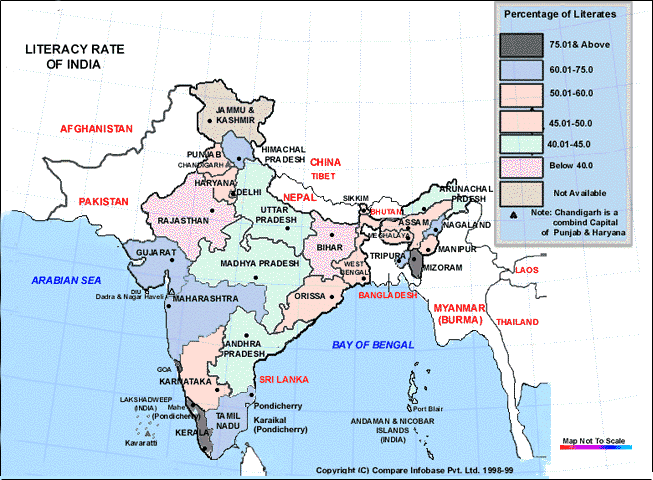



The India Literacy Rate Map gives a visual indicator of literacy rate to users from all Overlays of the India to compare the education achievement region-wise. It provides useful ideas about geographical differences, identifies regions that have achieved much progress, and is an excellent resource for students, researchers, teachers, policy makers, competitors and exam takers.
What is Literacy?
The Census of India defines ‘literate person’ as a man or woman aged seven years or above who is able to read and write intelligently in any language. Literacy is not just reading and writing; it is a way of empowering people to be active members of society, to access information, to make informed decisions and to be part of national development.
Since Independence, there have been multiple government initiatives designed to boost the literacy rate in India, including more pupils enrolling in school, building up educational facilities, and awareness-building campaigns for all children to learn.
Literacy in India: An Overview
The Indian educational scenario with regard to literacy has undergone a dramatic change over the years. The literacy rate was slightly above 18% when the country gained its Independence and has improved a lot since then, due to regular efforts to invest in education and social welfare. In modern times, literacy is an important criterion for judging the development of each state/union territory.
States in the south and west tend to have higher literacy rates, due to a myriad of reasons including better school retention rates, better educational infrastructure, and more public funding spent on education. A number of northeastern states also have outstanding literacy rates, which are achieved by successful community participation and educational outreach. At the same time, certain states are tackling problems of difficulty in reaching rural areas, socio-economic differences and unequal access to schooling for women.
State-wise Literacy Pattern in India
The India Literacy Rate Map showcases the literacy rates in various parts of India. States with long-standing and concerted focus on universal education, public healthcare and social development have consistently high literacy rates, like Kerala. Mizoram, Goa, Himachal Pradesh, Tamil Nadu, Maharashtra and Delhi also report relatively high levels of literacy, with better educational facilities, sustained policy action and so on.
In contrast, Bihar, Jharkhand, Rajasthan and some parts of central India have traditionally higher illiteracy rates. But they have also made improvements which have been unprecedented in the past with the expansion of school facilities, literacy missions, digital education and girl enrolment in schools.
This becomes apparent on the literacy map showing the regional differences, making it clear where there has been a lot of progress in education and where more still needs to be done.
Gender Gap in Literacy
One of the important aspects of literacy in India is the difference between male and female literacy rates. Although the gender gap has narrowed considerably over the years, male literacy continues to remain higher than female literacy in many parts of the country.
Governments have been very instrumental in promoting the education of girls through various measures such as offering scholarships, giving away books, implementing mid-day meal schemes and raising awareness. Access to schools is also improved, sanitation facilities are better, and the participation of the community in these projects has also contributed to increased enrollment and retention of girls.
Many states have close to gender parity in literacy, showing that targeted educational policies can help to close this gap.
Rural and Urban Literacy
It is found that the number of schools/colleges, trained teachers, libraries, and digital learning resources is more available in urban areas than in rural areas, hence higher literacy rates in urban areas than in rural areas. There are also improved transportation and higher household incomes, both of which make for easier access to education in cities.
However, the achievement in rural areas with respect to literacy has been improved considerably in the years gone by. Increases in the number of Government schools, Residential schools in remote areas, digital classrooms and Adult education programmes have helped improve literacy rates in villages. Post-fixing these learning gaps through investment in educational infrastructure and training of teachers is still necessary.
Factors Influencing Literacy Rates
Literacy rates in India are affected by a number of social, economic and institutional factors. These are all associated with greater literacy in states and include a better-equipped educational infrastructure, greater public spending on education, higher levels of urbanization, better health care provision, and more awareness of the advantages of education.
On the other hand, poverty, school infrastructure that is not up to scratch, lack of school staff, hard-to-reach geographical areas and unequal socioeconomic status can have an impact on literacy growth. Other factors include migration, child labour and poor quality education in some areas.
Understanding these issues has allowed the government to create focused initiatives to achieve better literacy rates among disadvantaged populations at both national and state levels.
Government Initiatives Supporting Literacy
India has implemented several major educational programmes to improve literacy and ensure inclusive access to education. Initiatives such as the Right to Education (RTE) Act, Samagra Shiksha, National Education Policy (NEP) 2020, PM SHRI Schools, and various adult education and digital literacy programmes have strengthened educational access across the country.
These are on improving school infrastructure, teacher quality, improving early literacy and numeracy, encouraging digital learning and reducing dropouts. They work together to help build an equal and accessible educational system.
Why the India Literacy Map Matters?
A literacy rate map is a visual representation of literacy information. The user can easily identify the areas in which literacy rate is high or low instead of reading through a lot of statistical table-format information and can see geographical patterns around India. The map serves multiple purposes:
- Helps compare literacy rates among states and union territories.
- Supports academic research and educational projects.
- Assists policymakers in identifying areas requiring focused intervention.
- Provides valuable data for competitive examinations and general awareness.
- Enables researchers to study relationships between literacy and socioeconomic development.
Importance of Literacy for National Development
Literacy is fundamental to sustainable development. A literate population is better equipped to access employment opportunities, adopt new technologies, participate in democratic processes, and improve health and financial well-being. Higher literacy also contributes to lower poverty levels, improved gender equality, greater social inclusion, and stronger economic productivity.
As India continues to invest in education and digital learning, literacy will remain central to achieving long-term developmental goals. Improvements in foundational education, vocational training, and lifelong learning are expected to further strengthen the country's human capital in the coming years.
Explore the India Literacy Map
The India Literacy Rate Map offers a quick and informative way to understand literacy patterns across the country. Whether you are a student preparing for examinations, a researcher studying demographic trends, an educator analyzing educational development, or simply someone interested in India's social progress, this interactive map provides valuable state-wise insights into literacy rates and educational achievements.
By exploring the map, users can compare regions, understand long-term educational progress, and gain a deeper appreciation of how literacy continues to shape India's journey toward inclusive growth and sustainable development.
FAQs
Q1: Which state has the highest literacy rate in India?
Kerala has the highest literacy rate in India, thanks to its strong education system, high school enrollment, and long-standing focus on universal education and social development.
Q2: Which state has the lowest literacy rate in India?
According to the latest official Census data, Bihar has the lowest literacy rate among Indian states. However, the state has shown steady improvement through education-focused government initiatives.
Q3: What is the literacy rate of India?
India's literacy rate is 74.04% as per the 2011 Census. The overall literacy level has continued to improve, with updated figures expected after the next official Census.
Q4: How is literacy measured in India?
The Census of India considers a person aged 7 years or above as literate if they can read and write with understanding in any language, regardless of formal schooling.
Q5: Which are the top 5 most literate states in India?
Kerala, Mizoram, Goa, Himachal Pradesh, and Tripura are among the states with the highest literacy rates, reflecting strong educational infrastructure and better access to schooling.
Q6: Why is the India Literacy Map important?
The India Literacy Map provides a state-wise view of literacy rates, making it easier to compare educational progress, identify regional trends, and support research, planning, and exam preparation.
Q7: What factors influence literacy rates in India?
Literacy rates are influenced by access to quality education, government schemes, economic conditions, urbanization, gender equality, and the availability of schools and trained teachers.
To Buy this Map or Customized Map Please Contact
Apoorv at +91-8750051915 or mail at [email protected]
Last Updated on July 23, 2026
Census 2011
