

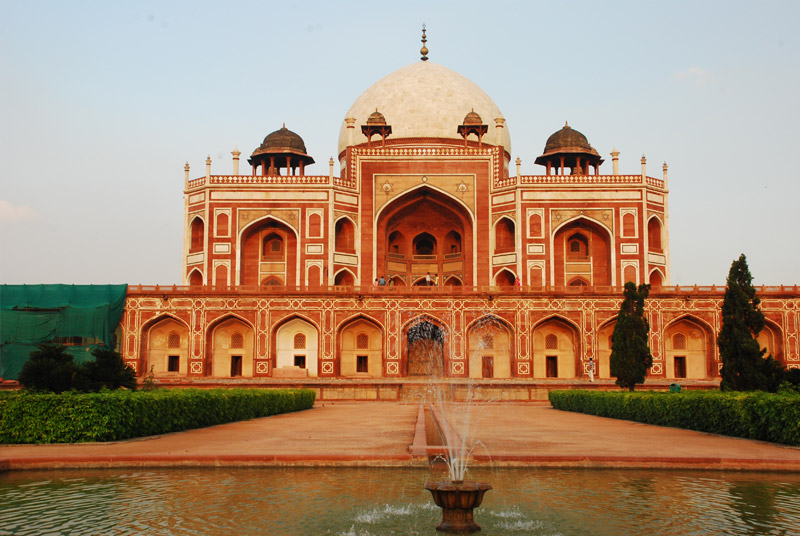
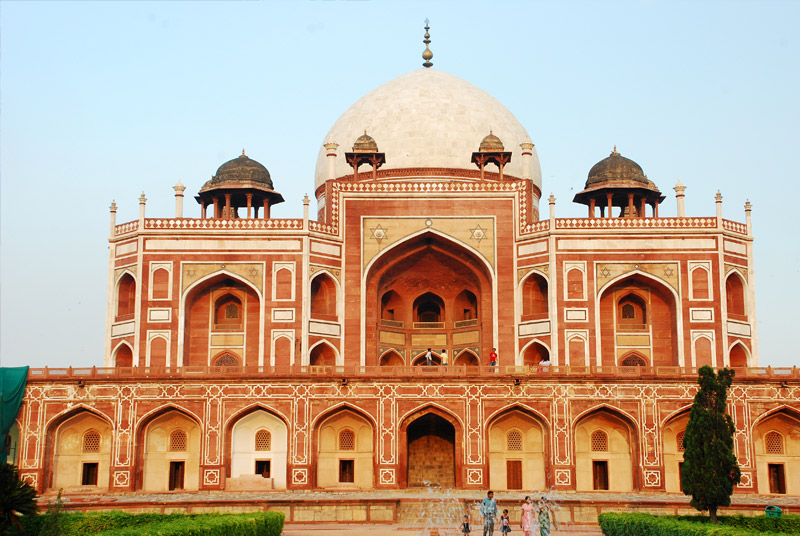
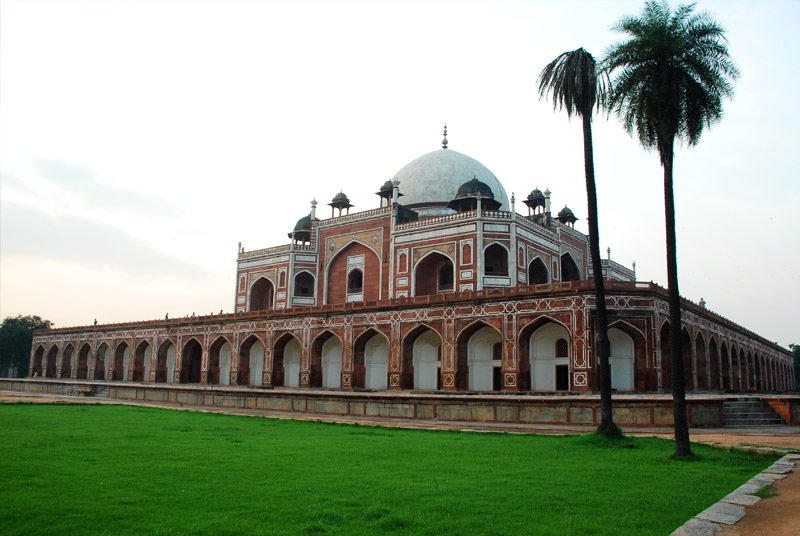
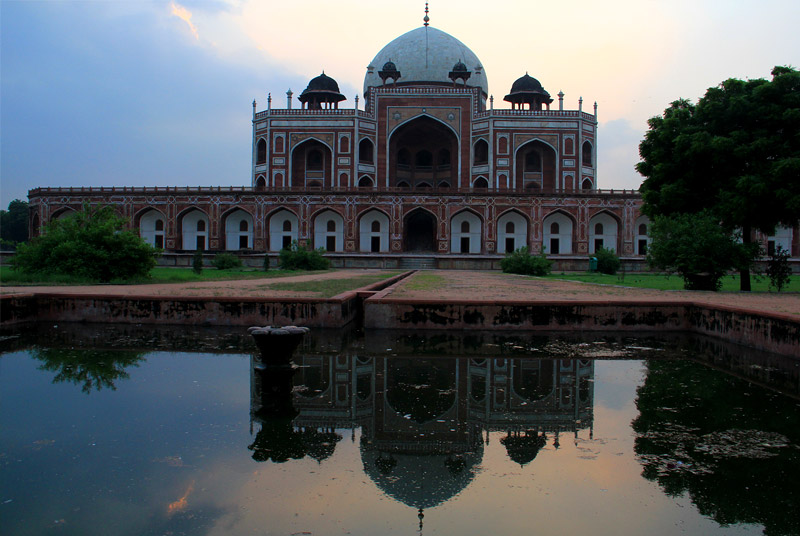
The famous Humayun's Tomb of Delhi is considered to be the precursor of the 'Taj Mahal' as far as the architectural structure is concerned. It represents the Mughal style of architecture at its best. One of the major attractions in the city this mausoleum serves as the burial ground of several Mughals apart from the emperor himself.
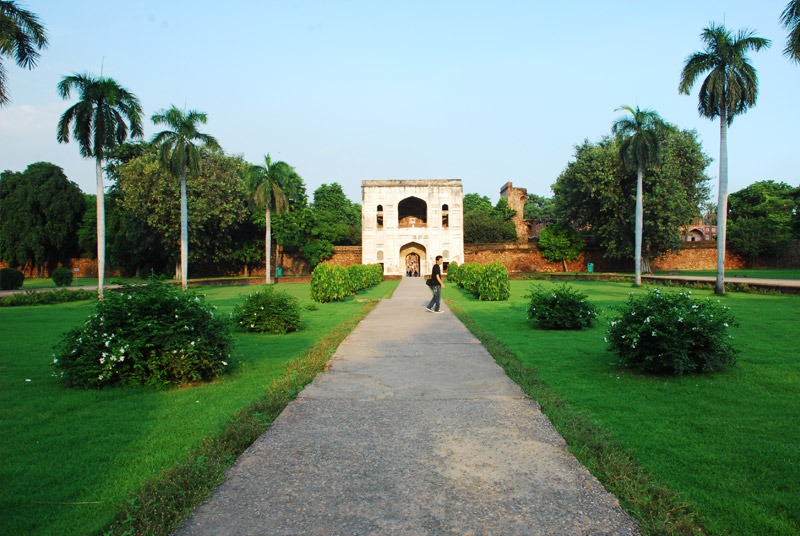
The Humayun's Tomb is a magnificent piece of architecture that took almost 9 years to complete with an expenditure of nearly one and a half million rupees. The mausoleum is a 140 feet high structure with a central dome. The double-layered dome has a white marble exterior but the rest of the tomb is made of red sandstone, with white marble ornamentation. Built over acres of lush green land and surrounded by fountains this complex is home to a well manicured garden, a beautiful mosque and several other tombs.
Humayun's Tomb - Entry Fee, Timing, Address, Official Website | |
|---|---|
| Address | Mathura Road, Opposite Dargah, Nizamuddin, New Delhi, Delhi - 110013 |
| Entry Fee : | Entry fee for Indians : 55 Rs. Entry fee for Foreigners: 100 Rs. Entry fee for Children below 3 Years & Senior Citizen is free. |
| Entry fee for Sound and Light Show: | Entry fee for Per Person : 25 Rs. |
| Timings : | Visiting Hours -10:00 AM - 7:00 PM |
| Phone No (Official) | +91-11-24355275 |
| Official Website | ww.delhitourism.gov. |
| Photography allowed or not | Allowed |
| Camera Fee : | 25 Rs. |
| Nearest railway station | Nizamuddin Railway Station |
Last Updated on : June 16, 2026
