




About Tamil Nadu
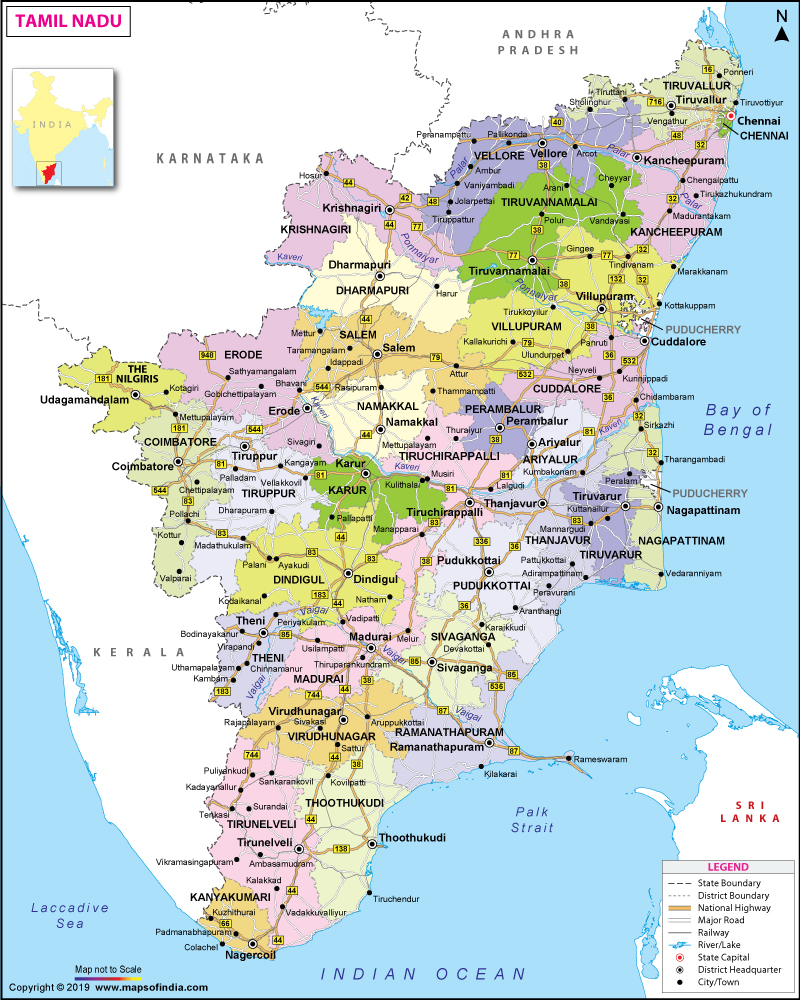
Situated in the Southern part of the country, Tamil Nadu is one of the most well known and important states in India. Andhra Pradesh forms the Northern border for it, whereas Karnataka and Kerala lie on its northwest and west respectively. Two water bodies that enclose the state on the southern and the eastern sides are the Indian Ocean and the Bay of Bengal respectively. In fact, geometrically, Tamil Nadu touches the extreme southern tip of the Indian Peninsula. The total area of the state is 1,30,058 square km. Chennai, earlier known as Madras, is the capital of Tamil Nadu which is the fourth largest city in India with an area of approximately 175 square km. Beautiful coastlines with hundreds of coconut trees, majestic temples, cultural legacy and wildlife sanctuaries have made Tamil Nadu a favourite destination with tourists.
Facts on Tamil Nadu | |
|---|---|
| Official Website | www.tn.gov.in |
| Date of Formation | Jan 26, 1950 |
| Area | 130,058 sq km |
| Density | 555/Km2 |
| Total Population (2011) | 7,21,47,030 |
| Males Population (2011) | 3,61,37,975 |
| Females Population (2011) | 3,60,09,055 |
| No. of District | 32 |
| Capital | Chennai |
| Rivers | Kaveri, Thamirabarani, Vaigai, Chittar, Manimuthar etc. |
| Forests & National Park | Mudumalai NP, Mukurthi NP, Annamalai NP, Indira Gandhi WS and NP. |
| Languages | Tamil, Telugu, Malayalam, Kannada, Urdu, English |
| Neighbours State | Kerala, Karnataka, Andhra Pradesh |
| State Animal | Nilgiri Tahr |
| State Bird | Emerald Dove |
| State Tree | Palmyra tree |
| State Flower | Glory lily |
| Net State Domestic Product (2011) | 72993 |
| Literacy Rate (2011) | 69.72% |
| Females per 1000 males | 995 |
| Assembly constituency | 234 |
| Parliamentary constituency | 39 |
-
 Important Places
 -
 Travel Guide
 -
 Places of Interest
 -
 People & Culture
 -
 Temples
History of Tamil Nadu
Originally known as the Tamilham, Tamil Nadu has an ancient history which is around 6,000 years old and is known to be the place of origin of the Dravidians. Historians divide the history of Tamil Nadu into three distinct divisions of ancient, middle and modern. Being one of the oldest of all civilizations, some say that the Dravidians (or tamilians) had to move to south and stay there because of the Aryans in the north. Several dynasties have ruled the state starting from the Cholas, Pallavas, Pandavas. Their glorious history comes under the ancient and medieval subsection. The Chola kings regained their valor in the 9th century after ruling for several years in the 4th century through several wars and battles with the then existing kings. But they were overpowered by the Muslim Sultans in the 14th century who had captured major parts of Southern India through invasions. More Detail...
Government and Politics
Tamil Nadu is quite active when it comes to politics and the state is run by the Chief Minister with the governor and other ministers. Almost all the national parties have a strong hold on the several operations of the state. Other than that, there are several regional parties that run their political affairs smoothly inside the state. However, this makes the entire political scenario of the state quite complicated and challenging. It is vibrant and diverse and in many cases influences the country's central political whereabouts as well. There are 234 assembly constituencies and round about 40 Lok Sabha constituencies in the state. Due to the presence and strong influence of national parties like Congress and BJP, the political power remains centralised in Union Government. More Detail...
Geography
Tamil Nadu is surrounded by lands on its north (Karnataka and Andhra Pradesh) and west (Kerala), as well as by water bodies of Indian Ocean and Bay of Bengal on its south and east respectively. To its extreme north, there is Pulicat Lake and the southern tip is formed by Kanyakumari or Cape Comorin. The Mudumulai Wildlife Sanctuary forms the western limit and the Point Calimere forms the eastern limit of Tamil Nadu. The mountain ranges of the Eastern Ghats and Western Ghats run along the boundaries of the state and meet at the Nilgiri Hills. There are three major regions that construct the geography of the state: the mountainous region or Kurinji, the arid region or Palai, and the forest region or Mullai, the coastal region or Neidhal and the fertile plains or Marudham. The river Cauvery that originates from the state of Karnataka enters Tamil Nadu to become the lifeline for the state. The river is responsible for making the lush Coromondal Plains fertile and it also forms the delta in Thanjavur and nagapattiam.
Climate of Tamil Nadu
Tamil Nadu is largely dependent on the monsoon rains, the failing of which some times leads to droughts in the country. Its climate varies from dry sub-humid to semi-arid. There are three distinct times of rainfall in Tamil Nadu, namely the southwest monsoon from the months of June to September characterised by heavy southwest winds; the northeast monsoons from the months of October to December, characterised by northeast winds; and the dry season from the months of January to May. The annual rainfall of the state is approximately 945 mm (37.2 in), of which 32% is the southwest monsoon and 48% is the northeast monsoon. The state can be divided into 7 agro-climatic zones: north-west, north-east, southern, west, high altitude hilly, high rainfall, and Cauvery Delta.
Demographics
As per census 2011, Tamil Nadu, has a population of 7,21,47,030 individuals with a decent ratio of males and females. The growth rates have been within limits for both with an average of 15.6% at the national level. Hindus occupy a major section in the Tamil society and most of them are staunch Brahmins with their own set of religious and social beliefs. One can find a perfect blend of modern as well as medieval Hinduism among them which is prevalent among all sections of Hindus. Muslims or Christians form the next category of population with a decent proportion between each other, which is however much less than the Hindus. The construction of several mosques and churches, in the capital as well as in major cities has proved that these two religions have established significant places in the state. There are few Buddhists, Sikhs and people from other religions who are also a part of Tamil society. Tamil Jains or Samanars, have made significant contribution to the literature and architecture of the state. Scheduled Castes as well as Scheduled Tribes also stay in the state and identify themselves to be Hindus. However, according to the Census, they are not included among the Hindu population.
Society, arts and culture
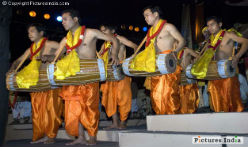
The people of Tamil Nadu lead by and large, relaxed lifestyles. Tamils have deep interest in music, dance and literature. Dance forms like Bharatanatyam and various forms of music, including Carnatic Music, have flourished here for centuries. Festivals are a daily feature in this region. Navaratri or Dussehra (September/October), Deepavali (October/ November), Karthika (November/December) and Pongal (January) are the popular ones. A unique festival of Carnatic music, the Thyagaraja festival is held annually in January at Thiruvariyar, the birth place of famous singer poet Thyagaraja, where one can witness the amazing spectacle of mass performance, in total harmony and rhythm. Handicrafts include the most intricately carved designs in wood, stone and metal. The exquisitely carved Bronze and Tanjore plate deserve special mention here. More Detail...
Food
There are different variety in Tamil Nadu when it comes to its cuisines. It has unique flavours, tangy twist, and sweet infusion. Here is a list of popular cuisines of Tamil Nadu:
- Uttapam
- Banana Bonda
- Rasam
- Dosa
- Muruku
- Sambar
- Coconut Chutney
- Idli and Vada
- Lemon Rice
- Paruppu Payasam
- Poriyal
- Pongal
- Kuzhi Paniyaram
- Kootu
- Puliodarai
Language
Tamil is the official and the most widely spoken language in the state. It is the first language to have been recognised as the classical language in the country. However, few other south Indian languages are also widely used by the inhabitants like Telegu, Kannada and Malayalam. There are distinct places in the state where these languages overpower the local language. For example, people residing in the north western part of the state, which is near Karnataka, prefer to speak in Kannada than in Tamil. Salem is the district with the largest population that speaks in Kannada. Similarly the residents who live near the borders of Kerala love to communicate in Malayalam. Urdu is the language to communicate among the Tamil Muslims who occupy a major part of the state. The native Christians stick to the universally-accepted English. Since Tamil Nadu is a diverse state with immense industrialisation and progress, people from several parts of the country also come to reside here. Hence, other non-south Indian languages like Hindi, Gujarati, Punjabi, Bhojpuri and Marathi are used by people of different ethnic groups to communicate with each other. Strikingly, most of the educated Tamilians prefer English to communicate amongst each other.
Festivals in Tamil Nadu
The state of Tamil Nadu is the origin of Dravidian culture. All the temples and monuments in the state are the best examples of Dravidian architecture. It has made priceless contributions to the music, art, and literature of India. Bharatanatyam, one of the famous Indian dance forms, has its origin here. Tamil Nadu fairs and festivals are important events that happen round the year and lead to millions of footfalls from different corners of the world. All the fairs and carnivals in the state are observed with pomp and glory. More Detail...
Education
Tamil Nadu happens to be one of those Indian states which possess the highest literacy rate in the whole country. It has a 100% GER when it comes to primary as well as upper primary education. There are thousands of schools in the state which are affiliated to the CBSE, ICSE as well as the Tamil Nadu state board. These schools are constantly monitored by the government as well as the private organisations so as to provide the best basic education possible to a child. In most of the government schools, the medium of instruction is Tamil whereas almost all private schools have chosen English to be the language. In order to bring the children below poverty level to school and get the primary education, government has come up with several innovative schemes like mid day meal, computer education, girl child education, distributing free travel, books and uniforms for the students etc. When it comes to higher education, the state possess around 40 universities (government as well as private), 480 engineering colleges, 5000 medical colleges, 1100 arts colleges for those individuals who dream to rise high in their lives. The TNDTE offers several diploma, degree, PG as well as research courses for aspiring students.
Economy and Infrastructure
| Click to View large Map |
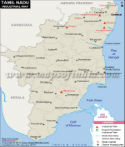 |
| Tamil Nadu Industrial Map |
Tourism
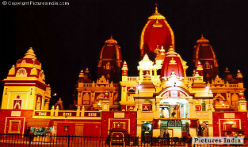
Blessed by natural beauty, Tamil Nadu is a traveller's delight by all means. The exotic beaches, the majestic temples, several historical monuments, breathtaking waterfalls, panoramic sites and the picturesque view of nature makes Tamil Nadu the ideal place for tourism. Chennai, the capital exhibits a perfect blend of ancient and modern culture. Kanchipuram is a destination for the pilgrims with almost 1000 temples. It is also famous for silk sarees. Yelagiri, Kodaikanal and Ooty are famous hills stations which are widely popular among the tourists. People love to visit the merging of three great water bodies namely the Bay of Bengal, the Indian Ocean, as well as the Arabian Sea and Kanyakumari, the southernmost tip of the Indian peninsula. Sunrises and sunsets appear to be heavenly from this point. Rameshwaram, the Meenakshi Temple of Madurai, Tiruchirapalli, Ramanathaswamy are those places which are visited by most religious travellers. The beautiful Marina beach (the longest in the world stretching 12 kms in length), Covelong beach. More Detail...
Transport
Tamil Nadu, due to its geographical location, has managed to develop a suitable and modern infrastructure of transportation with both public as well as private vehicles. The dense and extensive networks of roads that form the national, state as well as rural connectors are well maintained and coordinated by the government. The southern railways connect the state to all parts of the country. Chennai's international airport is the hub of some of the major national as well as international airways. There are five other international and national airports in the state to improve connectivitity with the rest of the world. Tamil Nadu also has waterways through which goods can be exchanged without any hazards. Within the city, with the initiatives of the Tamil Nadu State Transport Corporation Limited (TNSTC), the passengers can move from one place to another at ease through several buses covering routes to all areas. The metro railways in Chennai have further improved the conditions for the daily passengers. For locals, there are other vehicles like the taxis, auto rickshaw, cycle rickshaws as well as private cars to move from one place to other.
EBAKB151114
Last Updated on: May 08, 2026
