






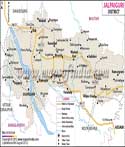
About
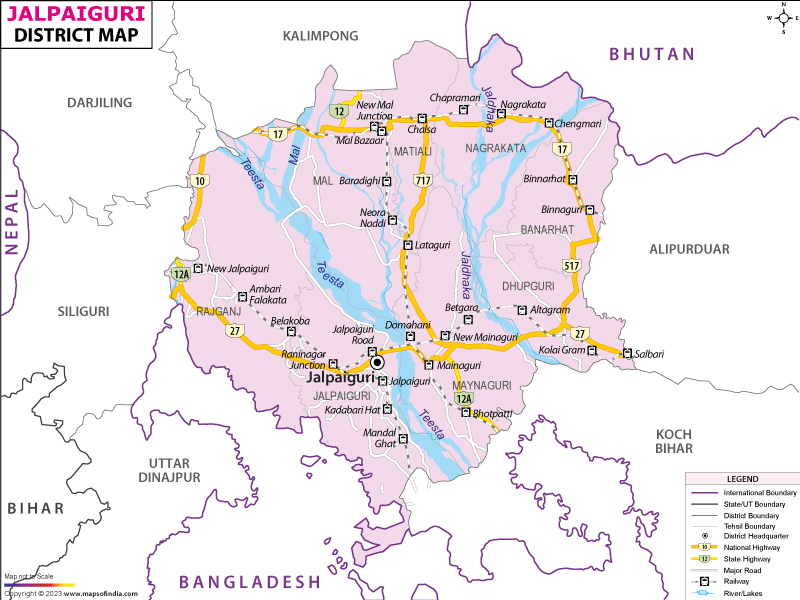
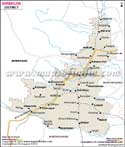
Jalpaiguri is a district in the north of West Bengal which is very much a known name. It is a part of the Dooars region and is home to many tea gardens, forests, rivers and wildlife. The district headquarters is at Jalpaiguri which also functions as a key center for government offices, education and trade and local business. Jalpaiguri also has very strong connections to the Dooars region. In terms of large tea plantations, forest land and rivers the district has a character which is unique in West Bengal. Also places like Gorumara, Malbazar and Gajoldoba see tourist activity all through the year.
History & Culture
Jalpaiguri has a past which is tied to the kingdoms and trading routes of northern Bengal. As per the district administration the area was a part of the ancient kingdom of Kamrup and later on became a part of the Kamatapur and Koch kingdoms. During that time which we may term as the historical period we see the development of places like Chilapata, Mainaguri and Panchagarh.
During British rule The Dooars came under British control. Growth of tea plantations which did see large scale investment by the British transformed the economy and the settlement patterns in Jalpaiguri. From all over India workers came to the tea gardens for jobs. Over time these communities became a very large part of the social fabric of the district.
Jalpaiguri’s culture is a mix of what you would expect from an area near the hills and forests and plains. Bengali is very common, also in use are Nepali, Hindi, Rajbanshi, Santali and other local languages.
Jalpaiguri’s food also represents the diversity of its population. We see rice, fish, vegetables and local meat dishes which are very common. In the tea garden areas and among nearby communities you also see influences from east and north Indian foods.
Jalpaiguri’s natural environment also has a great role in shaping local life. Rivers like the Teesta, Jaldhaka and Torsa are used for farming and fishing which in turn see growth in forest which in turn is a source of important natural resources. Also as reported by the district administration tea, timber and tourism are the main pillars of trade and economy.
Economy
In Jalpaiguri economy tea, agriculture, forests, tourism, trade and services play key roles. What we see is that tea plantations are present in almost every part of the district and they are the source of income for many families.
Agriculture is a key issue which also sees great activity in rural areas. Farmers there grow paddy, vegetables and a variety of other crops. We see that which parts of the district are mostly under cultivation and that irrigation plays a large role in many areas. District reports tell us that the net sown area is 198,256 hectares and that about 40% of the cultivated land is irrigated.
Forest products are a component of the local economy. For many years timber and other forest based activities have supported communities. At the same time in Jalpaiguri we see protected areas which are important for conservation.
Tourism is also a key element in local economy. We see visitors coming for wildlife safaris, tea plantations, rivers, forests and the natural beauty of the Dooars. From this we benefit from hotels, homestays, restaurants, transport operators, guides and local shops seeing an increase in business.
Government Sector
In Jalpaiguri government bodies are the employers. The district headquarters is home to offices related to revenue, education, health, agriculture, rural development, social welfare and also other public services.
Government schools and colleges which serve students from both urban and rural areas. Health centers and hospitals which provide for the health care of people in all parts of the district.
The district administration runs out a number of rural development and welfare programs. These programs reach out to farmers, students, women, children and rural families.
We see roads, bridges, drainage, water supply and other infrastructure which also puts money in the local economy. We have also seen that what is put into these works goes into job creation and that better roads in particular see people get to markets, schools, hospitals, and workplaces.
Jalpaiguri is home to a large tea garden population. In those areas government bodies work with local communities on education, health care, welfare and other public services.
Public Sector
In Jalpaiguri the public sector is very much a part of the economic structure. Banks which are public sector entities provide savings accounts, loans and other financial services to farmers, workers, students and business owners. Also these services which the banks provide help local people with their money management issues and in supporting small scale businesses.
Railways play a key role in Jalpaiguri which is located on an important rail route that connects North West Bengal with the rest of the country. In and outlying areas of the district you will find railway stations which see great activity from people going for work, study, business and tourism.
Road transport is a base for local trade also. Farmers use roads to get their crops to market and in addition businesses rely on road networks to get in goods and out ship their products to other areas.
Jalpaiguri’s proximity to Bhutan and Bangladesh plays a role in transport and trade. We see flow of goods and people between various towns and border areas which in turn supports local businesses
Services Sector
In Jalpaiguri services range in education, health care, banking, retail, transport, hotels, restaurants and tourism.
Jalpaiguri is a key service center for the nearby villages. People go to the town for shopping, medical care, education, banking and government related matters.
Education which is for teachers, office workers and other staff. Also we see that in schools, colleges and coaching centers we have students from Jalpaiguri and the nearby areas.
Healthcare is also a growing segment of the service sector. In it we see hospitals, clinics, pharmacies, diagnostic centers and private health care services which in turn provide jobs and health care to people from all over the district.
Tourism is the backbone of many service based businesses. In Gorumara, Malbazar, Gajoldoba and the nearby forest areas which see a great tourist traffic we have hotels, homestays, food joints and we also require local guides.
Tourism
Tourism in Jalpaiguri is a major draw. The district has outposts of forests, rivers, tea gardens, wildlife and quiet rural settings. Jungle safaris and watchtowers are a hit with visitors. In Jatraprasad and Medla which are well known watchtowers in the park.
Gajoldoba is a favourite with bird watchers and those that seek out peace in nature. It is near the Teesta River and is reported to be a great spot for migrant water birds. During winter many species of birds are seen in the area which is also a great spot for bird watching and nature photography.
Jalpesh Temple, a very old Shiva temple which is near Mainaguri. This temple has a large history and is a very important religious site in the district.
The temple is a place which sees great footfall all round the year, we do see larger assemblies during religious festivals. Also the fact that it has a historical connection to the old kingdoms of northern Bengal which adds to its appeal to visitors.
In Jalpaiguri tea gardens are a hallmark of the district. They cover large areas with rows of tea plants which in turn present a sea of green in the Dooars. Visitors can watch as workers collect tea leaves and will also learn what role tea play in our economy. Tea also is a primary element in local economic development which supports many families.
Demographics
In the 2011 Census of India report Jalpaiguri district had a population of 2,381,596. Out of which there were 1,217,532 males and 1,164,064 females as per the district’s report.
Jalpaiguri is a mostly rural district. Many of its inhabitants live in villages, tea gardens and forest areas which also include the main urban centers of Jalpaiguri town and other municipalities.
In the 2011 Census the district’s present administrative area was reported to have a density of 701 people per square kilometer. Also the official district stats report a sex ratio of 956 females for every 1,000 males.
The Census district report which we looked at puts out a literacy rate of 73.3% for Jalpaiguri in 2011. Also from the same source we see work participation rate of 39.1%.
In Jalpaiguri's population you will find Bengali speaking communities along with Nepali, Rajbanshi, Hindi, Santali and other language groups. Also included in the district’s population are Scheduled Caste and Scheduled Tribe communities.
Administration
Jalpaiguri district is run by the District Magistrate and Collector. In terms of administration the district is in charge of public services, revenue, development works, law and order and welfare programs.
According to the district administration report which states that in Jalpaiguri there are 3 subdivisions, 9 blocks, 9 Panchayat Samities and 80 Gram Panchayats. The three divisions are of Jalpaiguri Sadar, Dhupguri and Mal.
In the nine blocks of Jalpaiguri Sadar, Dhupguri, Maynaguri, Rajganj, Mal, Matiali, Nagrakata, Kranti and Banarhat we see. In these blocks many development and welfare initiatives are taken up.
Jalpaiguri reports 418 mouzas, 1,177 Gram Sansads, 404 inhabited villages and 29 forest villages which is as per the district’s official records. Also as per the same data the district has 9 police stations.
The administration is in charge of urban and rural areas. Also they deal with issues related to tea gardens, forests, agriculture, tourism, roads, health and welfare services. Also we have international borders with Bhutan and Bangladesh which add another dimension to administrative responsibility.
| Official Name | Jalpaiguri District |
| Location | West Bengal |
| District Headquarters | Jalpaiguri |
| Area | 3386.18 sq. km |
| Population | 23,81,596 (2011 Census) |
| Religion | Hinduism, Islam, Christianity and other religions |
| Language | Bengali, Hindi, Nepali and English |
FAQs
Q1. What is the total number of villages in Nadia district?
Nadia district has about 1216 villages.
Q.1: Where is Jalpaiguri located?
Jalpaiguri which is in the north of West Bengal. It is a part of the Dooars area and also has borders with many districts as well as Bhutan and Bangladesh.
Q.2: What is Jalpaiguri famous for?
Jalpaiguri is a home to tea gardens, forests, rivers and wildlife. In that area you will also find Gorumara National Park and the Dooars which are very popular.
Q.3: What is Gajoldoba famous for?
Gajoldoba is a home to the Teesta River which is very much a part of the setting there and also hosts a variety of migratory birds. In the winter season it is a favourite with birdwatchers.
Q.4: Is Jalpaiguri mainly urban or rural?
Jalpaiguri has large rural areas. In them many people live in villages and tea gardens which in turn have small towns of which Jalpaiguri and other towns are the important ones.
Q.5: Which are the top tourist places in Jalpaiguri?
Gorumara National Park, in addition to Gajoldoba, Jalpesh Temple and Malbazar which are very much visited. Also the nearby tea gardens and Dooars forests are major attractions.
Q.6: Which is the important district of West Bengal and why?
Jalpaiguri’s importance is due to its tea plantations, forests, agriculture, wildlife and tourism. Also being in the Dooars region it plays a key role in transport and trade in northern West Bengal.
