






About
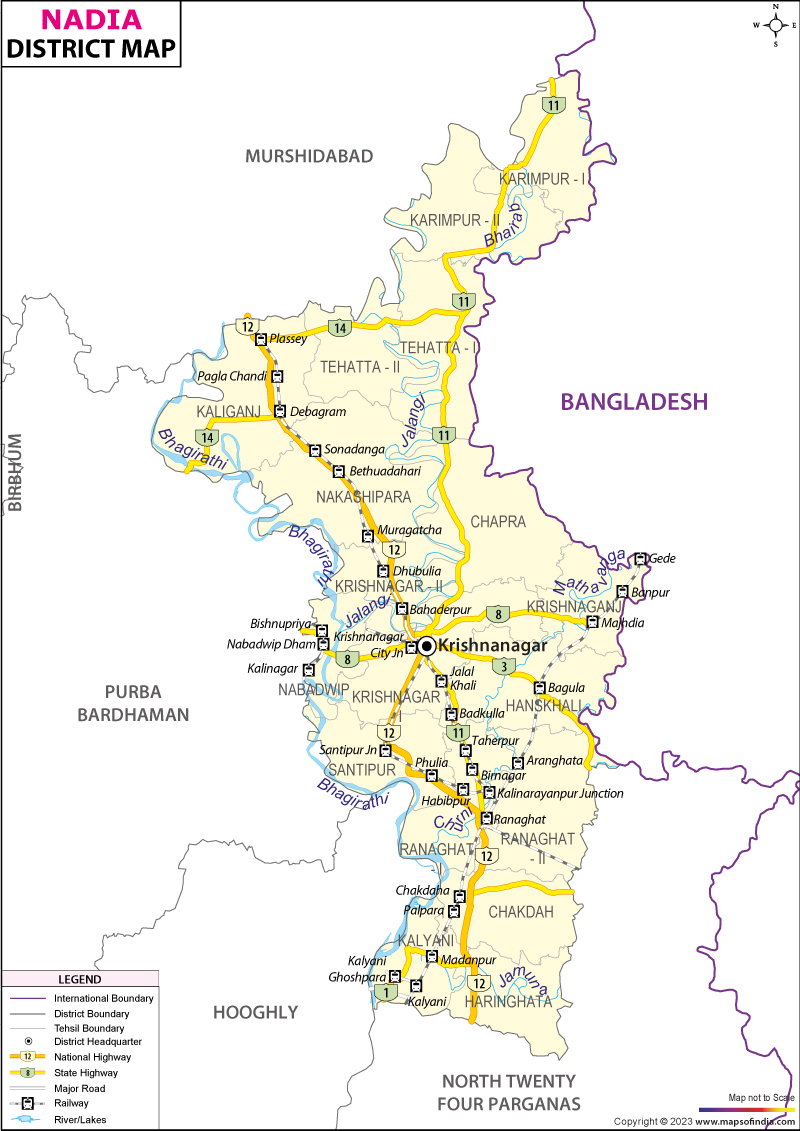
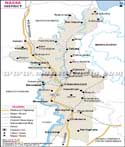
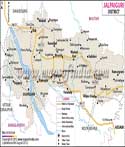
Nadia is not only the district name of West Bengal but also a geographical region lying in the southern part of the state. It is regarded as a culturally and historically rich place of the entire state. This combined legacy of spiritual and academic excellence brings Nadia a special status and position as the cultural heart of Bengal which still continues till today and is recognised by the heritage of the region. Locally, Nadia area is located at latitudes roughly between 2253' and 2411' North and at longitudes between 889' and 8848' East for an approximate area of 3,927 square kilometres. The state of Bangladesh is a boundary on the eastern side, the district of Murshidabad shares a northern boundary whereas the western boundaries are with districts of Purba Bardhaman and Hooghly, while the southern boundary is shared with the district of North 24 Parganas. The headquarters of the district is located in Krishnanagar a city that once was the centre of royal art patronage besides being world famous today for its unique clay-doll craft industry made in its own distinct style.
History & Culture
Nadia is inextricably linked to the history of Nabadwip, which in the twelfth and thirteenth centuries gained recognition as one of India's greatest seats of Sanskrit learning and in particular of Nyaya (logic) studies amongst the likes of Raghunatha Siromani, the school of Navya-Nyaya scholars drawing students from across the subcontinent. This eminent scholarly standing lends Nabadwip its moniker as the Oxford (of) medieval Bengal label it maintained for its next few centuries of stature, even as political centres moved around it. The region's most profound spiritual revolution occurred in the late fifteenth century, when in 1486 Sri Chaitanya Mahaprabhu was born at Mayapur, near Nabadwip. Chaitanya's movement focused on Krishna devotion, and it gave rise to a wider devotion movement known as the Bhakti movement that in turn fostered a Gaudiya Vaishnavism spiritual movement, because of this setting, in the state, the pattern of religious culture of the next few centuries and later finding echo in the twentieth-century establishment of ISKCON, the International Society for the dissemination of Krishna Consciousness. The first major political-historical event in the district was the Battle of Plassey which was a confrontation between the forces of the East India Company led by Robert Clive and that of Siraj-ud-Daulah, the last independent Nawab of Bengal, fought on 23 June 1757 at Palashi, in today's Nadia District on the banks of the Bhagirathi from which the battle is commonly viewed as marking beginning of the English rule or British rule through Company in a large part of India. So the modern district of Nadia is the scene of one of the most momentous battles in Indian history.
In the 18 th century the district became famous as a cradle of art, literature and Sanskrit learning under the auspices of Maharaja Krishnachandra Ray of Krishnanagar, the palace of the Krishnanagar Rajbari becoming a vibrant centre of Bengal aristocratic and artistic culture. Culturally too, Nadia still remains among the most lively districts of Bengal. Krishnanagar is globally renowned for the skill of its clay-doll and clay-figurines artisans, a craft tradition that has its origins with Maharaja Krishnachandra himself and which produces very realistic clay models of human bodies and mythological figures. Nabadwip and Mayapur still continue to be important destinations for the Vaishnavite festival, attracting a huge inflow of devotees and pilgrims during the celebrations of Chaitanya's birthday (Gaura Purnima) and the Nabadwip Ras festival, which is also marked by processions and performances. Shantipur ranks high among the historic towns of the district, proudly standing as a hub of the age-old handloom weaving tradition of producing high-quality tant and jamdani sarees. The same title can definitely be granted to Phulia, which too has become a much-praised handloom textile centre of the state. Matiari, an outskirt place of Kalna, is renowned for its handloom tradition that revolves around bell-metal and brass utensils.
Economy
The economy of Nadia is characterised by a broad and diverse range of (1) prosperous agriculture, (2) centrally managed, public sector-led urban development, (3) micro-scale handloom and craft-based manufacturing, and (4) expanding service-based and higher-education economy supported by the crowded river network of the district and its proximity to Kolkata.
Government Sector
The public sector is also one of the most significant employment generator in Nadia, given the presence of the world's first planned township of Kalyani which was created in the 1950s as a model town to accommodate a number of state and central government offices. Today the Kalyani area is home to several of India's high-profile institutions like the University of Kalyani and the Kalyani Government Engineering College, Kalyani and the AIIMS (All India Institute of Medical Sciences ), Kalyani, and also several central government research agencies.
This way the creation of government and administrative infrastructure is one of the most significant sources of formal employment in the district.
Public Sector
The public sector in Nadia is generally limited to education and research institutions and those in the public sector banks and cooperative credit institutions that cater to the large agricultural economy of the district. The public sector played a significant role in setting up the Kalyani Industrial Growth Centre, which now house small and medium scale manufacturing units that provide organized employment outside the agricultural sector. The public sector's presence continues through the district's strategic location as a railway hub with Ranaghat carrying two vital rail lines running from Sealdah to Lalgola and the rest of India; this line is an important route for agricultural produce to reach the markets of Calcutta and other parts of the country. The public sector is also well represented through health facilities such as the district hospital and most recently, AIIMS Kalyani.
Services Sector
The services in Nadia are highly diversified. They can be seen in the fields of education health religious tourism, handloom trade and retail trade. Krishnanagar and Ranaghat are playing important commercial roles in providing banking, wholesale trade and transportation services to the district's rural hinterlands. The handloom industry of the district based in Shantipur and Phulia, sustains a large informal services and trading economy where weavers dyers traders and other agents along a value chain export sarees to markets across India. Mayapur, the global headquarters of ISKCON (International Society for Krishna Consciousness) has developed a very large religious tourism and hospitality economy in and around it. There are hundreds of guest houses, restaurants and transport services catering to the large number of devotees and visitors to Mayapur every year, mainly during various festivals. Agricultural trade of rice jute potatoes, vegetables among other sales accounts for a large part of the district's rural services trading economy.
Tourism
The attraction of the region is that it combines spiritual pilgrimage places, the history of the colonial age and rural craft villages. This makes Nadia the most promising destination of the West Bengal in getting the cultural richness. Mayapur has a unique position in the district of being one of the major tourist sites and is also renowned since it is the birthplace of Sri Chaitanya Mahraprabhu.
Demographics
As per the 2011 Census of India, the total population in Nadia district was about 51,67,600, which included roughly 26,53,768 males and 25,13,832 females. Such a composition led to the district sex ratio being around 947 females per 1,000 males. The district has a population density of approximately 1,316 persons per square kilometre which is an indicator of it being among the more densely settled districts in West Bengal. The urban population living all over the various towns and municipalities of the district is around 14.39 lakh. By Census 2011, Nadia achieved a literacy level of 75.6%, which was much higher than the national average and demonstrated that this district had been known for educational facilities since ancient times. Sanskrit tools and centers at Nabadwip, and the universities at Kalyani are some instances. Although male literacy was higher in Nadia, the difference between gender literacy was not as wide as that in many other districts in West Bengal which is a significant fact. For administrative work, it is also one of the official languages. English is the second official language mainly for administrative and/or educational matters. As for the religious makeup, Hindus are the largest religious group constituting about 72 per cent of the population with Muslims forming a significant minority, around 27 per cent.
Administration
Administratively, Nadia is under the control of its headquarters, Krishnanagar and has been divided into four administrative units: Krishnanagar Sadar, Ranaghat Kalyani, and Tehatta. In each administrative unit, a Sub-Divisional Officer is placed in charge, who handles coordination about revenue, law and order, and development within that area of their responsibility. The Kalyani administrative division consists mainly of Chakdaha and Haringhata. These blocks have been further broken up into villages and village councils.
| Official Name | Nadia District |
| Location | West Bengal |
| Area | 3927 sq. km |
| Population | 51,67,600(2011) |
| Language | Bengali |
FAQs
Q1. What is the total number of villages in Nadia district?
Nadia district has about 1216 villages.
Q2. What was the population of Nadia district?
Nadia district had a population of 51,67,600 as per the 2011 Census.
Q3. What makes Nadia district a popular destination?
Nadia serves as the hometown for the religious leader Sri Chaitanya Mahaprabhu.
Q4. Where is the district’s HQ?
The city of Krishnanagar works as the main administrative centre of the district since it was the ancient seat of a royal house in the area and is also a renowned spot for the craft of making clay dolls.
Q5. When did the decisive Battle of Plassey happen?
23rd June 1757 is the date that the historical event of the Battle of Plassey is commemorated as having happened.
Q6. What per cent of the people can read and write in Nadia district?
With a literacy rate of 75.6 percent reported from the 2011 Census, it was evident that Nadia had a literacy percentage well above that of the state of West Bengal.
Q7. What are the number of subdivisions and blocks in Nadia district?
Nadia district includes 4 subdivisions, namely Krishnanagar Sadar, Ranaghat, Kalyani and Tehatta, and these have 17 community development blocks altogether
Last Updated on : October 19, 2026
