






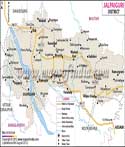
About
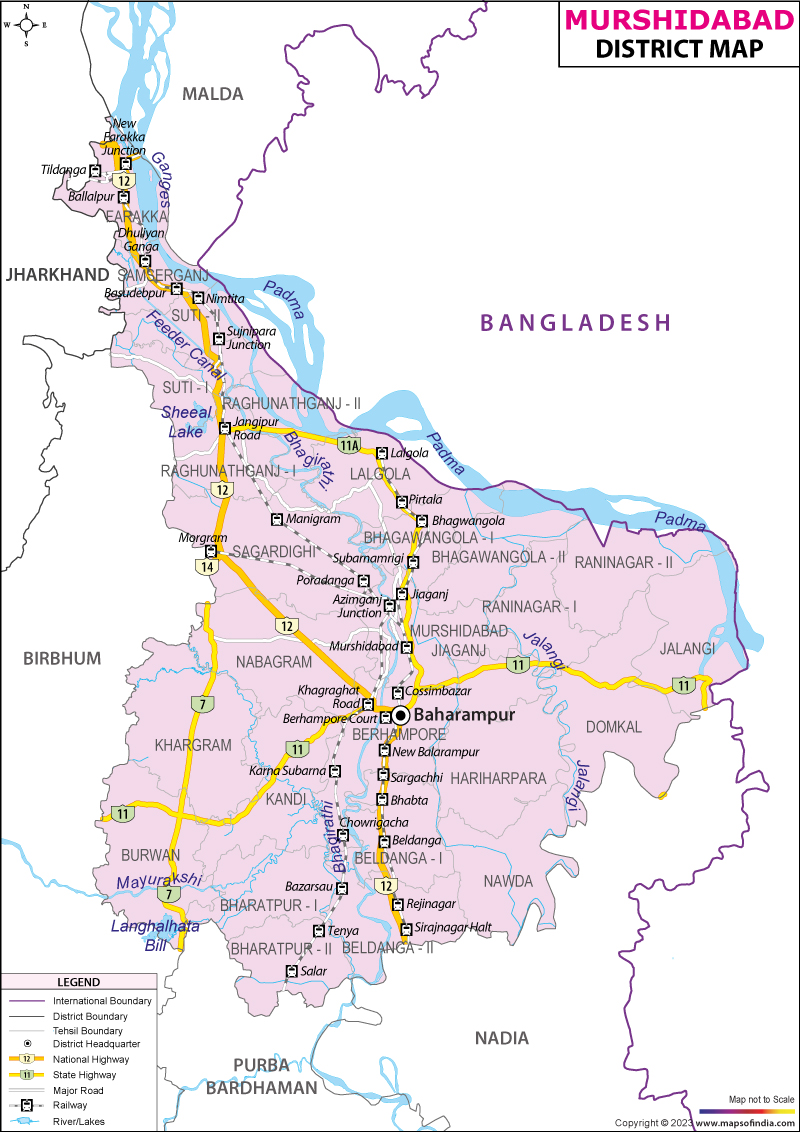
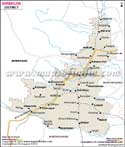
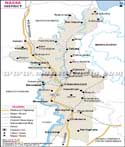
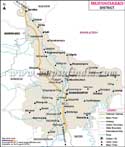
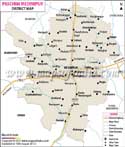
Murshidabad is one of West Bengal's most historic districts and is a district of Malda in eastern India. It is situated in the Malda administrative division of eastern India. It is located on the rivers Bhagirathi and Hooghly and the Ganga and Padma system. It has an international border with Bangladesh. Its area is less than 5324 sq km. The northern area is occupied by Malda district whereas, south and west are Birbhum and Nadia District and to the west in Bangladesh the districts of Rajshahi and Chapar Nawab are there. The district is really famous for three factors: one can be its multi layered Mughal and Nawabi history, second is the silk handloom industry and third is being one of the most crowded and agriculturally diverse districts in Bengal. It will always be known for its strong predominance of Muslim population compared to any other district in the country.
History & Culture
Ancient and Medieval Roots
The land that today forms Murshidabad was already inhabited at a time much older than the rule of the Mughals. Some historical writings, supported by local tales, associate this area with King Shashanka's seventh-century CE Gauda Kingdom; others trace it back to the Pala kings. Makhsudabad was the earliest name of the place, it is said, that this city was built on the land during the time of Mughal emperor Akbar in the sixteenth century.
The Rise of the Nawabs
It was in the early eighteenth century that a very significant event took place which led to the formation of a modern identity of the district. Aurangzeb, the Emperor in the year 1701 ordered Kartalab Khan an official named to head the Bengal Subah as Diwan, and by 1702 he had already transferred his seat from Dhaka to Makhsudabad. In the year 1703, Aurangzeb conferred upon him the title Murshid Quli Khan, following that in the next year the permission to change the name of this town from Makhsudabad to Murshidabad was given by the emperor himself in recognition of that title. Thereafter, the city of Murshidabad continued to be the main power base of Bengal which was governed by the Nawabs and at the same time banking centers of great influence such as Jagat Seth who were rich beyond compare were also present.
Freedom Movement and Later History
In the nineteenth and twentieth centuries, this district became an active center against British rulers where early anti colonial struggles were led by Muslim ulama and later on the movements against the East India company became very strong in a larger national movement for India to gain its independence. The region has also been home to some great writers like the Bengali writer, Syed Mustafa Siraj or the Bangladeshi novelist and martyred intellectual, Anwar Pasha.
Cultural Heritage
There are multiple elements in Murshidabad's culture and traditions. It is basically an admixture of Mughal, Muslim, and Bengali styles. The textile industry of this place with special reference to silk weaving deserves a special mention, especially the quality "Murshidabad silk" and "Baluchari saree." Many believe in towns like Jiaganj, Berhampore, and Murshidabad, these crafts have been in operation for generations. In fact, Murshidabad also boasts of traditional terracotta, wood carvings, bell-metalwork and brass work from Khagra and other Bengali arts.
Economy
Although Murshidabad's economy is predominantly agricultural, a significant level of small-scale industries, government employment, and services also thrive there alongside. Berhampore acts as the administrative and judicial headquarters for the district. As a result, many government offices are based there, such as the District Magistrate's office, the district court, police station headquarters, and various departments of the state government of West Bengal. Employment in sectors like education, healthcare, revenue administration, and policing, provided by the government itself, constitutes a major source of steady income for some of the district's workers. Besides, the community at large reaps benefits from central government infrastructure projects, mainly the Farakka Barrage and the associated Farakka Super Thermal Power Station which are located in the district and apart from generating employment, confer regional importance in irrigation, navigation, and power production.
Public Sector
Public sector agencies engaged in power generation, railway operations, postal services and banking, are also to be found throughout the district. The Farakka Barrage Project which is operated by a central public sector unit controls the Ganga's waters to reach the Bhagirathi-Hooghly river system through the Barrage. In fact, it is such a vital piece of infrastructure in the district that it not only promotes the water needs of the district by helping farmers but the Barrage also helps in navigation (transport of goods) besides that. In addition, the branches of public sector banks and financial institutions are fairly spread out to cater mainly to the needs of the rural population.
Services Sector
Murshidabad's services economy is dominated by trade, transport, education, and hospitality related to tourism. In the informal economy, local bazaars (markets) and wholesale trading areas of agricultural crops, mainly rice, jute, and mangos, play vital roles. Murshidabad district's silk trade is an amalgamation of manufacturing and services as weaving dyeing trading, and export of silk products sustain the livelihood of thousands of families, mainly in Berhampore, Jiaganj-Azimganj, and Islampur. Alongside the growth in the number of private schools and coaching centers, educational institutions like Berhampore Girls' College, Krishnath College, and Murshidabad University-affiliated institutions contribute quite a bit to the services economy.
Tourism
Murshidabad's tourism is essentially all centered on their Nawab legacy that is mainly concentrated in the historic town of Murshidabad (Lalbagh area) not far from the district headquarters. Hazarduari Palace. Hazarduari is without doubt Murshidabad's main tourist attraction. Built in 1837 for the Nawab Nazim Humayun Jah in a very grand European-style architecture, the palace called the "thousand door" palace was once a grand place to stay. Spanning a large complex area, the palace is now a museum where they display many different items like Nawabi-era armoury paintings, portraits, vintage carriages, and decorative art.
Nizamat Imambara: This imambara is situated by the Hazarduari Palace, the imambaras have the biggest size among India's religious buildings. It was built in 1847 because the original wooden building had burned down. Now it is considered a significant religious gathering place as well as a site for the commemoration of religious rituals of Shia Muslims on the occasion of Muharram. Katra Masjid: Constructed by Nawab Murshid Quli Khan in 1723 it is an excellent example of Mughal-style red-brick architecture besides being one of the oldest structures in Bengal. The tomb of the famous nawab lies under the staircase entrance of the mosque. Moti Jheel (Pearl Lakes): This horseshoe-shaped lake was excavated in the 18th century, initially connected to Nawab Mohammad, and later with the Governor, Warren Hastings, who took residence around this area. Today, it remains not only a place for the scenic view of a peaceful lake but also the historical area with the remnants of the old palace. Khushbagh: Located in the river opposite Khushbagh is a walled cemetery that is known as "Jubilee Garden". It contains the tombs of Nawab Alivardi Khan, Siraj-ud-Daulah, and their relatives which is considered one of the most significant historical sites as well as directly related to the Battle of Plassey. Jafarganj Cemetery and Kathgola Palace:
In Jafarganj, the family of Mir Qasim is buried. Also, Kathgola Palace and its adjoining Jain temple are a reflection of the Jain merchants' heritage of the district, and the palace is at the same time a fine specimen of the heterogeneous architectural history of the region. Other attractions: Besides Hazarduari, Jafargan Juma Masjid, Manbhar Bhandh, Wasef Manzil, Jagat Seth House (which is a museum dedicated to the famed banking family), the old mosque of the nawab Chak Mosque, and Footi Mosque round out the heritage circuit, as well as the Bachchawali Tope (a giant historic cannon).'
Far away from the city of Murshidabad, beside the Battle of Plassey's site, was Palashi. Apart from this, visitors will enjoy the view of the water body of Farakka Barrage, while exploring Murshidabad district, they will also get an opportunity to visit its mango orchards and silk-weaving villages, which make these natural and local cultural resources very interesting ones.
Demographics
In the 2011 Census of India, the latest complete census for the district, Murshidabad district came in first position in the whole state of West Bengal for population with a figure of 71.04 lakh making up almost 7.78% of the state's total population. Murshidabad has an extremely high population density of nearly one thousand three hundred and thirty-four persons per square kilometre with population dispersed on an area of five thousand three hundred and twenty-four square kilometers. Based on the 2011 Census, Murshidabad reported an overall literacy level of around sixty six point five ninth which was about six nine point nine fifths for males against sixty-three point nine fifths on the part of females. Religious profile: Murshidabad is one among the few districts that have such a high percentage of Muslim population about 66.27% of the total district population and the rest 33.21% are Hindus which actually makes this area quite special community-wise and culturally speaking. Languages spoken: The majority of people in the district i.e. almost 98.5% spoke and write Bengali and the rest very few people, speak Santali, Hindi and Urdu. There have also been reports about certain tribal and migrant communities being present, though in small numbers only.
Administration
In administration, the district of Murshidabad is part of the routine West Bengal government setup. The administration is headed by the District Magistrate who lives in Berhampore. The town not only houses the office of the District Magistrate but also is the administrative headquarter of the district and belongs to Malda Division of West Bengal.
Blocks, Panchayats, and Villages
Below the level of the subdivisions the district consists of 26 community development blocks, all under the oversight of the respective Block Development Officers, each Block being composed of several gram panchayats. It is stated in the records maintained by the government of the state that Murshidabad contains 254 gram panchayats and 27 police stations in all the parts of the district that are divided. The urban parts of the district are catered by the 7 municipalities, i.e., Berhampore, Murshidabad, Jiaganj, Azimganj, Kandi, Beldanga, Dhulian, and Jangipur.
Murshidabad District has a population of roughly 1,886 inhabited villages, and besides the 2011 Census records mention about a much larger number of mouzas (revenue villages), which may not be inhabited or could have been joined by other nearby settlements. The district is divided into 26 community development blocks, and the village-wise distribution is available from the official statistical information of the district office.
| Official Name | Murshidabad District |
| Location | West Bengal |
| Area | 5324 sq. km |
| Population | 71,03,807(2011) |
| Language | Bengali |
FAQs
Q1: In Murshidabad what number of the village are there?
A: In the Census report, that reports 1886 populated villages in Murshidabad district.
Q2: What is the population of Murshidabad?
A: As of the Census, the total population of Murshidabad district is 71,03,807.
Q3: Murshidabad is known for what?
A: Murshidabad is known to have had a very rich past which included the time when it was the capital of Bengal Subah, home to the renowned Hazarudari Palace and Katra Mosque, the site of the Battle of Plassey.
Q4: Which major river passes through Murshidabad district and divides it geographically?
A: The Ganges’ main branch which is the Bhagirathi River flows through Murshidabad from north to south.
Q5: What part has Karnasuvarna played in the history of Murshidabad?
A: Karnasuvarna, the present-day site which is near to Kandi sub-division in Murshidabad, was the 7th-century capital of King Shashanka.
Q6: Which is the main source of power in Murshidabad?
A: In the district, the main power generation comes from the Farakka Super Thermal Power Station.
Q7: What major historical conflict took place in Murshidabad that turned the scales for India?
A: In 1757, on June 23rd, the Battle of Plassey took place at Palashi in southern Murshidabad.
