






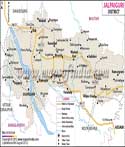
About
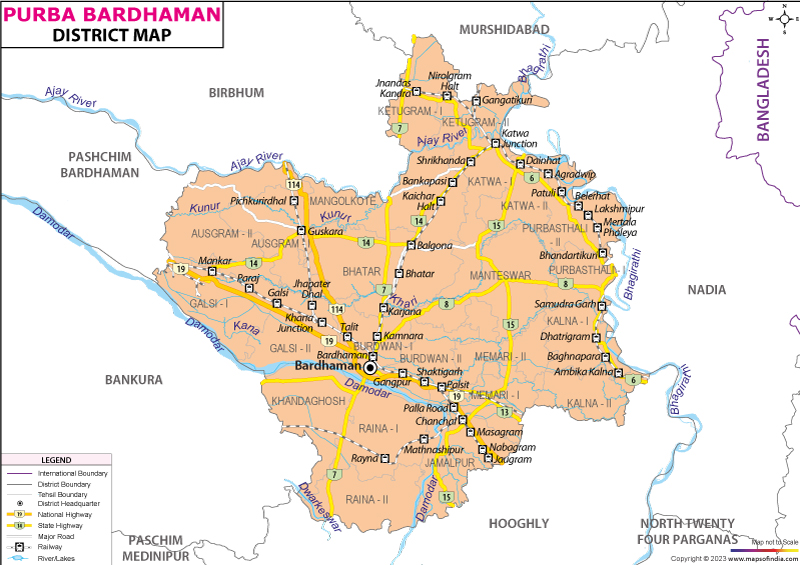
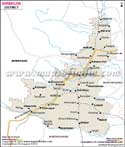
East Bardhaman in Bengali is literally a name denoting "East of Bardhaman" and is now Purba Bardhaman, a district of West Bengal, a state located at the very heart of India. Flanked by the Rarh region on the North and by the alluvial plains of Gangetic Bengal in the south are two other features of the territory. Purba Bardhaman district has the district headquarters at Bardhaman (or Burdwan) which is an important historic urban centre from ancient times which had been an important administrative, educational and commercial centre of the entire region. The title East Bardhaman is quite appropriate as it separates out this mainly farming-oriented (and quite rural) landscape from the western industrialised ones.
History & Culture
The history of the Bardhaman region goes back to antiquity. A part of the reason historians believe the district name is of Vardhamana comes to light if one considers that Bardhaman was once home to one of the major Jain centres, being that of Vardhmana the twenty-fourth Tirthankara. At the Pandu Rajar Dhibi (a town within modern-day Bardhaman district), the finds of Chalcolithic implements and other tools indicate that human settlement in the region has been going as far back as roughly four thousand years. The district's history reflects that the area has gone through many phases from the beginning of the Mauryan era to that of the colonial period. It was part of some major dynasties including the Mauryan, Gupta, and Pala-Sena. The zamindarian system made it a big zamindari in the medieval as well as colonial times. The history of the Bardhaman Raj is among the most remarkable aspects of the history of this area in modern times. Bardhaman Raj was one of the powerful zamindari estates established in 1086. Besides their immense wealth, the Maharajas of Bardhaman were also patrons of arts and religions. The Sarbamangala Temple and the 108 Shiva Temples at Nababhat are among the many temples which were patronised and built by them. The British, after their arrival, redrew boundaries and Bardhaman was upgraded as an administrative unit. The rail network was developed, making the city one of the key junctions of the railway system of the country at that time. It connected Kolkata to northern and western India. The Curzon Gate which is now referred to as Bijoy Toran was constructed in 1903 to mark the coronation of Maharaja Bijoy Chand Mahtab who was a great devotee of Lord Dharma of Kali Temple. It was in the post-independence years that the structure got the name "Bijoy Toran". Culturally, Purba Bardhaman is a major landmark in the evolution of Bengali Vaishnavism with its Vaishnavism centres in towns like Katwa, one of which is closely connected to the childhood of Chaitanya Mahaprabhu. Sri Radheshri Dasa's monastery at Bhandi and the Vaishnav Temple of Bhandi are important cultural spots in the region of Purba Bardhaman. But Ambika Kalna, a famous town in the district, is noted for its dense cluster of terracotta and Bengal-style temples that reflect a combination of religious piety and architectural skills at the local level. Also, the rural scene of this administrative region was closely interlinked with the struggle for the country's freedom, a number of revolutionary leaders having come from the villages of the South Damodar belt. The people of this area have a rich, vibrant and colourful cultural life which can be best depicted by the popular Bengali folk saying "Baro Masey Tero Parban" or "thirteen festivals in twelve months". Yes, the calendar of the district is a festival one with different kinds of celebrations taking place all year round. One of the grandest and most joyous of all celebrations is the festival of Durga Puja which is also sometimes fondly referred to as Saradotsava since it takes place in the autumn (or "sarath" by Bengalis) season. This particular festival is so well celebrated across various towns and villages alike that it seems to have the most powerful draw on the entire community. Then again, the festival of Kali Puja, Saraswati Puja, Rath Yatra (or chariot festival) and the Holi festival are also very much in the tradition which gives great pleasure to people celebrating them.
Economy
The mainstay of Purba Bardhaman's economy is agriculture, small and medium industries, government-led development programs and increasingly services.
Government sector
In its role as the administrative and agricultural heart of this region, the government is a main contributor to the district's development. Bardhaman also serves as administrative headquarters for implementing rural development, the district has block and panchayat offices covering different subjects like land development, irrigation, agriculture extension, and welfare. The canal system of the Damodar Valley Corporation, a prominent government irrigation project, has played a fundamental role in providing a consistent water supply to each of the district's blocks, thereby making Purba Bardhaman a leading rice-producing area. The employment opportunities are but a significant part of the government sector, and it covers educational, medical institutions, the district hospital, revenue administration, and the 18 law/police stations.
Public Sector
Public sector enterprises and co-operatives are also vital contributors to the local economy. Paddy mills which many operate in a co-operative or semi-public manner, control the agro-processing industry in the whole district since the district produces paddy in almost the first position in the state year after year.
Service Sector
The service sector has been in a gradual way expanding since a few years back and is mainly driven by sectors like education, health retail, transport and small scale trades. Bardhaman being a city not only meets the needs of its citizens, but it also has become a source of service provision to the surrounding rural areas. A city that houses many private hospitals, tutoring centres, banking and insurance branches as well as a growing retail sector is one place that is a hub for the distribution of services within a large area of the district. An institution like a university or colleges has given rise to various support services like guesthouses, print shops and a whole variety of businesses that cater to the students.
Tourism
The main attraction of the site is the Naba Kailash Mandir, locally called the 108 Shiva Temples. Many believe Maharaja Teja Chandra Bahadur built the temple in 1809. The temple compound consists of two Shiva shrines arranged in concentric circles with each built in the 'at-chala' Bengal architectural style. The striking visual effect of the twin circles of temples draws a large number of both pilgrims and photographers who visit the site. Besides, there is a rich assemblage of terracotta and temple artworks located at the Kalna Rajbari complex which includes the Pratapeshwar Temple, Ras Mancha, Pancharatna Temple, Lalji Temple, Vijay Vidyanath Temple, and Krishna Chandraji Temple. Golapbag, related to the Bardhaman Raj family, and Bardhaman's cable-stayed railway over-bridge, one of the largest in the country, are some other points of interest. Bardhaman city also has a few landmarks such as the Sarbamangala temple which was constructed by Maharaja Kirtichand in 1702 and is dedicated to the goddess Sarbamangala, seen as the presiding deity of the erstwhile royal family. There's also the Curzon Gate (Bijoy Toran) that was built in 1903 which is one of the colonial remnants that the city still boasts of. And, we have the 108 Shiva Temple at Nababhat, a temple complex constructed in 1788 by Maharani Bishnu Kumari Devi from whom the temple at Kalna got its shape and inspiration but with a different layout. Katwa, a historical town located at the confluence of rivers Ajay and Bhagirathi, was a spiritual center where one could worship the Lord Vishnu and the place is known to have been linked to Sri Chaitanya Mahaprabhu's life, an important Vaishnava preacher. Nearby, at Ketugram, the Attahas shrine, an important shrine in the Vaishnava tradition, is also said to be one of the sacred pithas for Shaktas or the followers of the goddess Devi. There is a legend in Hindu tradition that a part of the goddess Sati's body, when the world was created, fell at this very point where a shrine was later built. The shrine has been a great attraction for devotees throughout the year with a peak coming during the winter months which is also a tourist season at the place. The Purbasthali Oxbow Lake, also referred to as Chupi Char, is located very near to Kalna where one can go to see migratory birds coming to the lake with its tranquil water during the winter seasons. It works as a beautiful place for birding.
Demographics
As per the 2011 Census, the population of Purba Bardhaman was reported to be just shy of 4 835 532, including approximately 24.97 lakh males and 23.38 lakh females. As per the 2011 Census, literacy rate in this district was 74.73 per cent. Male literacy was quite a lot higher than female literacy, which is a normal situation in much of rural West Bengal but one that is being steadily corrected by better schools and government literacy drives. Bengali is spoken by the overwhelming majority of the people in the district as their mother tongue and serves as the administrative medium. A fraction of the people also speak Hindi and Urdu which is largely a result of migrant populations that have been living and running trading businesses in Bardhaman city and other commercial hubs.
Administration
Purba Bardhaman comes under the administrative umbrella of the Burdwan Division of West Bengal. To facilitate revenue and local administrative functions the district has been divided into four administrative areas. Each of these areas is administered by a Sub-Divisional Officer who oversees development, law and order, and revenue activities in that area. The subdivision level is further divided into 23 Community Development Blocks which act as the main units for rural development and the panchayati raj system. 18 police stations are there to provide law and order. An average of 2,185 mouzas (revenue villages) and 20 census towns were also listed as settlements by the government records while the 6 municipalities of the district, which have the responsibility of governing their towns as their area is more advanced, are Bardhaman, Kalna, Katwa, Memari Dainhat, and Guskara.
| Official Name | Purba Bardhaman District |
| Location | West Bengal |
| Area | 5411 sq. km |
| Population | 4,835,532 |
| Language | Bengali |
FAQs
Q1:What number of villages are in the district?
A: In the district of Purba Bardhaman there are 2,185 revenue villages which are in its four administrative subdivisions.
Q2: What is the population of Purba Bardhaman district?
A: According to the 2011 census the total population of Purba Bardhaman district is 4,835,532.
Q3: Which products does Purba Bardhaman produce?
A: Purba Bardhaman is a place that is known for its great rice production.
Q4: Which large rivers flow through the Purba Bardhaman district?
A: In Purba Bardhaman, the main rivers are the Damodar, Bhagirathi (Hooghly) and Ajay.
Q5: What does Purba Bardhaman district report in terms of literacy?
A: In the district of Purba Bardhaman the literacy rate is at 75.48%.
Q6: When did Purba Bardhaman become a separate district?
A: In April 2017 Purba Bardhaman was formed out of the former unitary Bardhaman district which was divided into Purba and Paschim.
